

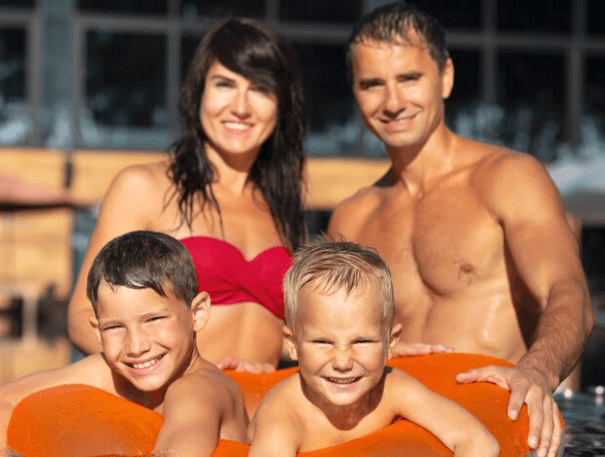
The smell of toast from the upstairs café and a hint of chlorine permeate the damp Saturday morning air in a recreation center outside Bedford. A baby clings to a young father’s shoulder like a small, startled monkey as he lowers himself into the shallow end while still wearing the lanyard from his locker key the infant blinks.
The father smiles, A mother is whispering something to her toddler in the lane next to them that sounds a lot like a motivational speech given before a job interview. It turns out that a swimming lesson in 2026 looks like this.
| Information | Details |
|---|---|
| Topic | Parent-and-Child Swim Classes |
| Leading Organisation | Swim England |
| Flagship Campaign | #LoveSwimming (Wave 17, launched 7 May 2026) |
| Campaign Ambassador | Michael Gunning, international swimmer and broadcaster |
| Programme Example | SWIMBiES by Better — the UK’s largest provider of newborn swimming lessons |
| Age Range Covered | 3 months to school age |
| Class Categories | Dippers (3 months–18 months), Splashers, Paddlers (2–4 years), Preschool |
| Typical Session Length | About 30 minutes |
| Reported Benefit | 84% of parents say their child’s mood improves after a lesson |
Naturally, swim lessons for parents and kids were always available. Something has changed. Speaking with instructors and parents at pools around the nation, it seems that these lessons have evolved from being a nice-to-have item on the parenting checklist to a small, serious ritual.
Reservations are now open. In certain boroughs, waiting lists can last for months. And the parents who show up are no longer just nervous first-timers. They are also grandparents. Uncles. Foster caregivers. And anybody else who is prepared to get into the water and hold a squirming little person at eye level.
This has been monitored by Swim England for some time. In 2026. The #LoveSwimming campaign. Which is currently in its ninth year and seventeenth wave. Has focused heavily on the idea that there is a true difference between a child who can swim and a child who is truly water safe.
The campaign’s leader, Michael Gunning, stated unequivocally in May that skills like floating, maintaining composure, and maneuvering in open water require practice. The week before a vacation in Spain is not the time to cram for them. It’s the kind of thing that seems obvious until you consider how many parents have actually done that.
The trend’s statistics are subtly convincing. Researchers from Swim England were informed by nearly eight out of ten parents that their kids’ focus and attention had improved. After lessons, 84% of respondents said they felt happier. These are not the numbers you would anticipate from a half-hour activity that primarily consists of singing and splashing ducks.
But they still exist. Teachers involved in the campaign observed with a hint of annoyance that the skills that are important in real water are developed in the later stages of lessons. Which are also the ones that parents are most inclined to discontinue. The way that programs have adjusted to this new appetite is intriguing.
The SWIMBiES program is offered by Better, the biggest provider of newborn swim lessons in the UK, beginning at three months of age. Dippers for the tiniest infants. Paddlers and splashers as they develop.
Depending on the child, parents may choose to stay in or leave preschool classes. The lessons’ moments are anything but choreographed, despite the structure feeling almost that way. After refusing to let go of her mother’s neck for the first three weeks, a toddler can paddle a meter by herself in week four. The mother breaks down in tears. The teacher feigns ignorance. This has a cultural undertone that is worth considering.
As an island nation with a cautious relationship to its own coastlines, British attitudes toward water have always been complex. Every summer, drowning statistics remain a somber read, and councils such as Wiltshire have been more forthright about the connection between early education and long-term safety. This year, Cllr Mel Jacob made it clear that swimming is more than just an after-school activity it’s an essential life skill.
Olympic diver turned father Leon Taylor speaks of his five-year-old son Ziggy with the same pride that parents typically save for their first words. It’s difficult to ignore the fact that something else is happening as well, something more related to the peculiar burden of contemporary parenting than safety. By the pool, phones are prohibited.
Emails from work cannot accompany you into the water. A parent must do nothing but hold and gaze at their child for thirty minutes, twice a week. That unbroken focus seems almost radical in a time when every other family activity seems to involve a screen lurking in the background. Some parents openly express this. Some simply return time and time again without providing a clear explanation. It’s still unclear if the boom will continue.
Budgets for leisure centers are still tight, instructor shortages are a constant source of frustration, and once the novelty wears off, families may revert to simpler weekend routines. You get the impression that something has permanently changed when you see a room full of parents gently bobbing their infants through a chorus of *Humpty Dumpty* on a Tuesday night. Not very loudly. Not in a big way. Just enough to keep the pools full for the time being.
i) https://www.bedfordtoday.co.uk/your-world/new-swim-england-campaign-reveals-why-summer-holiday-preparation-should-start-in-the-swimming-pool-for-parents-in-bedford-8506103
ii) https://www.wiltshire.gov.uk/article/14822/New-research-highlights-the-powerful-benefits-of-swimming-for-children-s-wellbeing
iii) https://www.better.org.uk/what-we-offer/lessons-and-courses/swimming/baby-parent