

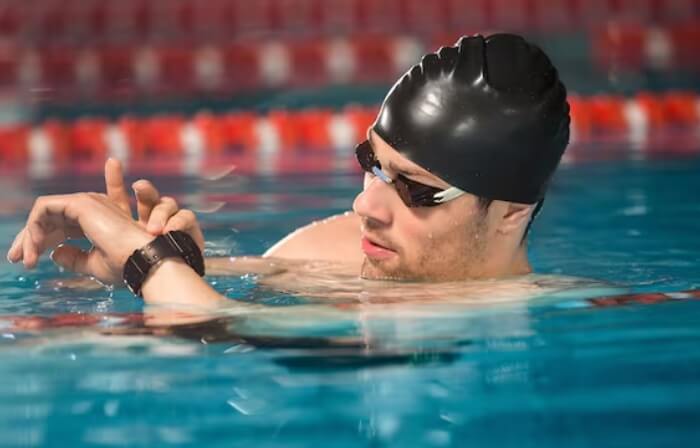
Football fields don’t make the same sound as suburban swimming pools on Saturday mornings. Naturally, it’s quieter, but it’s also less nervous. No coach yelling through cupped hands to stay low on the tackle, no parents flinching when their child is hit, no whistles piercing the chilly air. Only the sound of running water, the damp reverberation off the tile, and the sporadic cough of a kid who had swallowed half a lane. It’s a minor issue. It reveals something about the way families are beginning to think.
In childhood athletics, contact sports held a sort of unchallenged throne for decades. Hockey in Canada, football in the US, rugby in the UK and some Commonwealth countries, and even violent soccer in a large portion of Europe. The argument continued, “They built bodies, they built character.” The trade-offs were rarely questioned. Then the research on concussions began to come in, first slowly and then in a flood that the sports establishment was unable to process quickly enough. Weighing trophies against MRI scans, parents started doing math they had never done before.
| Quick Reference | Details |
|---|---|
| Topic | Swimming as a low-impact alternative to contact sports |
| Primary Authority Referenced | Swim England (Swimming and Health Commission) |
| Lead Researcher Cited | Prof. Hiro Tanaka, University of Texas, Austin |
| Commission Chair | Professor Ian Cumming, former CEO, Health Education England |
| Key Finding | Swimmers had a 50% lower all-cause mortality rate than runners or walkers (University of South Carolina, 40,000+ men, 13-year study) |
| Recommended Practice | 3 sessions per week, 20–30 minutes each |
| Best Suited For | All ages, people with joint issues, injury recovery, children’s development |
Swimming, on the other hand, appeared almost too soft to be taken seriously as she sat in the conversation’s corner. This perception is shifting, and it ought to. According to a report commissioned by Swim England and presided over by Professor Ian Cumming, a former chief executive of Health Education England, swimming is a viable, safe, and affordable option that medical professionals can confidently recommend to patients. A press release doesn’t use language like that. That is the language of a public health organization that has had enough of ambiguous assertions.
The water itself, which seems obvious until you sit with it, is what truly distinguishes swimming. The majority of the gravitational load is removed from your joints by buoyancy. There is nothing to crash into in lane four for a kid who would break their collarbone diving into a tackle. Of course, there is contact. At the training level, swimming is not truly a non-contact sport, as noted by coaches like Rick, who has written about this directly. In a lane, eight or ten swimmers kick each other, bump elbows, and get clipped on turns. A 200-pound linebacker slamming his shoulder into someone’s chest is a far cry from an inadvertent kick during a flip turn. Contact is a part of both. Only one person ends their career on a regular basis.
For land-based sports, the cardiovascular case is nearly embarrassing. Three months of a swimming program significantly decreased artery stiffness, one of those subtle metrics that most people don’t consider until something goes wrong in their fifties, according to research by Professor Hiro Tanaka of the University of Texas, Austin. Stress is forced into the kidneys and brain by stiff arteries. Elastic, soft ones don’t. Exercise on land is beneficial, but not as much or as consistently. Swimmers were about 50% less likely than runners or walkers to die from any cause, according to a University of South Carolina study that followed over 40,000 men between the ages of 20 and 90 for an average of thirteen years. To be sure you read the number correctly, you should read it twice.
Additionally, scientists are still mapping something that occurs in the brain. Because most swimming is done in prone or supine positions, which are flat, immersion in water increases blood flow to the brain. Walking and cycling require the heart to work against gravity to pump blood uphill to the brain. That fight is easier in the pool. Tanaka has even conducted experiments using Nordic walking poles in water, which may seem a little ridiculous at first, but after three months, both vascular and cognitive function improved. Rats’ memory was enhanced after seven days of swim training. Humans can improve their reaction time in twenty minutes. The early indicators are remarkably consistent, though it is still unclear if these effects scale up over decades.
Injury is another issue, which is what initially draws the majority of people to the pool. Knees give out. Backs move. Rain causes old football injuries to flare up. A land-based exercise turns into a torturous negotiation process. The negotiation is completely eliminated by water. A seventy-year-old’s ability to swim in the same pool as her grandchild is made possible by the same buoyancy that guides people with chronic injuries back into movement, which is the foundation of SwimExpert and similar specialized programs. There aren’t many sports that endure that age range.
This is not an argument for the elimination of contact sports. People who love rugby, football, and hockey will always love them because they teach lessons that swimming does not. The question that parents are subtly posing has changed. It used to be my child’s sport that would make them tough. Nowadays, it’s more about what sport my child will continue to play when they’re fifty. You get the impression that the solution is coming to you naturally as you watch the slow drift in the direction of the pool. As advised by Prof. Tanaka, continue moving in the water for twenty to thirty minutes three times a week. It’s not a glamorous prescription. It just so happens to work.
i) https://www.bbc.co.uk/programmes/articles/5Y9qZzcKDYdVxSDdM9gxGqY/why-swimming-could-be-the-best-exercise-you-do
ii) https://www.britishswimming.org/news/general-swimming-news/major-new-study-health-benefits-swimming-released/
iii) https://www.swimexpert.co.uk/about-us/news/swimming-the-ultimate-solution-for-exercising-through-injuries
iv) https://www.simplyswim.com/blogs/blog/why-swimming-is-the-best-low-impact-exercise-for-all-ages