

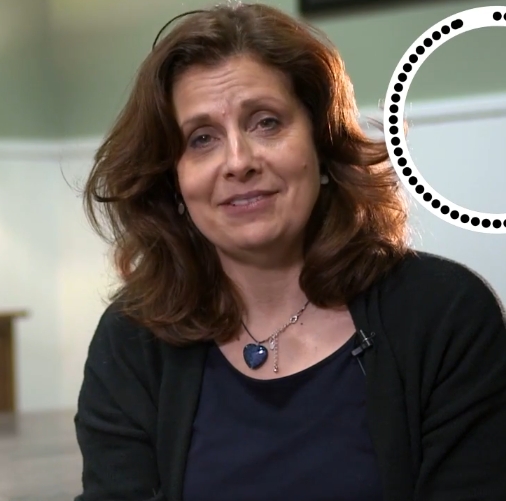
Rebecca Front has a subtle disarming quality. Over the course of a career that most actors would quietly envy, she has made Britain laugh for more than thirty years, first as the razor-sharp Nicola Murray in “The Thick of It” and then as Chief Superintendent Innocent in “Lewis”. She is astute, calm meticulous in her work. This may be the reason it was so unexpected when she started talking candidly about the thing that had been bothering her on the inside her PTSD experience.
When someone gives a flawlessly calibrated comedic performance, it is easy to forget that something challenging might be going on off-screen. People who are funny in public are often assumed to be okay in private. That is rarely the case in Front’s case, it was obviously not. Between the panels, the drama series the Guardian columns, Front eventually realized that she was suffering from post-traumatic stress disorder, a condition that doesn’t exactly flash neon signs. It usually comes silently and stays.
Front has talked about taking a break from the fast-paced world of television and recording her podcast “Three People” in what she called a garden shed. That picture of a BAFTA winner and an Observer-listed comedian sitting in a shed with a microphone is almost purposefully unglamorous.
It also seems intentional. Perhaps the shed, with its everyday quiet, was just what she needed. She claims that podcasts have taken the place of Twitter as a more subdued and thoughtful way for her to interact with the world. When someone is recalibrating after illness, that kind of deliberate withdrawal makes some sense.
Easy simplification is what the Rebecca Front illness story resists. She is not the type of person who uses personal suffering as a publicity stunt. Her autobiographical writing, especially her 2014 book “Curious: True Stories and Loose Connections”, reveals a person who examines her own life with the same scrutiny she might apply to a character, processing experience with wit and careful distance. It requires a specific type of emotional intelligence. Perhaps it also requires a certain level of bravery to admit that the instruments you employ to see the world clearly don’t always shield you from its harm.
Observing how Front has handled this gives me the impression that she has approached her own well-being in the same methodical manner that she has always approached her work that is, without melodrama and without losing her sense of humor. Vulnerability is difficult to accept in the comedy industry, as any working actor would tell you. Weakness is often concealed by wit, but this person has gradually allowed the mask to come off.
It’s important to note that complex women have always appealed to Front. In “Nighty Night”, she portrayed Cathy, a character with multiple sclerosis who navigates neglect with dark humor while surrounded by chaos. She has depicted people who are distressed or on the verge of collapse. The emotional territory she has ventured into on the job may or may not be coincidental with some of the challenges she has encountered on a personal level. There isn’t always awareness of such overlap. It is frequently illuminating.
It may be the most difficult role of all for an actress who has been watched for decades to turn the lens inward honestly without performance. Whatever the full extent of Rebecca Front’s illness, it serves as a reminder that those who appear to be most adept at understanding the world are also the ones who are most subtly struggling with their own. She is still working and writing here. That in and of itself says something worthwhile.