

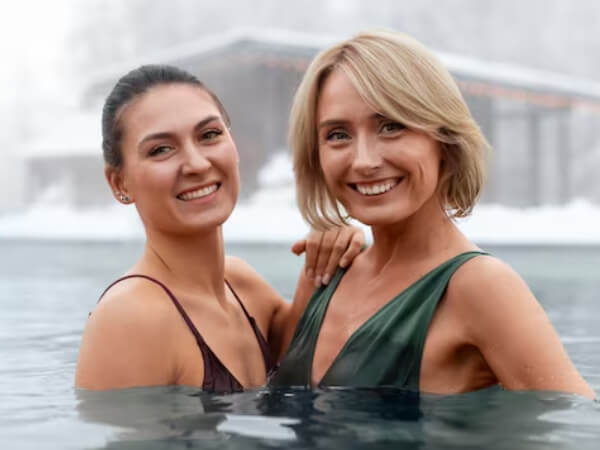
A group of women standing at the edge of a chilly, open body of water before the majority of the city has had its first cup of coffee has a subtly radical quality. Lane ropes are absent. No chlorine. They are not being timed. Simply the attraction of something fundamental and the companionship of other women who share this feeling.
For years, women-only wild swimming groups have been expanding throughout London; however, the term “growing” may be inaccurate, as they are more akin to surfacing. They operated through Facebook pages, WhatsApp threads word-of-mouth they were constantly present, informal self-organized. The fact that more women appear to be searching for them has changed.
It’s easy to understand the appeal. There are risks associated with wild swimming alone, such as cold water shock, currents unfamiliar surroundings. Swimming in a women-only environment adds a level of comfort that mixed groups may not be able to provide. When there are only women in the group, something seems to change. The discourse shifts. The tempo shifts. Perhaps people are more open about their feelings of coldness, anxiety weak swimming abilities. It’s likely that being honest saves lives.
Communities centered around this type of environment have been subtly created by groups such as the “Beckenham Bobbers”, who gather at Beckenham Place Park Lake on Sunday mornings at 9 a.m. Surrounded by historic parkland, the Park Lake is located in southeast London. On a winter’s morning, it can seem incredibly remote from the city.
Not all of the listed groups are currently accepting new members, the Outdoor Swimming Society, which keeps a directory of swim groups throughout the UK, is a helpful place for anyone looking to find their closest group. This is where the Bobbers are listed.
“Hampstead Ponds” is still the most well-known wild swimming area in north London for women. Despite being in existence for more than a century, the Ladies’ Pond on Hampstead Heath continues to attract swimsuits all year round, even during the winter months when the water temperature falls to truly uncomfortable levels. It is somewhat different from the grassroots culture of wild swim groups because it is controlled rather than unofficial, has an admission fee has lifeguards. It’s where the habit begins for a lot of women.
The “Tidal Thames Swims” group is based at Black Lion Steps in Hammersmith, further into the city. Tidal patterns, water quality river traffic are all factors that must be taken into account when swimming in rivers responsible organizations take this seriously.
Swimsuits in open water groups are expected to evaluate their own risk and swim within their own capabilities, according to the OSS Swim Responsibility Statement. No group, no matter how friendly, can accomplish that for you. Before you enter, it’s important to be honest with yourself.
The Bluetit Chill Swimsuits community, a nationwide network that has expanded significantly over the past few years and typically has a strong female membership across many of its local chapters, including those in London, may be the easiest way to find a women-only group rather than using a formal directory at all. The entire ecosystem is now more visible thanks to their presence on Facebook and Instagram.
Anyone who spends time in these circles is struck by how seriously members take the unofficial responsibility they have all taken on. These organizations lack formal organization, lifeguards traditional insurance.
They have a common understanding that everyone watches out for one another and that doing it correctly is more important than almost anything else. This model appears to be working for the time being, though it’s still unclear if it will scale indefinitely as interest increases. Before the rest of the city awakens, in cold water, quietly and consistently.
i) https://www.outdoorswimmingsociety.com/uk-wild-swimming-groups/
ii) https://frogmom.com/wild-swimming-in-london/
iii) https://www.better.org.uk/what-we-offer/activities/swimming/open-water-swimming