

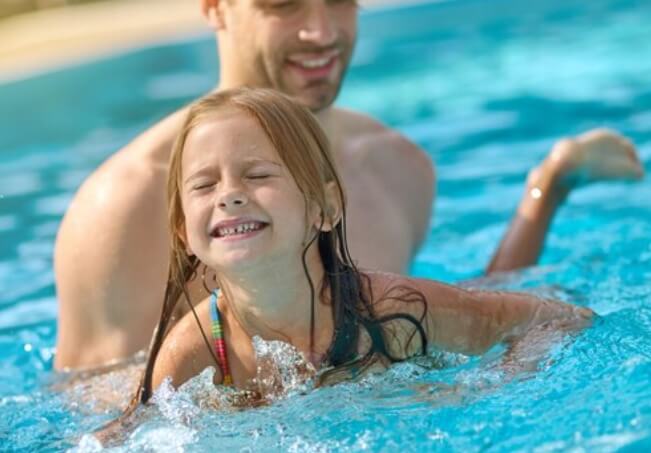
The warm, chlorinated air greets you as soon as you enter a south London recreation center on a Saturday morning. Toddlers are wrestled out of their puffy coats by their parents. A young child, perhaps four years old, treasures a pair of yellow goggles. A teacher is gently encouraging a row of kids to blow bubbles somewhere behind the glass, and the majority of them are complying. Some aren’t. All of this, the routine scene of children taking swimming lessons in thousands of pools every weekend, doing work that doesn’t always receive the recognition it merits, is subtly amazing.
A portion of the story is revealed by the numbers. Over 200,000 people receive lessons from Better, the biggest provider in the UK, each week. Thousands more are handled by Places Leisure, Active Lambeth, and Swim England’s network of approved pools. In any given week, more kids may complete structured swim programs than participate in the majority of other extracurricular activities put together. Conversations on the poolside benches reveal a slight shift in the reasons why parents enroll their children.
| Information | Details |
|---|---|
| Topic | Kids Swimming Lessons (UK) |
| Governing Body | Swim England (National Governing Body for Swimming) |
| Framework Used | Swim England Learn to Swim Pathway (Stages 1–7) |
| Recommended Start Age | 3 months (parent-and-baby) to 4 years (independent lessons) |
| National Curriculum Standard | Swim 25 metres confidently + perform safe self-rescue |
| Largest UK Provider | Better Swim School (200,000+ swimmers per week) |
| Common Lesson Cost | £6–£15 per group session, depending on region |
One reason is that parents are becoming more concerned about water safety. One of the most frequent causes of unintentional death in children is still drowning, which makes parents uneasy. Every child in England must be able to swim 25 meters with confidence and perform self-rescue by the time they graduate from primary school, according to the national curriculum. Many people don’t. Schools cover as much as they can, but pool time is squeezed, and lessons scheduled outside of school hours are frequently used to fill the void quietly, costly, and persistently.
And then there’s the age question, which appears in every conversation by the pool. Although baby and toddler classes are now common starting at three months of age, the conventional wisdom suggests that children have sufficient coordination to begin swimming around the age of four. Critics claim that babies are incapable of learning to swim, and they are partially correct. Comfort the lack of fear and the readiness to submerge one’s face in water without recoiling is what those early sessions actually teach. Instructors will tell you that this foundation makes the rest of the process easier.
A brief lesson in human nature can be learned by watching a Stage 1 lesson. Some kids get into it right away, kicking with a kind of happy mayhem. Others cling to the wall, their lower lip quivering and their eyes wide. The teachers never seem hurried, and the good ones are truly impressive. They wait, they encourage, and they give praise. Observing them gives the impression that the relationship being developed with water itself is more important than the technique being taught. Once fear is ingrained, it is difficult to eradicate. Once gained, confidence usually endures.
For the most part, this is a good thing because lesson structures themselves have become more standardized. Swim England’s Learn to Swim Framework, which includes seven progressive stages, app-based progress tracking, badges, and more, is currently used in the majority of UK programs. Even though this gamification of a fundamental life skill can occasionally feel a little corporate, kids actually seem to enjoy it. Recently, a friend’s daughter advanced from Stage 3 to Stage 4, and she handled the news as though she had won a national championship.
It is worthwhile to identify the system’s gaps. In many places, private one-on-one instruction is still costly and on waitlists. Although collaborations with nonprofits like Level Water are beginning to change this, children with physical or sensory disabilities still don’t always find inclusive services near home. Families who might have otherwise completely avoided the pool are now able to participate thanks to women-only sessions taught by female instructors. Uneven progress.
It is also worth mentioning the cost issue. The cost of a weekly group lesson can range from £6 to £15 per session, occasionally more, and the suggested method consistent instruction over several months quickly adds up. While some councils provide subsidies, others do not. Although chains like Better and Places Leisure offer free swimming for kids enrolled in lessons, the basic math isn’t affordable for families with lower incomes. It’s difficult to ignore the fact that a life-saving ability is somewhat restricted by household budget and postcode.
Even so, the difference over the course of a year or two is remarkable for the kids who survive. The eight-year-old launching themselves off the side without thinking transforms from the wide-eyed novice clinging to a float. They settle into something. They carry it with them for the rest of their lives, whether they go on to compete, swim casually with friends on vacation, or just know what to do if they ever fall into deep water. Even though the system surrounding it could be much better than it is now, that seems like a result worth defending.
i) https://www.placesleisure.org/learn-to-swim/free-swimming-with-children-s-swim-lessons/
ii) https://www.swimming.org/learntoswim/find-swimming-lessons-for-your-kids/
iii) https://www.leisurecentre.com/willesden-sports-centre/swimming-lessons
iv) https://be-well.org.uk/what-we-offer/swimming-lessons/