

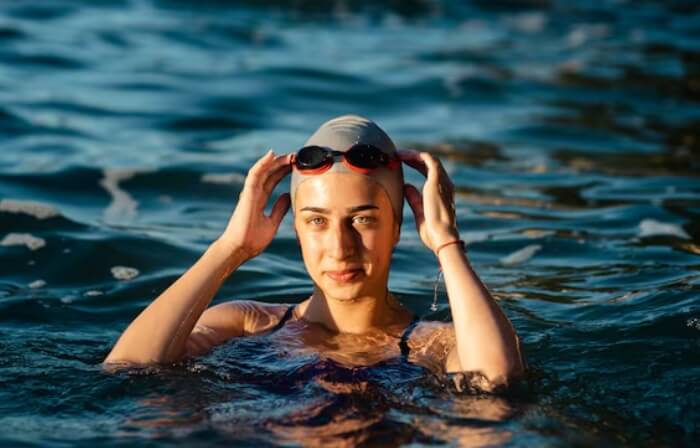
A certain type of British summer afternoon culminates in someone getting drenched on a grassy bank with a towel draped over their shoulders while simultaneously shivering and laughing. The scene is well-known Strangely, the part where the child in question can actually swim is becoming less familiar. The nation appears to be waking up to that quiet shift. For a long time, swimming was seen as a fun extracurricular activity for kids that fell somewhere between Saturday football and piano lessons.
Schools, parents, and life-saving organizations now discuss it with a level of urgency that was unheard of ten years ago. Furthermore, the statistics supporting that urgency are unsettling. Over 44% of the approximately 307 accidental drowning victims in the UK and Ireland never intended to be in the water. They slipped. They were taken by surprise. A walk by a canal, a misjudged step on a riverbank, an inflatable carried by a sudden gust on the coast.
The statistics are particularly unsettling because of something unique about inland water. More than 60% of these incidents occur in rivers, lakes, and canals exactly the kinds of locations that people in the UK pass by on a daily basis without giving them much thought. In summer, a river appears leisurely and artistic. Seldom is it. For years, water safety organizations like the RLSS UK have been attempting to bring these unglamorous realities such as cold water shock, hidden currents, weeds, and abrupt depth drops to the public’s attention.
| Key Information | Details |
|---|---|
| Topic | Swimming as an essential life skill in the United Kingdom |
| Annual Drownings (UK & Ireland) | Approx. 307 accidental drownings each year |
| Unintentional Water Entries | Over 44% never meant to be in the water |
| Inland Water Incidents | More than 60% occur in rivers, lakes, and canals |
| Children Affected by Lost Lessons | Nearly 2 million in England (pandemic-related) |
| Parental Concern | 55% unsure their child would know what to do in open water |
| Confidence Boost from Lessons | 84% of parents report improved self-esteem |
| Key Campaign | Drowning Prevention Week (mid-June) |
| Lead Authority | Royal Life Saving Society UK (RLSS UK) |
It’s difficult to ignore how the pandemic made everything more difficult. Pools were shut down. Swimming lessons in schools quietly disappeared from the schedule, and in many places they never came back. It may seem like a fabricated statistic for a headline, but the current estimate that almost two million children in England alone did not participate in school swimming is accurate. Any manager of a leisure centre in the Midlands or the North will tell you the same story: a generation of nine and ten-year-olds attending classes years later than they should, sometimes for the first time. Instructors claim that classes for beginners are now overcrowded with kids who should be proficient swimmers by the previous standards.
Then there’s the issue of parental confidence, which seems to be almost as telling as the child data. Approximately 55% of parents in the UK have acknowledged that they are unsure if their child would know what to do in the event of an open water fall. Saying that aloud is a powerful statement. It implies a quiet, pervasive recognition that the fundamental safety net most families believed to be in place school lessons, beach vacations, and a casual familiarity with water has frayed.
The image isn’t totally depressing, and drowning isn’t the only topic of discussion. Alongside this, Swim England’s research reveals something that most parents already have a sneaking suspicion about: swimming lessons do more than just teach kids how to swim. 84% of parents claim that lessons have increased their child’s self-esteem or confidence. Approximately two-thirds report that their child made new friends as a result. Children learn patience, coordination, and the kind of slow resilience that comes from showing up to something twice a week even when the water feels cold and the changing room smells slightly of chlorine and damp socks. This experience has a subtle, almost incidental social benefit.
The little moments are when you can see it most clearly. Six months ago, the child was afraid to put their face under the surface; today, they do it mindlessly. At Derby’s Lonsdale Pool, a nine-year-old is quietly making progress from clinging to the wall to managing a clumsy front crawl across the shallow end. These changes aren’t particularly noticeable, but they do add up. There’s a feeling that what’s being learned by the pool is something more general, like body awareness, composure, and perseverance.
It’s also difficult to overlook the class gap in all of this. A large portion of the responsibility that schools once held has been taken on by private clubs and after-school programs. For families who can afford weekly lessons, that works well; for those who cannot, it is less effective. The children who are most likely to live close to unsupervised areas of open water or canals are also the ones who are most likely to miss out on lessons, as drowning prevention advocates have pointed out quite bluntly. Local authorities have not yet provided a complete solution to this uncomfortable equation.
It remains to be seen if the nation will change its direction in this regard. School swimming funding is still inconsistent. Closing pools is a common backstory, especially in older, council-run recreation centers that are having financial difficulties. Charities like RLSS UK continue to push the Water Safety Code into schools, offer free resources, and hold Drowning Prevention Week every June, but they face challenges.
It appears that families’ perspectives on this are changing. Lessons are now described as non-negotiable by parents who previously thought of them as optional. The term “life skill” is used without irony. Additionally, lines are forming outside community pools that didn’t exist three years ago on summer evenings in towns from Derby to Devon.
It’s possible that swimming will reclaim its former position in British childhood over the course of the next ten years not as a sport or a pastime, but rather as something more closely related to road safety. The nation subtly demands this ability. As the discussion progresses, that future seems more plausible than it did a few years ago. There is no guarantee.
i) https://www.lsst.org.uk/why-learning-to-swim-is-a-life-skill-every-child-needs/
ii) https://www.virginactive.co.uk/blogs/articles/2025/11/05/9-reasons-swimming-is-an-important-life-skill-for-your-child
iii) https://www.wiltshire.gov.uk/article/10040/Swimming-lessons-key-for-children-to-develop-wider-life-long-skills
iv) https://www.lleisure.co.uk/blog/why-learning-to-swim-is-an-essential-skill/
v) https://www.politicshome.com/opinion/article/swimming-lifesaving-skills-no-school-lessons-leave-poorer-children-risk-drowning