

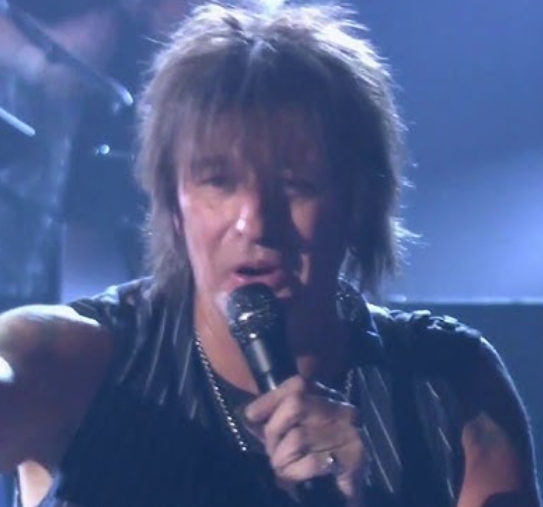
The current state of Richie Sambora’s finances is almost comical. Even though he hasn’t released a major album in years and hasn’t toured with Bon Jovi in over ten years, the checks continue to come in. He co-wrote a few songs in the back rooms and rehearsal spaces of New Jersey in the mid-1980s, which contributed significantly to his estimated net worth of $150 million. You only need to write “Livin’ on a Prayer” once to receive eternal compensation. That’s the situation.
It should be noted that the numbers are shaky. It’s difficult to determine a working musician’s true wealth, as evidenced by the fact that some outlets have floated figures closer to $65 million or $100 million. Royalties are subject to change. Real estate is purchased and sold. Catalogs are traded. It’s evident that the higher estimate, which Celebrity Net Worth consistently returns to, represents a career that generated an exceptionally high volume of long-lasting, licensable content. Songs that, decades after they were recorded, are still played at ball games, weddings, and movies.
He didn’t begin in a glamorous setting. Growing up in Woodbridge, Sambora learned to play the accordion before the guitar ever made sense to him. He was the son of a factory foreman and a secretary. Over the years, he has shared a story about how he began to take his music seriously after Jimi Hendrix passed away, as though the loss opened something. His playing reflects that ancestry. His solos seem to fit into the song rather than stand out above it, thanks to the blues phrasing and restraint. That instinct made him stand out in the glamorous 1980s, when guitar heroes were all over the place.
| Bio Data | Details |
|---|---|
| Full Name | Richard Stephen Sambora |
| Born | July 11, 1959, Perth Amboy, New Jersey |
| Profession | Guitarist, Songwriter, Singer, Producer |
| Best Known For | Lead guitarist of Bon Jovi (1983–2013) |
| Estimated Net Worth | ~$150 million |
| Hall of Fame | Rock and Roll Hall of Fame (2018), Songwriters Hall of Fame (2009) |
| Solo Albums | Stranger in This Town, Undiscovered Soul, Aftermath of the Lowdown |
| Spouse | Heather Locklear (m. 1994–2007) |
| Children | Ava Sambora (b. 1997) |
| Reference | Celebrity Net Worth |
It nearly took a different turn. After Ace Frehley left, he tried out for Kiss, but someone else was hired. In retrospect, a near-miss like that seems inevitable, but it must have hurt at the time. Then he happened to wander into a Bon Jovi rehearsal, and according to most accounts, as soon as he plugged in, the band sounded better. He was immediately hired. That one room gave rise to everything else, including stadiums and platinum records.
Sambora’s worth extended beyond the guitar. It was the collaboration. He and Jon Bon Jovi went on to become one of the most successful songwriting teams in rock, and when it comes to money, that distinction is crucial. Players are compensated for their performances. Every time a song appears anywhere, songwriters are compensated. He was in possession of “You Give Love a Bad Name”, “Wanted Dead or Alive”, “Bad Medicine”, and “It’s My Life.” Just the talk-box riff on “Livin’ on a Prayer” became one of the most iconic sounds of the time, and such recognition is an annuity in terms of money.
In 2020, he made what may have been the most significant financial decision in his life. For an undisclosed sum, Sambora sold Hipgnosis Songs Fund the rights to his 200-song catalog. Around that time, catalog sales were skyrocketing, many legacy artists were cashing out, and investors were treating old hit songs like bonds. Sambora might have timed it perfectly. It’s also possible that he was just concerned about the steady stream of royalties. In any case, that transaction most likely accounts for a sizeable portion of the $150 million that is associated with his name.
He appears to be aware that his solo work has never been as successful as Bon Jovi’s. Records like Aftermath of the Lowdown, Undiscovered Soul, and Stranger in This Town were created by people pursuing goals other than the charts. They tend to be introspective, bluesy, and a little restless. They didn’t make him wealthy. They reminded people that he existed on his own terms, which may have been more significant for a man who was so closely associated with one band.
Then came 2013 and Bon Jovi’s sudden mid-tour departure. Fans were taken aback. Initially ambiguous, the explanations eventually focused on family, weariness, and tension in the background. He stated that he had to be present for his daughter, Ava. In any case, the band continued without him, and it was difficult to replace the chemistry that drove those early hits. From a distance, it seems as though the split cost Bon Jovi something that money couldn’t replace.
Each of the personal chapters was significant in and of itself. He and Heather Locklear’s marriage ended in 2007, but they remained close because of Ava. This past spring, they reunited to walk their daughter down the aisle at her Montecito wedding in a brief but poignant moment. The symmetry there is difficult to ignore. Together, two professions that once characterized celebrity stand for something wholly commonplace and human.
What does that mean for the ledger? Clearly comfortable. The catalog has been made profitable, royalties continue to flow, and he is kept in the spotlight by the occasional charity performance or guest appearance. Given Jon’s vocal issues in recent years, it is unclear if Sambora will ever fully rejoin Bon Jovi. A reunion is no longer necessary for the fortune to continue expanding. That’s what the songs are doing by themselves.
i) https://en.wikipedia.org/wiki/Richie_Sambora
ii) https://www.therichest.com/celebnetworth/celeb/musician/richie-sambora-net-worth/
iii) https://www.grunge.com/400508/heres-how-much-richie-sambora-is-actually-worth/
iv) https://blabbermouth.net/news/richie-sambora-says-he-has-more-than-two-albums-worth-of-solo-music-sitting-in-the-can