

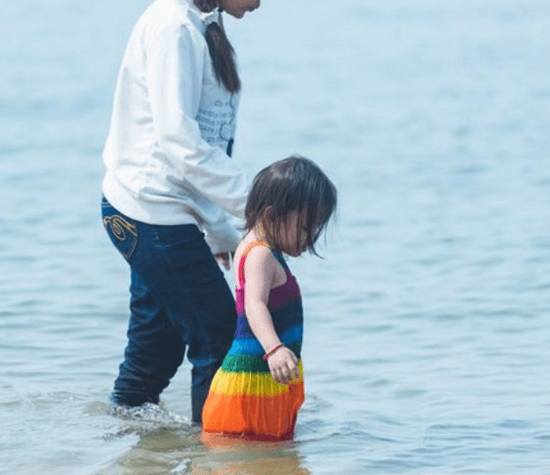
There is a special pause that happens near water, a split second when a parent knows how easily fun may tilt into danger. It is subtle, nearly imperceptible, yet obviously serious.
At a local pool last summer, I observed a kid lean too far toward a floating toy. The water did not splash or shout; it quietly accepted the child’s weight. The parent’s reaction was immediate and steady, but the lesson was lasting.
Moments like those have altered modern parenting. Water safety is no longer considered as an optional activity, categorized under piano or soccer. It is discussed with the same practical urgency as buckling up a seatbelt or donning a helmet.
| Key Context | Details |
|---|---|
| Global Risk | Drowning is one of the leading causes of unintentional injury death worldwide, particularly among children. |
| Age Group Impacted | Drowning consistently ranks among the top causes of accidental death for children aged 1 to 14. |
| Prevention Insight | Research shows participation in swimming lessons and water safety education reduces drowning risk. |
| Beyond Swimming | Modern programs emphasize floating, treading water, hazard recognition, and emergency response. |
| Parental Role | Active supervision and early instruction are widely recognized as critical prevention strategies. |
Families have been surrounded by more water than ever in the last ten years, from resort holidays that promise limitless aquatic pleasure to backyard pools. Access has expanded, and with it, responsibility has grown tremendously.
Data on public health has been very illuminating. Drowning remains a prominent cause of unintentional injury death globally, accounting for around seven percent of such fatalities. Those numbers, plainly presented, have transformed conversations at kitchen tables nationwide.
Once thought to be sufficient, supervision is now viewed as merely one layer. Parents have learnt, sometimes unwillingly, that presence alone is not a guarantee. Drowning is frequently silent and can unfold surprisingly identically across very different households.
In this scenario, swim instruction have taken on a new meaning. They are not about immaculate strokes or competitive ambition. They are about teaching a youngster to float, to tread water, to identify the wall, and to climb out unassisted.
Those simple drills, repeated repeatedly, are very effective. They establish muscle memory while also building composure, encouraging children to respond rather than panic. That calm response can be particularly valuable when seconds matter.
Modern swim instruction has become considerably better in tone and structure. Instructors guide children progressively, lowering fear while slowly building competence. The approach feels extraordinarily straightforward and intentionally supportive.
Fear, after all, is common. Some children clutch to the pool edge with white knuckles, navigating each step forward. Through regulated exposure, they learn that water may be managed, respected, and even enjoyed.
By practicing floating and controlled breathing, youngsters are not only strengthening their bodies but also training their nervous systems, relaxing themselves while facing uncertainty. That emotional management is highly adaptable and transfers beyond the pool.
Parents have started speaking about water readiness the way they talk literacy. It is fundamental to them. A youngster who can navigate water safely is a child who carries a skill that is remarkably reliable across contexts, from lakes to hotel pools.
Yet even as swim skills have considerably improved access to safety, guidance remains firm on one point: supervision is vital. No lesson replaces attentive eyes and interested adults.
This reality is complicated by phones. While a child strays farther than planned, a parent may be physically near yet mentally far, looking down for a message. The distraction feels harmless until it is not.
That is why water safety now resembles a tiered system, extremely efficient and purposely redundant. Lessons increase competency. Life jackets add buoyancy. Access is limited by barriers. CPR training prepares adults for emergencies.
Families are embracing this strategy at an early age through parent-child workshops and community events. While parents learn preventative techniques, infants are carefully introduced to water to help them become more comfortable. These programs are often surprisingly inexpensive and readily available.
For older children, systematic sessions develop technique while emphasizing rules. They practice safe entry and exits, learning to assess depth and circumstances. They rehearse rescue principles, reaching or throwing help rather than rushing in impulsively.
In the context of childhood independence, these lessons are particularly unique. They properly provide independence, giving kids both skill and judgment. A confident swimmer is not irresponsible; they are informed.
Parents now ask useful questions regarding lifeguards, currents, and policies for supervision while on vacation. They bring life jackets with the same habitual assurance as sunscreen. The mindset has moved from reactive to proactive.
Since public awareness efforts escalated, communities have seen drowning risks considerably reduced where education and access to training are consistent. Even if they are slow, the outcomes are positive and promising.
There is also something quietly transformational about adults participating in basic lessons. Watching a parent overcome long held fear can be extremely encouraging for a youngster, exhibiting resilience in real time.
Families reinforce a strong message by learning together: safety is shared and growth is continuous. Skills can be gained, polished, and strengthened at any age.
After all, water is neither an enemy nor a friend. It is a force that rewards preparation. With systematic training and conscious monitoring, families can approach it confidently rather than nervously.
In the coming years, water safety will likely continue improving, molded by research, community investment, and technology enhanced training. There is hope and clarity in the direction.
Instead of wishing for the best, parents are actively getting ready for it. By embracing water safety as a key life skill, they are producing a generation that approaches water not with dread, but with informed confidence and steady respect.