

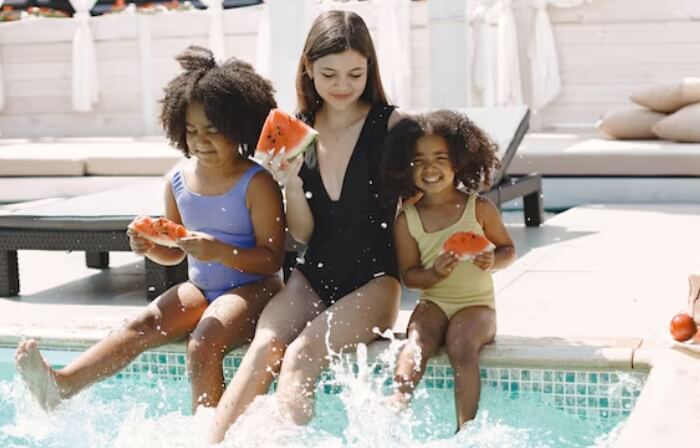
A Saturday morning at the neighborhood recreation center has an almost predictable quality. The air was heavy with the pungent stench of chlorine. The corridor was lined with wet footprints. Before a parent can even put on their swimming cap, there’s a child somewhere screaming with joy. The scene is becoming more and more common across the nation, and it’s difficult to ignore how consciously families appear to be selecting it.
Of course, swimming has always existed. There seems to be a subtle change in how families view it; it’s no longer merely a lesson to cross off the weekly schedule. A trip to the park or watching a movie at home just doesn’t keep the entire week together, but for an increasing number of parents, the weekend pool session has evolved into something more akin to a ritual.
| Topic Overview | Details |
|---|---|
| Activity | Family Swimming |
| Best For | All ages — babies, children, teens, adults, seniors |
| Key Benefits | Full-body workout, motor skill development, stress relief, family bonding |
| Recommended Frequency | 2–3 sessions per week (per NHS guidelines) |
| Ideal Time | Weekend mornings or after school |
| Governing Body (UK) | Swim England — national governing body for swimming |
| Physical Benefit | Burns similar calories to running with low joint impact |
| Mental Health Benefit | Reduces anxiety, builds self-esteem and confidence in children |
The fact that it is genuinely beneficial to all parties involved is part of what makes it work, at least physically. Unlike running or cycling, swimming works every muscle in the body without putting undue strain on the joints. In the water, children acquire motor skills and coordination that will benefit them throughout their physical lives. It’s one of the few activities that keeps you moving without running the risk of causing harm to elderly family members, including grandparents who might participate. Children should engage in at least 60 minutes of physical activity each day, and adults should strive for two and a half hours of moderate exercise each week, according to the NHS. It turns out that one of the best ways to work toward both at once is to take a family swim.
Most parents will cite something more difficult to quantify than fitness as the reason they continue to visit the pool. It’s hard to create the intimacy that occurs in the water. Perhaps it’s the absence of phones. No television background noise. Don’t split your focus between the buzzing notification in your pocket and the child in front of you. Families appear to be finding the pool’s demanding presence refreshing in a way they weren’t fully prepared for.
What these parents are sensing is supported by evidence. Youngsters who engage in more physical activity typically exhibit greater self-assurance, reduced anxiety, and improved social skills. Swimming may hasten a child’s development of self-confidence, trust in the water, and growing trust in those around them. The kind of moment that quietly lingers with a family is witnessing a reluctant four-year-old kick across the shallow end to reach a parent who is waiting.
Additionally, the social aspect is often disregarded. Recreational pools are truly communal areas. Regular swimmers learn how to interact with other children during free-swim sessions, share a lane, and take turns on the steps. These are modest, everyday social lessons rather than big ones. They add up. A child who is at ease in a public pool typically exudes a certain ease that comes from more than just structured classroom activities.
The swim session provides parents with something that many acknowledge they weren’t looking for: time to spend with their kids without having to worry about the details. There are no taxes on anyone. There’s nothing to put together. Everyone is just in the pool together for about an hour, and the water is sufficiently warm. It sounds humble. It appears to have a significant impact in practice.
It is likely sustained by its ritualistic nature. Families who regularly go swimming on Saturday or Sunday mornings often discuss it in the same way that people discuss their favorite restaurants or dependable walks. The weekend is anchored by it. Midway through the week, the kids begin to inquire about it. Instead of viewing it as just another task that needs to be coordinated, the parents are actually looking forward to it.
It’s still unclear if this is a sign of a broader cultural change or just the result of more families learning what committed swimmers have always known a little later. It’s difficult to deny that something genuine is taking place when you stand at the edge of a recreational pool on a Saturday morning, watching a grandmother float gently while her granddaughter splashes nearby and a father counts to three before making a nervous jump. Not exactly a trend. Something more ancient than that.
i) https://www.placesleisure.org/blogs/benefits-of-family-swim-time/
ii) https://www.swimming.org/learntoswim/family-swimming-journey-far/
iii) https://www.simplyswim.com/blogs/blog/why-swimming-is-the-perfect-family-activity?srsltid=AfmBOoquTfrecFfn2paBAJ4g5VtOZ7DzT7Ttstr787T4xxSNudg-7zR_
iv) https://www.swimdesignspace.com/blog/adult-swimming-lessons-gloucester
v) https://www.everyoneactive.com/content-hub/swimming/half-term-family-swimming/
vi) https://www.essexmums.com/fitness/why-swimming-is-a-great-family-activity/
vii) https://sport.port.ac.uk/news-events-and-blogs/news/half-term-family-swimming
viii) https://birdsandlilies.com/reasons-to-start-swimming/