

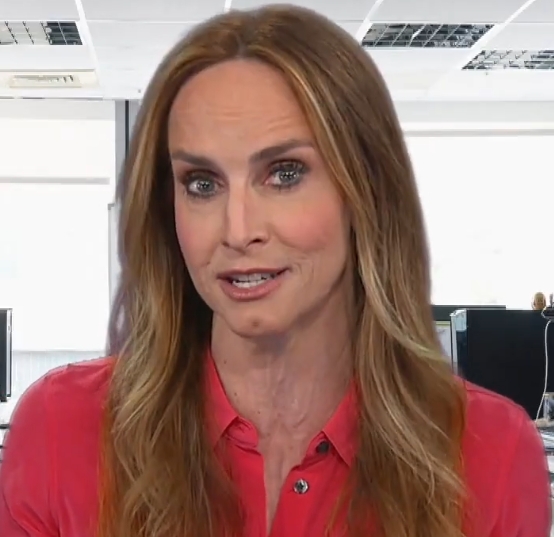
Faith Salie has a disarming quality. She is precise and humorous, the type of person who can mention Leonard Nimoy and Jimmy Carter in the same sentence with ease. Five Daytime Emmy Awards have been won by her. She received a Rhodes Scholarship to Oxford, attended Harvard with honors has been a regular on NPR’s “Wait Wait… Don’t Tell Me”! for many years.
The woman appeared to have life figured out early on, but underneath all of that, there was something subtly unraveling that she would eventually put into words, on stage, in print, in candid conversations that most people in her position would have completely avoided.
Salie has been candid about her struggles with depression and anorexia, two disorders that don’t really care how good your resume is. The story of Faith Salie’s illness is not one of abrupt crisis or catastrophic breakdown.
The kind of erosion that occurs when a person spends decades looking for outside validation in settings that are unable to offer it is slower and more subtle. She described herself as an approval junkie. It began as something much more intimate and difficult to describe, but it eventually became the title of her book and a solo Off-Broadway production.
After Oxford, she moved to Los Angeles and, at the age of 26, lost her mother. Geographically disoriented, she was working thru professional setbacks while observing colleagues create lives that felt well-organized and merited in contrast to her own. Women are particularly cruelly treated by the entertainment industry, which continuously evaluates their attractiveness, thinness level of interest.
That kind of unscientific, arbitrary frequently cruel judgment struck differently for someone who had always found her footing thru academic success. It’s easy to see how that setting, which exacerbates grief and uncertainty, could lead to depression and disordered eating. Salie has admitted both.
Because she doesn’t present it as a chapter that she neatly closed and moved on from, her account of it is valuable. As you listen to her talk, you get the impression that these experiences have influenced the way she now views everything her career, her relationships her late-life motherhood.
She returns to the fact that she became a mother for the first time in her forties with a kind of productive restlessness and evident wonder. She says that when you’ve already spent years learning the hard way what it really costs to be absent from yourself, the question of how to strike a balance between intense ambition and being there for a child feels more pressing.
Some of this topic is covered in her book “Approval Junkie” with a lightheartedness that shouldn’t be confused with diversion. With the assurance of someone who has thot things thru enough to laugh at them, Salie writes about pageant victories, divorce, grief exorcisms, both literal and figurative. The health component particularly the mental health component carries weight.
Depression is not a peculiar topic for an essay. Anorexia is not a plot device. The fact that she talks about them in addition to her professional achievements and humorous observations reveals something about her refusal to divide her life into what is and isn’t appropriate to share.
As her career develops, it’s still unclear how much she will continue to share in public. Salie has always seemed to be more interested in open communication than in managing one’s own brand, which is a unique talent in the media.
Her observations on CBS Sunday Morning range from the ridiculous to the truly poignant. Her NPR paneling is quick, warm sharp. Behind the humor and off stage, there is a person who understands what it’s like to lose someone irreplaceable and to feel invisible in a city that is meant to help you find your way back to something more resilient rather than who you were before.
That may be why her illness story is worthwhile to comprehend. As texture rather than as tragedy or victory. The kind of information that clarifies how someone so well-groomed can still feel entirely authentic.