

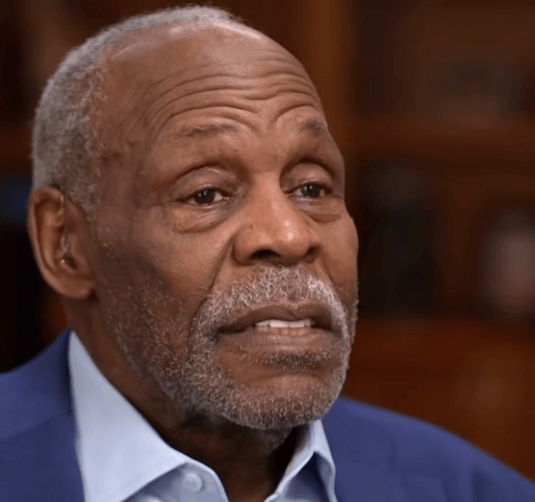
Danny Glover has always seemed to have a timeless quality. Perhaps it was the calm, grounded authority he brought to Roger Murtaugh throughout the four *Lethal Weapon* movies, which gave you the impression that he could outlast anything. Perhaps it’s the breadth of a life lived with a unique purpose, the decades of work, or the political activism.
When Glover’s diagnosis of Alzheimer’s disease was announced in July 2026, the response in Hollywood and beyond was especially significant. It was more than a health announcement. Something seemed to be changing.
Glover, who was born in San Francisco on July 22, 1946, is eighty years old. His life has never been straightforward. His parents were NAACP activists and postal workers. Despite having epilepsy as a teenager, dyslexia, and an early awareness of his own “diminished expectations,” he managed to secure one of the most diverse careers in American cinema.
He worked in city administration for years before taking what he once referred to as “a leap of faith.” He didn’t begin acting professionally until his thirties. What he created seems even more deliberate because of that late start.
The long chapter comes to an end with the diagnosis of Alzheimer’s. Glover appeared in *Jumanji: The Next Level*, played Santa Claus in a Disney+ movie, and continued to make appearances in smaller independent projects with the kind of low-key dedication that characterizes his late career.
When I saw him in *Sorry to Bother You* in 2018, there was something about him that gave the impression that he was totally at ease with the industry and unaffected by its fads. The exact onset of symptoms and the extent of the condition’s progression are still unknown. Glover hasn’t yet made those details available to the public.
This is more difficult to accept because Alzheimer’s is a disease that impairs memory, and one of Glover’s lifelong passions has been memory, particularly the preservation of Black history. He worked for years to adapt the tale of Toussaint Louverture for the big screen. In remembrance of Paul Robeson, he co-founded the Robey Theatre Company. Louverture Films was the name of his production company. For decades, the man has insisted on certain stories being remembered. That is a painful irony.
There is a precedent for complexity in his medical history. Around age 35, Glover’s epileptic seizures stopped. He overcame his dyslexia for the duration of his acting career. He has been candid about feeling uncomfortable and insecure about his physical appearance. At the time they were occurring, each of those things most likely appeared to be the most difficult. Nevertheless, he has outlived them all and is still here.
Glover’s public declaration may be an act of advocacy in and of itself, a sign that Alzheimer’s affects everyone, regardless of accomplishment or legacy. When someone of his caliber chooses openness over silence in such circumstances, there’s an emotion that’s difficult to describe. The conversation is affected in some way.
His filmography is still extensive and truly unexpected in its scope for the time being. *The Color Purple*, *Saw*, *Dreamgirls*, and *The Last Black Man in San Francisco* are all examples of someone who consistently made unexpected choices. That is not erased by the illness. It is unable to. However, it alters the perspective that people will begin to see it through, which might not be totally detrimental. Sometimes a diagnosis compels a career to receive the attention it has always deserved.