

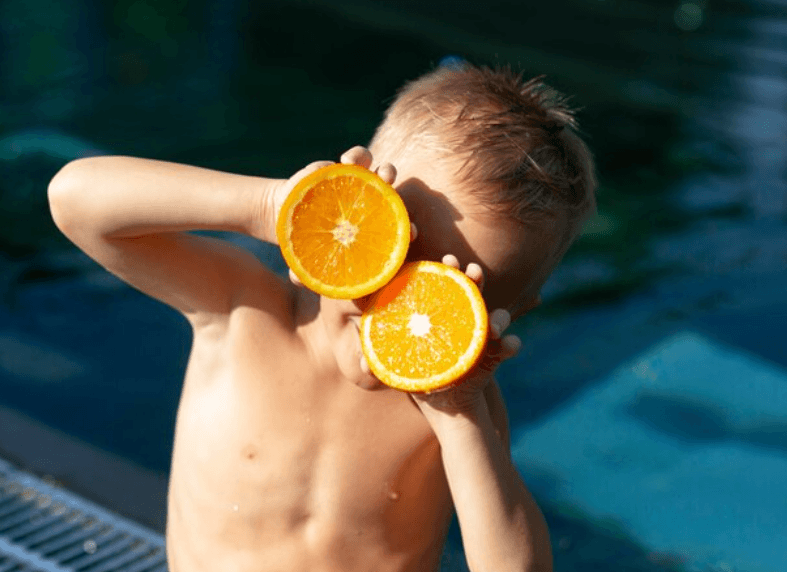
Around the third or fourth swim lesson, a specific moment usually occurs. A child who came to the pool holding a parent’s hand, with their shoulders drawn in and their eyes following the water with a mixture of longing and suspicion, abruptly pushes off the wall by themselves. It’s tiny. Perhaps two seconds pass during it. However, their post-event expression is completely different. That’s more than just a swimming accomplishment. That’s a child learning about the capabilities of their body.
In wellness discussions targeted at adults, body positivity has become somewhat of a buzzword, frequently focused on appearance and social media pressure. However, the path to genuinely feeling good about oneself is quieter and more physical for kids than any hashtag campaign might imply. It turns out that one of the better ways to get kids there is through unglamorous, sometimes spluttering swimming that smells like chlorine.
| Topic | Swimming and Body Positivity in Children |
| Focus Area | Child Development, Mental Health, Physical Wellness |
| Target Age Group | Infants (6 months) through Teenagers (18 years) |
| Key Benefits | Confidence, Strength, Coordination, Emotional Well-being |
| Recommended Start Age | As early as 6 months (parent-child classes) |
| Primary Skill Type | Lifelong physical and psychological skill |
| Reference / Learn More | pedalheads.com |
Swimming requires complete awareness of the body rather than just performance, which is one way it differs from other physical activities. Children must continuously monitor their arms, legs, and breathing patterns when they are in a pool. They are unable to mentally wander as they might during a jog in gym class or a soccer drill. Over time, this forced awareness subtly alters children’s perceptions of their own bodies. Instead of focusing on shortcomings, they begin to recognize strengths.
This may be the reason why studies on early swim instruction frequently reveal results about self-esteem and confidence that go far beyond the water. According to studies, children who learn to swim at a young age typically develop stronger motor skills, a more stable sense of their own body, and improved spatial awareness. These advantages aren’t theoretical. They are the type that manifest in a child’s demeanor in a school hallway or in their willingness to go first in a frightening situation.
One of the few physical activities that truly accommodates all body types without being ostentatious is swimming. The appearance of a child has no bearing on the water. Buoyancy is democratic. In a pool, a larger child who might feel awkward in a gym class can learn that their body can move through the water with actual force. A smaller child who finds it difficult to handle the pressure of contact sports on playgrounds can find a setting where their technique and accuracy truly matter. There is a feeling that the water’s equality is undervalued because it provides a level playing field that most physical settings just cannot match.
Although more difficult to measure, the mental health aspect is also challenging to overlook. Swimming seems to hasten the calming effects of water because it combines rhythmic movement with deliberate breathing. In that sense, it’s similar to some types of meditation, though most children would strongly disagree. They would likely concur that swimming makes them feel better than they did before. Swimming causes the release of endorphins, which improve mood and lessen anxiety. This biochemical reset has significant practical benefits for kids coping with what adults politely refer to as “big feelings.
The social architecture of swim lessons is another factor to take into account. A specific type of peer relationship based on shared awkwardness and progress is created in group classes. At some point, every child in that pool has breathed in water. Every child has experienced a stroke that they were unable to properly coordinate. A low-key solidarity that doesn’t always develop in more competitive athletic settings is created when people watch each other fail and improve in roughly equal measure. Children support one another, wait their turn, and discover that progress is gradual rather than instantaneous. In the guise of a swimming lesson, these are lessons about perseverance and fortitude.
It’s still unclear how much of this effect stems from regular lesson structure, physical activity in general, or swimming in particular. However, there’s something about the enclosed, steady, and concentrated pool environment that seems to concentrate these advantages in a way that casual sports don’t always match. When a child learns to tread water, they may start raising their hand in class or stop pulling their shirt down self-consciously during physical education, according to parents who enroll their kids in swim programs.
As you watch this dynamic unfold, it’s difficult to ignore the fundamental differences between telling a child they look fine or that their body is beautiful exactly as it is and what swimming offers. Although they function at the level of appearance, those assurances are important. Swimming functions at the level that the body is capable of performing, enduring, and mastering. It is not necessary to tell a child that their body is worthy if they have learned to float on their back, swum their first full length of the pool, or held their breath longer than they believed was possible.
At the end of the day, neither producing elite swimmers nor creating confidence on a schedule are the objectives. It’s more subdued. A child who develops a positive, healthy relationship with their body as a child one based on experience rather than comparison carries that relationship with them for years. It turns out that swimming is a pretty good place to start developing that.