

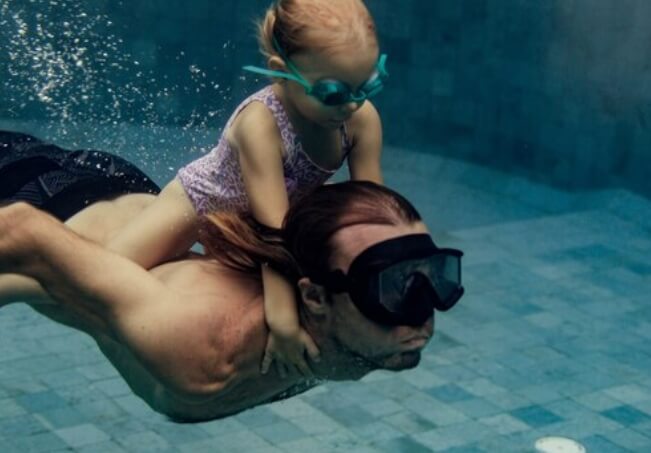
A four-year-old is standing at the shallow end of a community pool in north London on a Tuesday night, refusing to submerge her face. The older children splashing nearby, the sound reverberating off tiled walls, or even the cold are not the cause. The goggles are the problem. They continue to slip. Behind her ear, the strap pinches. For the fourth time, her mother adjusts them while kneeling by the edge in flip-flops. As you watch this little scene unfold, you become aware of how much rides on a piece of equipment that is less expensive than a takeout pizza.
Until they are staring at twenty nearly identical packets in an aisle, parents often underestimate the goggle decision. It seems like it ought to be easy. Seldom is it. Children’s eyes, faces, and tolerance for intricate straps vary greatly, and the wrong pair can make a child dislike swimming for months. This isn’t a dramatic assertion, as anyone who has attempted to persuade a sobbing five-year-old to return to a swimming pool following a Google leak will attest.
Over the past ten years, the market has undergone significant change. Formerly adult-focused brands now create products especially for small faces, sensitive skin, and erratic bath-time energy. Splash About, a British company with a quiet but devoted fan base, divides its line of goggles into two- to six-year-olds’ Infant Guppy and Minnow shapes and six to fourteen-year-olds’ Junior line, which includes the Piranha and Koi styles in hues like Lavender, Pistachio, and Croc Blue. names that seem absurd until you see a toddler’s excitement when they hear the word “Piranha”.
| Information | Details |
|---|---|
| Category | Children’s Swimming Accessories |
| Common Age Brackets | Infant (2–6 years), Junior (6–14 years) |
| Key Features Parents Look For | Anti-fog lenses, UV protection, soft silicone seals, adjustable straps |
| Popular Brands | Splash About, Speedo, Zoggs, Zone3, Decathlon, TYR |
| Typical Price Range | £6 – £25 |
| Standards Worth Knowing | FINA approval (for competition use) |
| Reference Website | Splash About – Kids Swimming Goggles |
Born on Bondi Beach in 1928, Speedo continues to be the talk of the town, particularly among older children who are starting to compete. Zoggs has over thirty years of experience in this field. Predictably, Decathlon undercuts the majority of competitors on price, which is more important than most people realize. With goggles that truly feel like miniature versions of serious adult gear, anti-fog built in, and silicone gaskets that flex without leaving angry red rings, Zone3, founded by triathlon world champion James Lock, has pushed into the children’s market.
All of the technical claims become hazy. anti-fog. UV defense. broad field of vision. buttons that release quickly. Some of these characteristics might be more important in marketing decks than in the real, chlorinated world of a Saturday morning lesson. Fit appears to be the key factor in how parents and children handle this. A goggle that does not crush a small cheekbone while sitting flush against it. a strap that keeps wet hair from tangling. a lens large enough to allow an inquisitive youngster to glance sideways at a friend without completely turning her head.
Another issue is style, which kids completely disagree with while adults ignore it. In the water, a seven-year-old who chooses her own goggles whether they are lime, magenta, or rose behaves differently than one who is given a plain pair from a shared bag. This preference is not insignificant. It’s the distinction between a child who views goggles as protection and one who views them as a form of punishment.
Calculus is different for kids who are competitive. Drag is decreased by low-profile lenses. If a galas circuit is planned, FINA approval is important. When their children are on club squads, parents usually keep two pairs going at all times, one for training and the other hidden for races. They will also discreetly acknowledge that the second pair is on the verge of superstition. Whatever is effective.
Then there is the mask-style category, which has become more and more popular among anxious novices and younger swimmers. The larger lens reduces fog complaints, the wider seal feels less cramped, and most importantly, children can put them on themselves without an adult helping every two minutes. You begin to understand why masks are nearly always advised for children under seven by pediatric swim instructors as you watch this tiny independence grow.
It’s difficult to ignore the extent to which these small choices made in fluorescent-lit stores influence children’s swimming culture. The appropriate pair discreetly fades into the background, allowing a child to focus on learning to be fearless in the water. The entire lesson revolves around the incorrect pair. Parents who have experienced both know which they would prefer to pay for, and the majority will tell you, with a hint of experience fatigue, that it is nearly always worthwhile to spend an additional five pounds up front.
A swimmer won’t be created by the goggles alone. They can ensure that a child wants to return the following week in a small way. And that’s what really matters in the lengthy math of childhood pastimes.