

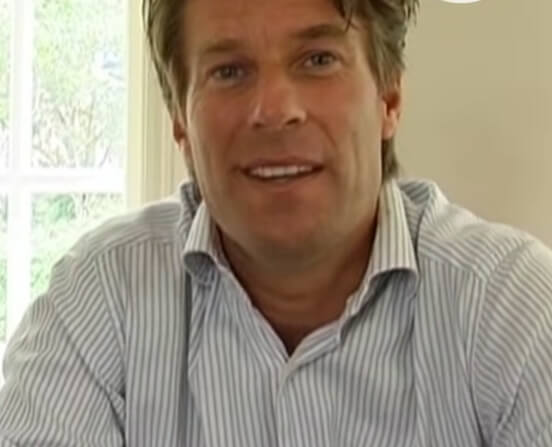
One type of wealth is one that doesn’t show itself. Arguably the most technically talented football player Denmark has ever produced, Michael Laudrup has always possessed that trait both on and, it seems, off the field. For a man who played at the top level of European football for almost 20 years, his estimated net worth of $20 million, or nearly 70 million Danish kroner, feels both noteworthy and somewhat understated. Given the layers of business interests that have subtly gathered around his name, it’s possible that the number is even higher.
By all standards, Laudrup’s playing career was exceptional. Few players in history have won league titles with Ajax, Juventus, Barcelona, and Real Madrid. His yearly salary at Barcelona was reportedly between 9 and 10 million kroner, but when he moved to Real Madrid in 1994, he was paid an estimated 12 to 14 million kroner. Laudrup received these substantial salaries at a time when the financial machinery of European football was starting to take off. After adjusting those figures for the salaries of modern football players, it appears that he received generous compensation but was never fully compensated for his skill.
| Category | Details |
|---|---|
| Full Name | Michael Laudrup |
| Date of Birth | June 15, 1964 |
| Nationality | Danish |
| Profession | Former Professional Footballer, Coach, TV Pundit |
| Playing Position | Attacking Midfielder / Forward |
| Major Clubs (Player) | Brøndby, Lazio, Juventus, Barcelona, Real Madrid, Vissel Kobe, Ajax |
| Major Clubs (Manager) | Brøndby, Getafe, Spartak Moscow, Swansea City, Lekhwiya, Al Rayyan |
| International Career | 104 caps, 37 goals for Denmark |
| Estimated Net Worth | ~$20 million (approx. 70 million Danish kroner) |
| Marital Status | Married to Mette Frank Laudrup |
| Children | Three |
| Notable Honours | European Cup (1992), 5x La Liga, Danish Superliga, League Cup (2013) |
The way the wealth was handled after the boots were removed is intriguing. Laudrup founded Michael Laudrup Holding A/S, a Copenhagen-based holding company whose surplus, or overskud as it is known in Danish, has been steadily increasing in recent years. This is not the tale of a football player who retired, lived extravagantly, and gradually lost his financial significance. According to the company’s accounts, he handled his post-match finances with the same poise that he displayed when threading passes through congested midfields. High-earning professionals frequently use the holding structure to manage their wealth, but it calls for self-control and long-term planning. It appears that Laudrup also brought those attributes to the boardroom.
Although it was not without difficulties, his managerial career added a new chapter to the financial narrative. When Laudrup joined Swansea City in June 2012, he produced what many believe to be his best coaching work. With a 5-0 victory over QPR on opening day, a ninth-place Premier League finish, and a five-goal victory in the League Cup final, that 2012–13 season was incredible. He was once described as “the best player in the world” by Pep Guardiola. It’s unbelievable that he hasn’t been named the best player. In terms of managerial marketability, such an endorsement is also beneficial. His later positions in Qatar from 2014 to 2018 with Lekhwiya and Al Rayyan would have come with contracts that reflected the Gulf’s desire for well-known European brands, and those numbers are typically substantial.
Walking through Laudrup’s career arc, it’s difficult to ignore the fact that money was never the narrative he presented about himself. His decisions, especially the well-known transfer from Barcelona to Real Madrid in 1994, were motivated more by personal conviction and footballing ambition than by contract negotiations that were reported in the media. After a falling out with Johan Cruyff, he chose rivalry over comfort and left Barcelona. He won La Liga for the fifth time in a row at Real Madrid. Even though it made him a divisive figure in Catalonia, the decision was justified.
Naturally, the question of what might have happened if Laudrup’s managerial career had not stalled after Qatar remains. According to reports, Real Madrid discussed the prospect of him replacing Zinedine Zidane with his agent. If that conversation was genuine, it was never made public. It might have been exploratory, even speculative. However, the fact that his name was mentioned in that discussion indicates how much respect the football community still has for him. His profile and earning potential would have increased significantly if he had been a successful manager at the Bernabéu rather than just a player.
Laudrup, who has always been more introspective than ostentatious, is now employed as a pundit on Danish television. He offers his insights on the game with the authority that comes from playing it at the highest level. Although the broadcast work won’t significantly increase his wealth, it will keep him visible and relevant, and visibility has its own quiet value for someone with business interests to safeguard.
His legacy is the kind that maintains commercial value long after the playing days are over. It was formalized in 2006 when the Danish Football Union named him the greatest Danish football player of all time, and it was reinforced in 2021 when he was voted the greatest Danish sportsperson in history. He was listed by Pelé as one of the top 100 players in the world. Readers of Marca ranked him among Real Madrid’s top foreign players. These are money, not just honors.
Michael Laudrup has a net worth of about $20 million, which is real money that was carefully amassed and kept under wraps. That seems appropriate for a man who once carried the grace of European football on his shoulders.
i) https://en.wikipedia.org/wiki/Michael_Laudrup
ii) https://sports.yahoo.com/michael-laudrup-forgotten-manager-shaped-083000856.html
iii) https://gp.ekiti-south-east.mlga.ek.gov.ng/michael-laudrup-039-s-marital-status-revealed.html
iv) https://linemagazine.co.uk/uncategorized/how-much-money-michael-laudrup-earns-see-his-wealth-here