

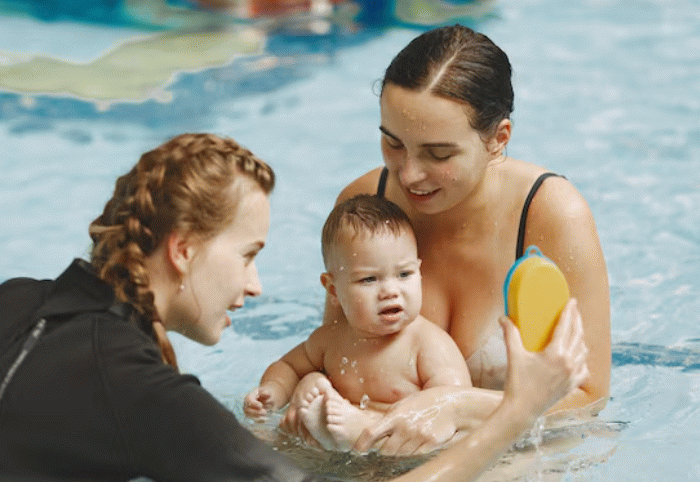
In May, you’ll notice the same flyer pinned somewhere close to the lost property bin if you pass any elementary school noticeboard. A picture of a child floating in midair with their eyes wide open, accompanied by a brief message asking parents if their child has actually begun lessons yet. Compared to the typical school appeals, this type of campaign is softer, and that softness is part of its purpose. Schools have come to the realization that a calm, persistent reminder has a greater impact on parents than fear.
The change has been developing for some time. Speak with deputy heads anywhere in England, and you’ll get the impression that swimming has risen to the top of adults’ list of unspoken concerns. Previously, swimming was considered an optional after-school skill, ranked below football and the piano. Every summer, the number of drownings along the British coast increases. In pictures, vacation pools appear smaller than they actually are. In actuality, there is a huge difference between a child who can splash and a child who can endure ten minutes in open water.
Swim England’s #LoveSwimming campaign consistently focuses on that gap. The campaign, which is currently in its ninth year and involves ten leisure operators, has spent its most recent wave encouraging parents to schedule lessons prior to the summer break rather than after. In the launch materials, Helen Marney, who oversees community involvement and health at Swim England, stated it plainly: every summer, families visit the water, and every summer, avoidable tragedies occur. A sentence so simple coming from a national governing body is striking.
| Campaign Name | #LoveSwimming |
| Run By | Swim England (national governing body for swimming in England) |
| Year Launched | 2017 (currently in its ninth year, Wave 17) |
| Latest Wave Launch | Thursday, 7 May 2026 |
| Key Spokesperson | Helen Marney, Director of Community Participation and Health, Swim England |
| Funding Partners | 10 leisure operators, including Everyone Active, Freedom Leisure, Nuffield Health, Places Leisure, BH Live, Active Leicester, Alive West Norfolk, Parkwood Leisure, Plymouth Active and Wiltshire Council |
| Recommended Age to Begin | From around 1 year old, per most aquatic experts |
| Minimum Recommended Progression | Learn to Swim Stages 1 to 7 |
Schools have begun using nearly exact replicas of that language. A few years ago, teachers would typically advise students to “make sure they can swim a length.” It’s longer now, more detailed, and strangely more sentimental. Bring them in ahead of time. Keep them inside. Continue past Stage 4. In the same way that nutrition advice used to permeate parents’ evenings, Swim England’s guidance, which recommends continuing lessons until at least Stage 7, has done so. These days, it’s common to hear a Year 2 teacher discuss floating drills in the same manner that they discuss phonics.
This includes research catching up to common sense. Youngsters who begin lessons at age one, which is currently the age at which most pediatric guidelines consider safe, develop a different bond with water than those who begin at age six or seven. At that age, confidence is more absorbed than taught. You can see something settle when you watch a toddler in a parent-and-baby class kick with that wobbly seriousness only toddlers can manage. It’s tiny but genuine, and it usually persists.
The part that parents most frequently overlook is the question of what later-stage lessons actually teach. Helen Marney has stated unequivocally that the lessons that prepare children for the messy realities of open water are the ones that families are tempted to abandon once a child can swim a wide distance with confidence. wearing clothes while treading water. maintaining composure when an unexpected wave arrives. being able to float correctly for longer than is comfortable. One summer of carefree splashing is not the source of any of that.
It’s still unclear if the message will be fully received. In some parts of England, qualified swim instructors are still hard to come by, lessons are expensive, and recreation centers are overburdened. While some parents will make reservations this week, others won’t. It seems that early swimming is now more of a quiet public health expectation rather than a parental preference. It is rare for local councils, charities, and schools to say essentially the same thing at roughly the same time.
It’s difficult to ignore the shift in tone. Ten years ago, you could fit a swimming lesson in between trampolining and Brownies. These days, it’s being framed as a life skill on the same shelf as safely crossing the street, and the schools doing the framing aren’t making a big deal out of it. In May, before anyone has packed a suitcase, they are doing it on a flyer that is pinned next to the lost property bin.
i) https://www.miltonkeynes.co.uk/your-world/milton-keynes-parents-urged-to-get-children-in-swimming-lessons-before-the-summer-holidays-8507728
ii) https://www.waterbabies.co.uk/baby-swimming/london-north/brook-school/
iii) https://www.better.org.uk/what-we-offer/lessons-and-courses/swimming/children-swim
iv) https://www.waterbabies.co.uk/baby-swimming/london-central-and-south-west/henry-cavendish-primary-school-pool/