

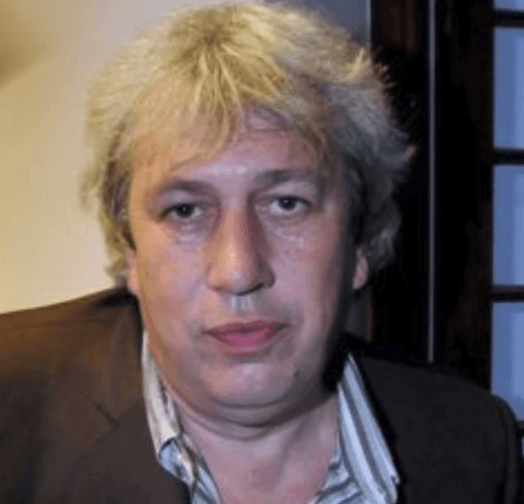
Rod Liddle passed away on Sunday nite at James Cook University Hospital in Middlesbrough. Liddle was a Sunday Times and Sun columnist whose writing caused people to either grab the paper first or toss it across the room. He was sixty-six. Even the family who had spent his last weeks with him described his death, which followed a brief illness, as unexpected and shocking.
Wilder and Tyler Emmy, his children, released a statement that was remarkable in how accurately they portrayed their father. They wrote, “He raised us much as you might imagine to be curious, courageous always humorous”. He continuously held the room and never let the terrible circumstances show, even during the last few weeks in the hospital. The phrase “held the room” conveys a message. Rod Liddle seemed unable to stop performing, even as he was dying.
Liddle was born in Sidcup, Kent, on April 1, 1960. After growing up in Nunthorpe, Middlesbrough attending state schools, he eventually enrolled in the London School of Economics as a mature student and studied social psychology.
It’s a trajectory that explains a lot about his journalism; despite being fully immersed in the establishment, there was always a part of him that felt a little outside of it. He started out at the South Wales Echo, briefly worked for the Labor Party as a speechwriter in the 1980s, then joined the BBC. In 1998, he was appointed editor of Radio 4’s flagship Today program.
His time at Today is the kind of career-defining chapter. He employed journalist Andrew Gilligan, whose 2003 Iraq “sexed up” dossier report would later lead to the Hutton Inquiry and weapons inspector David Kelly’s demise.
By then, Liddle had already left the BBC, having been fired for using language that the BBC considered inappropriate for his editorial position in a Guardian column that made fun of Countryside Alliance marchers. The column was his choice. In 2002, he resigned. It’s difficult to see him making a different decision.
Perhaps the most fascinating part of his career was what came next. Beginning in October 2002, Liddle wrote for the Spectator, the Sunday Times finally the Sun. She produced the kind of journalism that is becoming more and more uncommon columns that people genuinely debated. News UK CEO Rebekah Brooks referred to him as “an inimitable journalistic force” whose