

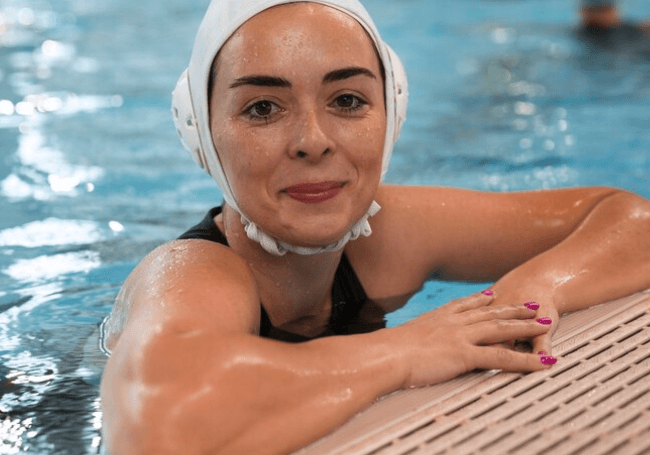
People in their forties and fifties occupy the shallow end of a council recreation center in south London on a Tuesday morning. Gripping the side and attempting to avoid looking at anyone is a man wearing goggles that he obviously purchased the previous evening. A woman beside him laughs at something the instructor says, then lets out a deep breath and, for the first time, lifts her feet off the ground. It’s not glitzy. Swim caps with sponsorship logos and lap counters are absent. Something has been quietly developing in pools like this one across the nation for some time.
According to Swim England, 14.2 million adults in England are unable to swim a single 25-meter pool. That’s about one in three, a statistic that nearly everyone finds shocking when they first hear it. The nation boasts a coastline that most other countries would be envious of, swimming is taught in schools nationwide, and a long-standing cultural affinity for beach vacations.
| Detail | Information |
|---|---|
| Topic | The rise in UK adults enrolling in swimming lessons |
| Governing Body | Swim England |
| Adults in England unable to swim 25m | ~14.2 million (roughly 1 in 3) |
| Adults who find learning to swim intimidating | More than 50% |
| Average hours to gain basic skills | 20–25 hours of lessons |
| National Framework | Swim England Adult Swimming Framework (4 award levels) |
| Active Campaign | #LoveSwimming, run by Swim England with 10 leading operators |
one third of adults are unable to handle a length. For a country that promotes itself on its beaches, the discrepancy between the assumption and the reality is, to be honest, embarrassing. More of those adults are now taking action, which is a recent change. Adult lesson sign-ups are steadily rising. According to operators throughout the UK. And Swim England has launched the most recent phase of its #LoveSwimming campaign with the express goal of eradicating the stigma that prevents people from swimming.
According to their own research, nearly three out of five adults who have never swum feel intimidated by the thought of learning to swim. Interestingly. Men are more likely than women to feel embarrassed about it. Which probably speaks to the fact that we still discuss competence and masculinity. Even though nobody in the leisure sector seems eager to engage in that discussion in public.
The misconceptions are peculiarly particular. It’s a common misconception that adult beginners must wear armbands. They believe that certain costumes are necessary. They believe that lessons are only for kids or complete beginners. Which makes the intermediate swimmer the one who can do a frantic dog paddle on vacation but nothing more feel as though there isn’t a class for them.
If the stigma didn’t exist, two out of five adults told Swim England they would be more inclined to sign up. When you consider it, that is an impressive figure. In theory, several million people were prepared to leave, but they were prevented from doing so by something as flimsy as the fear of appearing foolish.
A man named Jamal Hussan, who received his first lesson at the age of 45, has shared a story with Swim England. He began because he didn’t want to be the parent watching his daughter swim away from him while she was learning. He is direct about the obstacles body type, age, etc. After lessons, what he describes now sounds more like therapy than exercise.
He claims that spending an hour in the water gives him something he was unaware he was lacking. It’s the type of endorsement that would typically seem staged in a press release. It doesn’t come from him.
Then there’s the eighty-year-old man that one Serco Leisure instructor talks about meeting; he avoided swimming pools and the ocean for over seventy years after almost drowning as a boy. He arrived trembling. He was floating on a noodle, kicking, and grinning by the end of the hour.
It’s difficult not to wonder how many similar stories are, in a sense, sitting unswum in living rooms across the nation when you read these accounts. Although less romantic, the practical aspect is still important to understand. The Swim England Adult Swimming Framework, which is based on four progressive awards and a list of essential skills, is currently used by the majority of providers.
Most people seem to find it comforting that lessons are conducted in small groups, frequently with only adults. Although the estimate of twenty to twenty-five hours to acquire basic competence is imprecise, it provides a helpful framework for expectations. Private one-on-one lessons start at about £69 per hour, especially in hotel pools in London, but council and chain-operated centers are much less expensive.
For once, the primary obstacle is not economics. Measuring whether the campaign is genuinely effective or whether something more fundamental is changing is more difficult. Swimming, being low-impact and subtly social, fits in well with the general return to physical, in-person activities that people had previously shunned since the pandemic. Additionally. It seems. At least anecdotally. That adults are now more inclined to publicly start something from scratch. Such as language apps. Clubs. Or instruments.
In a way that would have seemed impolite ten years ago. Perhaps swimming is just catching up to the broader cultural acceptance of being a novice once more. It’s still unclear if the numbers will change enough over the coming years to significantly affect that 14.2 million figure.
Campaigns reach a standstill changes in funding. Pools close, and they have been closing in many local governments. For now, though, you get the impression that something has actually changed when you see adults visit a shallow end that was previously exclusive to children on a weekly basis. It’s not a revolution. Compared to that, it is quieter. Individually, many people have come to the conclusion that they are sick of being on the edge.
i) https://www.placesleisure.org/blogs/learning-to-swim-as-an-adult/
ii) https://www.birminghamleisure.com/erdington-leisure-centre/news/why-swimming-lessons-are-for-adults-too/
iii) https://www.better.org.uk/what-we-offer/lessons-and-courses/swimming/adults
iv) https://www.freedom-leisure.co.uk/blog/take-the-plunge-what-to-expect-from-adult-swimming-lessons/