

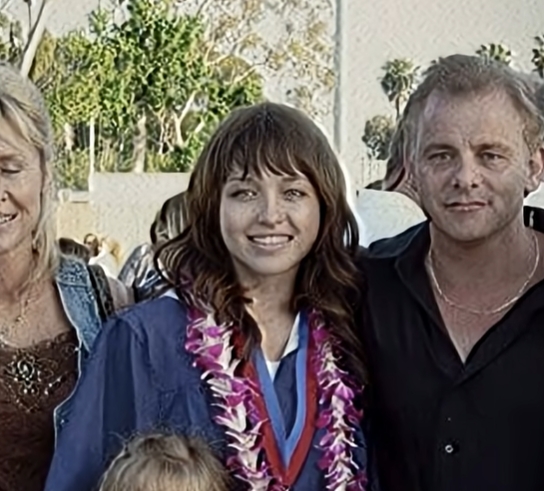
Nikki Catsouras drove her father’s Porsche 911 Carrera into a concrete tollbooth in Lake Forest, California, on Halloween morning in 2006. She was eighteen. The local coroner refused to allow her parents to view her body because the collision was so violent. The idea of being kept away from your own daughter because the reality of what happened to her was too much carries a certain kind of cruelty. It was standard procedure for the California Highway Patrol to take pictures of the scene, Nine pictures, standard documentation it ought to have ended there.
Of course it wasn’t. After hearing from a neighbor that the pictures were making the rounds online, Christos Catsouras received a call from his brother-in-law approximately two weeks later. He called the C.H.P. They said they would look into it. Eventually, they discovered that two of their own employees had sent the nine pictures to friends and family via email on Halloween for what one court document referred to as “pure shock value.” From that point on, the photos did what they do today. They relocated. Within days, they were all over the place, attached to anonymous emails with hurtful subject lines that were sent straight to the Catsouras family. They were forwarded, posted, embedded, mirrored, and more.
| Field | Details |
|---|---|
| Full Name | Nicole “Nikki” Catsouras |
| Date of Birth | March 4, 1988 |
| Date of Death | October 31, 2006 |
| Age at Death | 18 |
| Place of Death | Lake Forest, California, USA |
| Cause of Death | High-speed car crash (Porsche 911 Carrera collided with concrete tollbooth) |
| Father | Christos Catsouras |
| Known For | Posthumous controversy over leaked accident photographs |
| Legal Case | Catsouras v. Department of California Highway Patrol |
| Reference | The New Yorker — “The Solace of Oblivion” |
The term “Porsche Girl” is used in the scholarly literature regarding this case, and it’s an odd one to say aloud. The internet began referring to her as such. In the strictest sense of the word, a deceased adolescent became a meme a unit of cultural transmission that people shared because of the response it elicited. In a paper, the Dutch scholar Nadia de Vries argued that Nikki’s situation highlights the vulnerability of what she refers to as “memeified subjects” people who are unable to object to anything and thus lose all control over their own image. Dead people don’t file lawsuits. As Christos Catsouras would discover, the law isn’t really designed for this, so their families must take care of them.
The advice he kept receiving when he attempted to take action was the kind that seems reasonable until you give it some real thought. Do not be concerned. It will pass. This was said to a man whose daughter’s severed body was being circulated online for amusement. His three other daughters were no longer permitted to use the internet at all. You can picture the home, the meticulous planning of a younger sister’s birthday celebration, and the anxiety each time a phone rang. It’s difficult to believe that the individuals giving that advice had never had to deal with an anonymous email containing a picture of their child.
The Catsouras family desired something that isn’t really available to Americans. Following a 2014 decision by the European Court of Justice, people in Europe have the right to request that search engines remove links to information about them that is “inadequate, irrelevant or no longer relevant.” Approximately half of the more than 100,000 requests that Google has received have been approved. The ruling resulted from a rather unremarkable case involving Mario Costeja González, a Spanish attorney, and some old newspaper notices regarding his debts. The underlying idea what Europeans refer to as the right to be forgotten has deeper origins than real estate auctions.
The Oxford professor Viktor Mayer-Schönberger, who is frequently credited with creating the concept’s intellectual foundation, links it to the Stasi files and the Dutch population registry that the Nazis used to track down Jews and Gypsies during the occupation. In general, he argues that the natural order of human memory has been reversed by digital storage. In the past, forgetting was the norm. These days, remembering is inexpensive, and once something is posted online, it usually stays there. The durability is the same whether it’s a death photo or a debt notice.
The legal tradition in the United States is the opposite. The Costeja ruling would most likely fail a constitutional test in the United States because the First Amendment provides almost complete protection for the publication of truthful, legal information. The American strategy, according to Jennifer Granick of Stanford, is to safeguard particular categories, such as medical records and educational files, rather than granting people complete control over their personal data.
Even though the photos of Catsouras were terrible, they weren’t against the law like, say, leaked medical records. They were merely present. In the end, the family reached a settlement with the C.H.P. for about $2.4 million, which is both a real result and, as you can imagine, irrelevant. You can still locate the pictures. On some parts of the internet that focus on this type of content, the meme is still active.
After all these years, when you watch the case from a distance, neither the legal framework nor the philosophical debates over speech versus privacy stick with you. It’s the little things. A dad receives a call. What a parent should and shouldn’t see is determined by the coroner.
The particular bureaucratic detail of two highway patrol officers deciding that the pictures on their work computers were amusing enough to post on Halloween. Reading the record now gives me the impression that something changed during those weeks in late 2006 and that we’ve never fully caught up to it. Perhaps we won’t.
i) https://en.wikipedia.org/wiki/Nikki_Catsouras_photographs_controversy
ii) https://www.snapchat.com/topic/nikki-catsouras-death-photographs
iii) https://www.cbsnews.com/news/should-internet-privacy-end-at-death/