

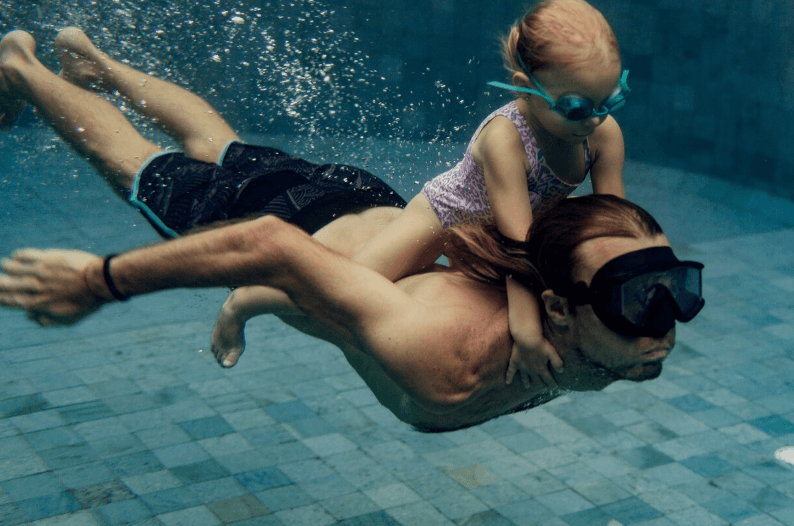
Every swim instructor seems to notice the first time a scared child lets go of the pool wall and manages to float. It’s just a few seconds something changes. The child’s eyes widen, then soften and something silently clicks into place that wasn’t there before. It is simple to write off that moment as a physical milestone because it is repeated in community pools and swim schools all over the nation.
Yet, anyone who has spent enough time observing kids in the water understands that it goes beyond that. One of the first times a child may learn that giving up control, even a little, doesn’t have to be catastrophic is when they learn to float. that they will be supported by the world.
| FIELD | DETAILS |
| Topic | How Swimming Helps Kids Build Emotional Resilience |
| Focus Area | Child psychology, emotional development, aquatic therapy |
| Age Group | Toddlers to pre-teens (ages 1–12, with broader applicability) |
| Key Benefits | Emotional resilience, anxiety reduction, confidence, social skills |
| Research Base | Griffith University (Australia), Swim England, NHS, SafeSplash Studies |
| Related Programs | SafeSplash Swim School, Fitness Champs, SwimReady Cardiff |
| Reference Website | Swim England |
That lesson feels almost urgent at a time when children are dealing with social media pressures, academic anxiety, fractured attention spans, and a general sense that the world is moving too quickly. A growing body of research from academic institutions, swim programs, and child development clinics confirms what coaches and parents have known for years: swimming is particularly effective at fostering the kind of emotional resilience that kids so desperately need.
The causes are multifaceted. Swimming is physically taxing because it releases endorphins, the body’s own feel-good chemicals, into the brain and breaks down stress hormones. Children frequently come out of a good swim session calmer and more composed. Levels of cortisol decrease. The kind of low-grade anxiety that subtly permeates a child’s school day is momentarily disrupted.
According to research, the kind swimmers’ practice of rhythmic breathing with each stroke triggers the parasympathetic nervous system, which essentially flips the body’s internal switch from “fight or flight” to “rest and recover.” This is a significant advantage for kids who suffer from anxiety disorders or hyperactivity.
Although it serves a purpose, swimming has an aspect that transcends biochemistry. Children must confront fear on its own terms in order to learn to swim. The water doesn’t bargain. It doesn’t allow a child to get by on sheer intelligence or give extra credit for good intentions. You either float or you don’t, and learning to float requires some uncomfortable sitting. There’s a feeling that this is precisely the kind of manageable, low-stakes challenge that gradually strengthens emotional fortitude.
In miniature, facing the deep end of a pool serves as practice for dealing with truly frightening situations. After years of working with kids, swim instructors frequently notice a pattern: the child who first arrives scared and reluctant to touch the water eventually develops into someone who jumps in after weeks and months of consistent, patient practice. willingly. even with great enthusiasm. Their swimming skills are not the only thing that has changed.
Their perception of challenge shifted. Every tiny victory and every skill acquired adds something to a reservoir of belief within. Although research on the degree of this carryover is somewhat conflicting, instructors and parents frequently report witnessing it occur. It is still unclear whether the confidence developed in the pool directly transfers to the classroom or to social situations.
It is worthwhile to focus on the breath work. Breathing is automatic in most sports. It’s intentional when swimming. In order to remain composed when their face is submerged, children must learn to exhale underwater and time their inhalation with the rhythm of their stroke. This literally translates to learning to remain composed under duress.
These methods controlled, paced breathing have been appropriated by some child therapists who work with children who are anxious. They learn naturally through swimming. Through the agony of cold water and physical strain, a child who has spent months learning to breathe is subtly developing a skill that will benefit them long after they have dried off.
The social aspect of group swim lessons is another aspect that receives insufficient attention. A lot of the social armor that kids usually wear is removed by the pool. There are no fashionable backpacks, designer sneakers, or important status symbols in the water. Children are wearing swimsuits and frequently face the same fundamental difficulties side by side. Sometimes, in the middle of a lesson or splash, a child who feels invisible at school realizes they are a part of something. that, albeit unofficially, they have teammates. that when they reached the other side, someone applauded.
When observing kids in a well run swim program, it’s difficult to ignore how the traits being cultivated such as patience, perseverance, emotional control, and the capacity to try again after failing map nearly exactly onto what psychologists refer to as the building blocks of resilience. These are not coincidental results. Swimming’s structure, with its well-defined skills and quantifiable advancement, fosters the development of resilience. Additionally, there is very little opportunity for faking it, in contrast to many structured children’s activities. Swimming progress is sincere.
This is not to say that swimming lessons are a panacea. More than a pool is required for kids who are experiencing severe anxiety or trauma. Regular swimming seems to offer something genuinely uncommon as part of a larger life that includes supportive adults, sensible screen limits, and space to simply be a kid. A physical environment that also trains the mind and stabilizes the emotions. It turns out that the pool serves more purposes than just teaching people how to avoid drowning. In every other sense of the word, it may be among the greatest places to learn how to stay afloat.