

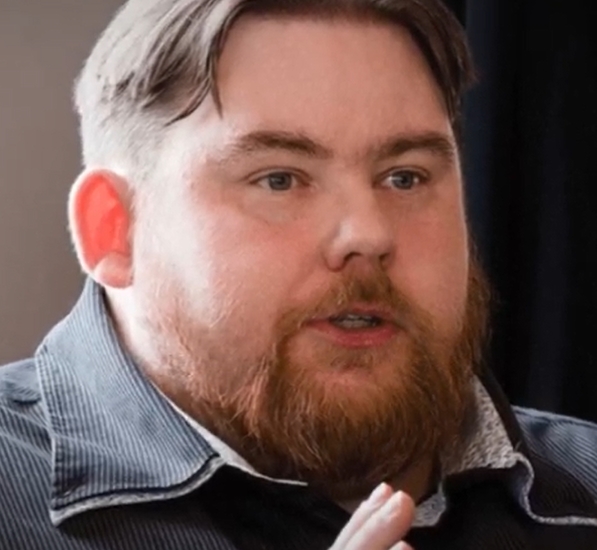
A certain type of expert in antiques has the ability to silence a room simply by picking up an object, flipping it over in the light, and scowling. Among them was Michael Baggott. He spent years sitting among the shuffling crowds and trestle tables on “Flog It!” the BBC’s gentle daytime ritual of strangers bringing out heirlooms, and he paid more attention to the silver than most people do to their own families. He passed away in a Birmingham hospital in late January 2025 at the age of 51. After having a stroke in October of last year, the cause was a heart attack.
Strangely, that information about his age is important. He was initially reported to be 65 by a number of sources, but the BBC subsequently stated that he was 51. Once you sit with it, the gap is startling. For a man who still held decades worth of opinions, 51 is a very young age. There’s a slight, uneasy feeling that the early mistakes were part of the whole depressing situation and that the general public hadn’t been paying enough attention.
Like all good stories, his begins with a single item. While still in school, he paid £22 for his first antique, a Chester silver Vesta case one of those tiny boxes used to hold matches. It’s a small, precise detail that tells you nearly everything. The majority of teenagers don’t buy Victorian match holders with their pocket money. Baggott had already left, reading the maker’s faintly stamped intentions, the weight, and the hallmark.
| Information | Detail |
|---|---|
| Full name | Michael Baggott |
| Best known for | Antiques expert on BBC’s Flog It! |
| Profession | Antique silver specialist, author, private consultant |
| Specialism | British silver, boxes, early spoons, provincial & continental silver |
| Age at death | 51 (some outlets first reported 65; later corrected) |
| Death announced | Late January 2025 |
| Cause of death | Heart attack, following a stroke in October 2024 |
| Place of treatment | Good Hope Hospital, Birmingham |
| Earlier career | Christie’s (while a student); head of silver, Sotheby’s Billingshurst |
| Notable books | An Illustrated Guide to York Hallmarks 1776–1858; As Found: A Lifetime in Antiques |
| Reference | ITV News report |
He went a long way with that instinct. While attending college, he worked at Christie’s before running Before going out on his own as a private consultant, he worked for Sotheby’s southern silver department at Billingshurst for four years. He wrote books that were too formal and well-researched, such as a guide to York landmarks that no casual enthusiast would attempt. He wasn’t performing expertly when he joined “Flog It!”. He possessed it.
Furthermore, by all accounts, he was not a man who softened things. Auctioneer Charles Hanson’s tribute, which recalled that Baggott was never afraid to call out an expert who had made a mistake, including Hanson himself, was spot on. In late December, he made his final public post, which was a direct, humorous, and slightly irate critique of a “Antiques Roadshow” valuer who had misdated a piece of silver by four years. After he was gone, he essentially dared everyone to make that error. It’s difficult not to grin at it after experiencing the weight of what followed.
Since the final chapter was depressing, he decided to write about it himself. He recorded videos for his fans from a bed at Good Hope Hospital, where he had been essentially immobile for five weeks following the stroke. In one, he claimed to have received very little water and to be dying of thirst. He expressed his admiration for the nurses and junior physicians, said they were giving their all to assist, and directed his ire directly at the senior management he said he had never seen. Swallowing after a stroke carries a real risk of choking, so there may have been a clinical reason for the rationed fluids, though this was never made public. Looking back, part of what unnerves me is not knowing.
His grievance wasn’t isolated. With hospitals operating at roughly 96% bed occupancy and England’s top physician cautioning that conditions resembled the worst periods of the pandemic, it arrived in the midst of a harsh NHS winter. According to one report from that month, patients died in A&E without anyone noticing because the staff was just too busy to get to them. Thus, Baggott’s little, private video almost unintentionally became a piece of evidence, giving numbers that most people scroll past a voice and a recognizable face.
Then, for a moment, the situation improved. He returned to the internet a few days after that terrifying video to report that he had finally gotten some water, that Radio 3 was blaring, and that he felt a little happier and more optimistic. He wrote that the road back might begin right now. It didn’t. A few weeks later, he passed away.
The overall shape of the thing is what remains. A boy who fell for a £22 silver box, developed into the kind of connoisseur colleagues referred to as a raconteur and a font of knowledge, and fought a much smaller, more intimate battle in his final weeks than any auction. In order to make room for more recent commissions, “Flog It!” was discontinued in 2018 after being wound down years earlier. The tributes’ tenderness points to something the schedulers overlooked. Baggott wasn’t the only thing people watched. They had faith in him. And that is the rarest thing of all on television.
i) https://www.lbc.co.uk/article/flog-it-star-expert-michael-baggott-dies-aged-65-cause-of-death-5Hjcykj_2/
ii) https://www.dailymail.com/news/article-14337171/michael-baggott-flog-star-nhs-hell-expert-fans-worried-stroke-death.html
iii) https://dannybarrettfitness.com/unrecognisable-michael-baggott-weight-loss/