
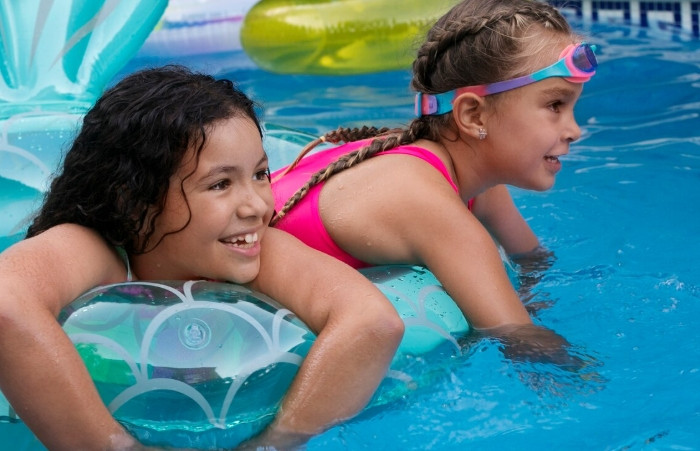
A line of parents carrying towels, a child wearing a swim cap who appears a little anxious, and an A-frame or chalkboard sign near the door promoting a free trial are all common sights when you pass any council recreation center on a Saturday morning. This wasn’t always the case. Ten years ago, enrolling your four-year-old in swim lessons required you to commit to a full term, pay in advance, and hope they wouldn’t lose interest by the third week. The point of entry has now changed. Schools are taking the lead with the trial, which can be offered for free or at a nominal cost. This shift reflects a broader shift in how leisure companies are reconsidering trust.
One of the leading providers of early childhood swim instruction in the UK, Puddle Ducks, offers a free trial that parents can sign up for via a form. A local team will then get in touch with them within three working days. As part of their group classes, GetSetSwim offers free trials in Putney and Golders Green. The strict ratios are 4:1 for children over three and 8:1 for parent and baby sessions. Sport Brighton just launched a free trial of its own. A slightly different approach is taken by St. Dunstan’s, which charges for the initial session and presents it as a paid taster rather than a giveaway. The differences are important. They show how each school interprets its own market.
The old enrollment model seems to have been damaged by the pandemic. Families started to be less inclined to spend money on anything they hadn’t actually tried. Operators noticed that subscription fatigue spread from streaming services to gyms and swim schools. A parent will be hesitant to spend £150 on a term of swim lessons that could result in their child screaming at the pool’s edge if they have already lost tenner on an unused yoga app. Trial lessons provide a direct response to that hesitation. They transfer the risk back to the company, which is, to be fair, where it most likely belonged in the first place.
| Key Information | Details |
|---|---|
| Sector | Children’s & adult swim education |
| Trend | Rapid expansion of free or paid trial lesson offerings |
| Common Age Range | Birth to adult (most demand: ages 3–10) |
| Typical Trial Format | 30-minute group session, 4:1 or 8:1 ratio |
| Pricing Model Shift | From upfront term fees to “try-before-you-buy” |
| Notable Operators | Puddle Ducks, British Swim School, GetSetSwim, Sport Brighton, St Dunstan’s |
| Accreditation Bodies | Swim England (Stages 1–7), STA Level 2 |
The way trial lessons subtly reframe the relationship is intriguing. The lesson itself isn’t the main focus of a free or inexpensive first session. It’s about allowing a parent to observe. They observe the lifeguard’s alertness, the instructor’s tone, the children’s laughter or tears, and the cleanliness of the changing areas. More sales are closed by those little observations than by any glossy brochure. It’s difficult to ignore the fact that swim schools have discovered what auto dealerships knew long ago: the test drive is more important than the spec sheet.
Additionally, there is a competitive pressure aspect to this that operators hardly ever discuss in public. Numerous independent swim schools have emerged, frequently led by former Olympic-level coaches or physical education instructors who quit their jobs during the wage disputes. Name recognition is no longer as reliable for established chains as it once was. It is not generous to offer a trial. In order to get a child into the water before the family books elsewhere, it’s a defensive tactic. Puddle Ducks, British Swim School of London, Better, and smaller franchise companies are all pursuing the same nervous parent on the same Mumsnet thread.
Although they hardly ever express it publicly, the instructors themselves appear to have conflicting opinions about the trend. More new students, more anxious toddlers, and more time spent on preliminary evaluations rather than instruction result from a free first lesson. Trial weekends were exhausting, according to one instructor I spoke with, because they were filled with kids who had never been in water deeper than a bath. Nevertheless, conversion rates seem to make the effort worthwhile. If the math didn’t work, schools wouldn’t continue doing this.
It’s important to note how much swim instruction has become more professional at the same time. Nowadays, the majority of schools use the STA framework or Swim England Stages 1 through 7 structured curricula, and teachers are certified at Level 2. From floating to front crawl to lifesaving, the trial lesson is at the beginning of what is essentially a multi-year pathway. The trial is only the beginning of a long arc of development that parents are being sold. Whether intentional or not, this framing makes the commitment feel more like enrollment in something greater than a purchase.
It’s still unclear if the trial lesson model is sustainable. The margins deteriorate if too many schools provide freebies, and eventually someone will have to raise the price. The market may settle in the middle, as there is already a slight trend toward paid tasters at higher-end operators. But for the time being, the industry’s front door is the free first lesson. It’s similar to watching the gym industry twenty years ago, right before everyone started giving away the first week. The pattern is recognizable Simply put, the water is colder.
i) https://www.lamptonleisure.co.uk/free-trial-swimming-lesson-cta/
ii) https://sport.brighton.ac.uk/about/news/577-free-swim-lesson-trial
iii) https://www.better.org.uk/what-we-offer/lessons-and-courses/swimming