

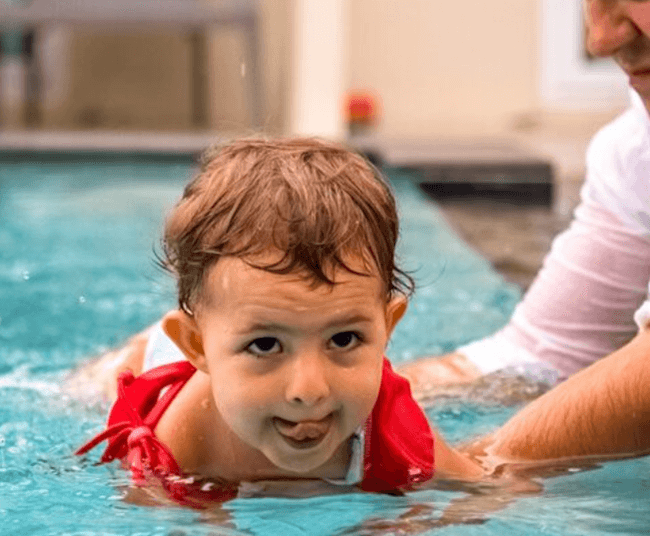
Since progress is based on effort rather than performance, a swimming pool is one of the few places where kids are expected to struggle honestly, without trying to hide their uncertainty. This expectation alone is especially helpful in influencing how young brains handle challenges.
The water merely provides feedback, remarkably similar each time, until a child adapts and tries again. This means that even though arms move out of sync, breaths are mistimed, goggles slip, and laps end sooner than expected, none of this carries with it any lasting judgment.
| Topic | Key Information |
|---|---|
| Activity | Swimming and structured swim instruction |
| Primary Age Group | Early childhood to adolescence |
| Core Idea | Growth mindset built through effort, feedback, and persistence |
| Supporting Evidence | Aerobic movement improves brain function; skill repetition builds confidence |
| Long Term Impact | Physical strength, emotional regulation, resilience, and water safety |
Swimming develops more like a gradual apprenticeship than a race, where progress is made via patience, repetition, and minor adjustments. These circumstances are incredibly successful in teaching kids that skill is developed rather than found.
Every lesson offers dozens of silent choices, such as whether to let go of the wall, try the kick again, or stop and listen. As these choices are made repeatedly, effort starts to be reframed as something reliable rather than draining.
Teachers have placed a lot of emphasis on mindset in recent years, but swimming teaches it without lectures because the relationship between action and result is so obvious and hard to ignore once it is felt in the body.
A child learns through experience that change is possible, particularly through attention rather than talent, when they shift their head position and breathe more easily, kick intentionally, and move farther.
A system where learning happens organically through interaction rather than instruction alone is created by this instant feedback loop, which simulates a swarm of bees reacting to subtle cues. Each correction influences the subsequent movement.
When children test the depth of the water or let go of support, fear enters the picture early and frequently silently. When this fear is gradually addressed rather than ignored, confidence develops in a very dependable way.
When floating ceased to feel like a gamble and began to feel like a choice, I once noticed how a child’s shoulders relaxed.
In contrast to environments that reward speed, swimming lessons are designed to tolerate plateaus, which is surprisingly low in emotional cost because kids can pause without feeling like they’re falling behind.
Even though there may be weeks when it seems like progress has stalled, perseverance during those periods teaches that a lack of noticeable improvement is information rather than failure a lesson that becomes more and more important over time.
Swimming permits parallel progress, where two children advance differently without comparison, in contrast to many activities that rank children quickly. This greatly lessens the pressure that frequently distorts motivation.
As kids watch their peers struggle and succeed in succession, group lessons add a social layer that is especially creative in its simplicity. This normalizes effort and makes perseverance feel shared rather than isolated.
A culture that emphasizes trying again over finishing first is reinforced by the tendency for applause to follow effort rather than dominance. This is a lesson that can be applied outside of the pool.
Swimming’s cognitive demands are equally educational; it calls for timing, coordination, spatial awareness, and listening in addition to breath management, all of which are extremely effective at improving focus.
Aerobic exercise has been repeatedly demonstrated to promote brain development, and swimming puts this science into practice by combining mental and physical exertion into a single activity.
Since they have discovered that progress frequently feels awkward before it feels smooth, kids eventually start to apply this reasoning in other contexts and approach homework or new tasks with less resistance.
Because competence is linked to actual ability rather than recognition, water safety adds a grounded layer of confidence that is incredibly resilient.
The idea that learning continues long after the first success is achieved is reinforced by the fact that swimming is still accessible to kids as they get older, allowing skills to develop rather than expire.
The most notable thing is how little explanation is needed because the pool teaches quietly, turning effort into proof and repetition into resilience, one deliberate effort at a time.