

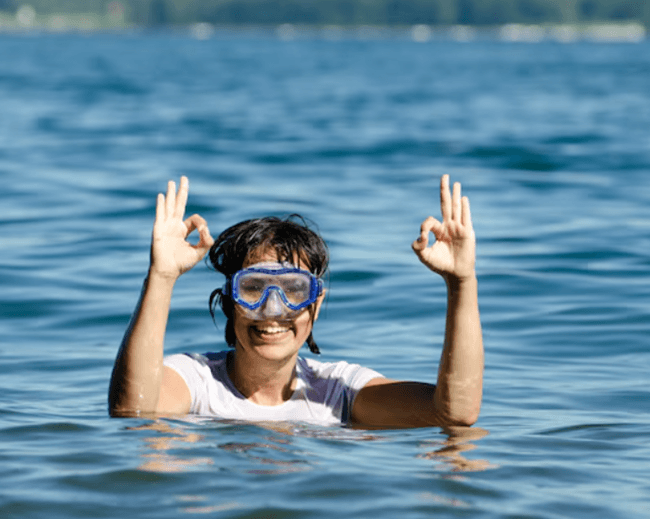
Almost every Saturday morning at a community pool in Bristol or Manchester, you can observe a little custom. Half-asleep and shivering, children tiptoe toward the water’s edge as parents shuffle in with tote bags filled with wet towels. Before they even get to the changing rooms, everyone is hit by the stench of chlorine. It’s a familiar scene, and some parents have been uneasy about that particular sharp smell for years. The headlines have been read by them. They’ve heard rumors about asthma and chlorine. So they question whether their children are truly benefiting from all this swimming, sometimes aloud at the snack bar.
The answer was unclear for a long time. Trichloramine, a byproduct of chlorine that floats just above the water’s surface, may be the reason why pool attendance may be subtly harming young lungs, according to studies that have surfaced from Belgium. Other research from Spain and Germany found no conclusive results or the opposite. To be honest, it was a complete mess. Swim instructors continued teaching the front crawl as if nothing had happened, parents shrugged, and pediatricians frequently hedged.
| Reference | Details |
|---|---|
| Study Name | Avon Longitudinal Study of Parents and Children (ALSPAC) |
| Lead Researcher | Cristina M. Villanueva, Ph.D. |
| Affiliation | Centre for Research in Environmental Epidemiology (CREAL), Barcelona |
| Children Followed | 5,738 |
| Study Duration | Birth to 10 years |
| Country of Study | United Kingdom |
| Published | American Journal of Respiratory and Critical Care Medicine, March 2011 |
Next was the extensive Avon Longitudinal Study of Parents and Children, a UK-based initiative that tracked almost 6,000 children from birth to age ten. It generated more than just another set of data. It was the first prospective approach to the question, so instead of asking parents years later to recall how frequently three-year-old Oliver visited the pool, researchers monitored these children in real time. This distinction is more important than it might seem. People’s memories have a tendency to bend in favor of the desired response.
When the results eventually came in, many were taken aback. Asthma risk did not seem to be increased by swimming. Researchers found that it did not exacerbate hay fever, eczema, or any other allergic symptoms. If anything, children in the highest exposure category those who swam the most exhibited marginally better lung function than kids who didn’t spend much time near a pool. The researchers found it difficult to explain why their forced midexpiratory flow, a measure of how well the smaller airways move air, edged upward.
What happened to kids who had wheezing issues prior to turning three and a half is even more startling. More swimming was associated with a significantly lower chance of requiring asthma medication and fewer asthma symptoms by the age of seven for that group. Children with asthma who had spent more time in pools were about one-third more likely to have asthma by the time they were ten years old. It’s a big difference. This is the type of number that causes a pulmonologist to stop in the middle of a sentence.
Naturally, no one claims that swimming can treat asthma. The researchers themselves were extremely cautious. They admitted that they were unable to completely distinguish the impact of swimming from the more general impact of being a physically active child. Perhaps families who take their children swimming also take them for long walks and bike rides. Perhaps children who were glued to television and were sedentary would always do worse. The team acknowledged that the study’s use of TV watching as a rough proxy for inactivity isn’t ideal.
The pattern persisted, though. What’s intriguing is the pattern. Reading between the lines, the researchers believe that swimming itself the prolonged breathing, the humid air, the rhythmic exertion may actually be beneficial for developing lungs. Anyone who has witnessed a wheezing child climb out of a swimming pool with flushed cheeks and easier breathing than they did an hour ago will find this conclusion to be intuitive. This is what coaches have been saying for decades. Science is only now beginning to catch up.
The Belgian research hasn’t vanished, and it probably shouldn’t. Asthma is more common in elite swimmers those who train for thirty hours a week than in other athletes. Long-term exposure to indoor pool air causes respiratory problems in lifeguards as well. A seven-year-old splashing around on Sunday afternoons is a different matter. Toxicologists like to remind everyone that the poison is made by the dose.
The speed at which cultural anxieties can surpass evidence is difficult to ignore. In some parenting circles, chlorine was portrayed as a villain long before anyone had demonstrated that it was deserving of the title. In the meantime, screen time continues to eat into outdoor hours, childhood obesity continues to rise, and children’s actual exercise activities continue to decline. In light of this, advising families not to visit the pool begins to seem less like caution and more like a lost chance.
The Avon study is not definitive. More research is desired by researchers, particularly in the early years of life when the data becomes sparse. They seek more accurate measurements of the true contents of pool water across national borders. All of the requests were reasonable. As of right now the evidence is pointing in a direction that parents may not have anticipated. It’s possible that the child wearing goggles is quietly helping his lungs by kicking his way across the shallow end.
i) https://felixswimschools.com/why-swimming-is-the-perfect-sport-for-childrens
ii) https://www.ovid.com/journals/nust/fulltext/00002311-201012010-00025~lung-function-in-children-improves-with-swimming
iii) https://www.researchgate.net/publication/374602167_Effect_of_swimming_on_respiratory_function_test_and_lung_capacity_in_children_with_asthma
iv) https://www.usms.org/fitness-and-training/articles-and-videos/articles/5-reasons-why-swimming-is-great-for-lung-health