

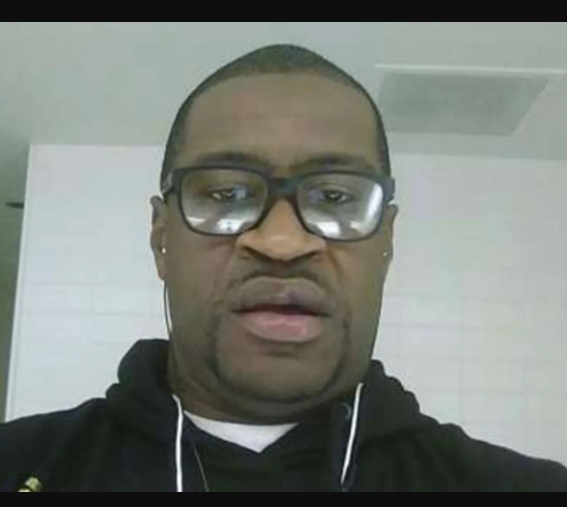
Even after watching the video a hundred times, most people never fully understood the peculiar aspect of the George Floyd case. Contrary to what the protests, slogans, and nine-minute clip suggested, the cause of death the true medical explanation turned out to be more complex. It’s not exactly contradictory. Simply messier. And in the spring of 2021, that mess turned into the whole battlefield inside a courtroom in Minneapolis.
The autopsy was actually carried out by Dr. Andrew Baker, the Chief Medical Examiner for Hennepin County. It was he whose words were legally binding. Additionally, he made a statement that defense attorneys had been waiting for when he testified in Derek Chauvin’s trial: that Floyd’s heart condition and fentanyl use were actual, present, and pertinent. According to Baker, Floyd had hypertensive heart disease, which simply meant that his heart was heavier than it should have been and required more oxygen than a healthy heart could readily provide. It is a fact. The autopsy report contains it you cannot dispute it.
| Key Information | Details |
|---|---|
| Full Name | George Perry Floyd Jr. |
| Age at Death | 46 |
| Date of Death | May 25, 2020 |
| Location | Minneapolis, Minnesota |
| Official Cause of Death | Cardiopulmonary arrest during law enforcement subdual, restraint, and neck compression |
| Manner of Death | Homicide (ruled by Hennepin County Medical Examiner) |
| Medical Examiner | Dr. Andrew Baker, Hennepin County |
| Contributing Factors | Hypertensive heart disease, fentanyl, methamphetamine |
| Related Case | State v. Derek Chauvin |
This is where Baker exercised caution. He distinguished between the direct cause and contributing factors. He claimed that Floyd was not knocked down by the fentanyl. His neck was not pinched by the heart disease. These factors were listed under “other significant conditions” in the death certificate, indicating that they were important but did not cause death. He maintained cardiopulmonary arrest while being restrained by law enforcement and having his neck compressed, which is the crucial part. He declared it to be a homicide. He told the court without hesitation that he still would today.
It’s important to consider what “homicide” means to a medical examiner because the term has many mental functions that it doesn’t have on paper. According to Baker, homicide is just another person’s death. It’s not a decision. It’s not a murder charge. Guilt is decided by juries. Physicians explain bodies. It was difficult to ignore how a single technical term could carry so much emotional weight as that distinction became increasingly hazy in public discourse.
The fact that Baker had not seen the viral video prior to conducting his examination made the trial fascinating almost uncomfortable. He decided against it. He stated that he didn’t want preconceived ideas to skew what he saw on the table and lead him in one direction or another. That refusal to let the nation’s most well-known footage influence his scalpel is subtly admirable. He started by examining the man. Later, he watched the video.
Furthermore, asphyxiation was not mentioned in the official autopsy. The family’s independently commissioned autopsy revealed that Floyd died of asphyxiation from prolonged pressure cutting off blood and air, which made that absence one of the most bizarre conflicts in the case. One body, two emphases, and two autopsies. It wasn’t dishonesty or ineptitude that separated them. It was interpretation, the kind that occurs when anatomy is insufficient to fully explain a situation.
For the prosecution, other experts filled that void. Although she agreed with Baker’s cause of death, Dr. Lindsey Thomas, a forensic pathologist who actually assisted in Baker’s training, elaborated on the mechanism. She thought that asphyxia, or low oxygen, was the main mechanism. Because of the way he was held and positioned, Floyd was unable to breathe. She also pointed out that his death didn’t appear to be the result of a drug overdose. Meth overdoses happen quickly. People who use fentanyl pass away slowly and peacefully. Floyd’s wasn’t either. He was having trouble. He had been attempting to push himself into a position where he could breathe, as evidenced by the superficial scrapes on his face, shoulder, and wrists.
The pulmonary specialist, Dr. Martin Tobin, then delivered the statement that most likely struck the hardest of all. He claimed that if a healthy person had been exposed to what Floyd went through, they would have also perished. He believed that the preexisting conditions were not the cause of death. It was the restraint.
You could clearly see what the prosecution was building as you watched the medical testimony pile up. Floyd insisted that if there hadn’t been nine minutes of body weight on a man’s neck and back that evening, it wouldn’t have mattered that he had drugs in his system or a strained heart. To put it plainly, there was no proof that he would not have died that evening.
What exactly caused George Floyd’s death, then? The truth is that he died because he was unable to breathe while being restrained, and the drugs and his weakened heart made it harder for him to endure what was happening to him. Both of these statements are accurate. The courtroom was aware of that. When Thomas identified asphyxia as the main mechanism, almost every juror was observed recording it. The truth isn’t always expressed in a single, clear sentence. Sometimes it’s a doctor who won’t turn away from a man lying on the ground.
i) https://www.cnn.com/2021/04/09/us/derek-chauvin-trial-george-floyd-day-10
ii) https://www.famous-trials.com/george-floyd/2717-what-caused-george-floyd-s-death-q-a
iii) https://www.nytimes.com/2021/04/08/us/george-floyd-cause-of-death.html