

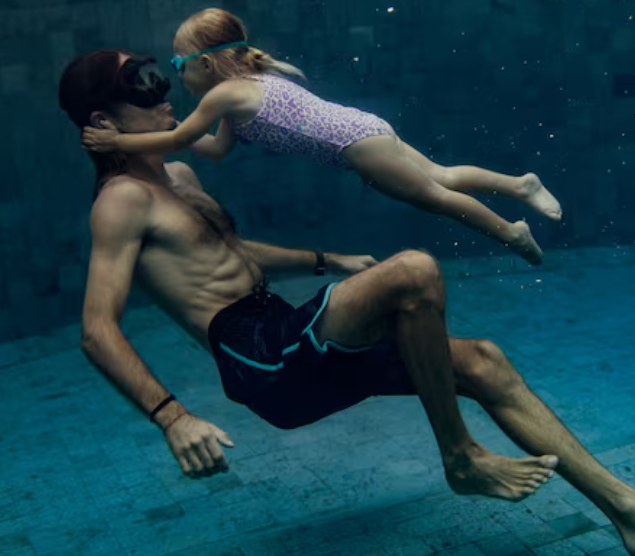
Community pools have a familiar rhythm in the early mornings, with wet benches, resonant whistles, and parents sipping coffee from takeout while watching their kids practice. However, in recent years, a noticeable shift has occurred, as more of those same parents are easing themselves into the water instead of just watching.
Time constraints, aging joints, and a quiet desire for something remarkably effective without being punishing have all played a role in this return, which hasn’t been heralded by grand announcements or fitness influencers lining the deck but rather by small, pragmatic decisions made between work emails and school drop-off.
| Key Context | Details |
|---|---|
| Type of Exercise | Full-body cardiovascular and resistance activity |
| Muscle Involvement | Arms, shoulders, back, core, hips, and legs |
| Joint Impact | Significantly reduced due to water buoyancy |
| Accessibility | Suitable across ages, abilities, and injury histories |
| Mental Benefits | Stress reduction, improved focus, steady mood |
Once thought of as a childhood necessity or a doctor’s recommendation, swimming is now being reevaluated through an adult lens. Parents are finding that swimming behaves less like a fad and more like a very dependable system, consistently providing strength, endurance, and calm without requiring reinvention.
Since the resistance in water changes instantly in response to effort, muscles can fully contract without the harsh impact that frequently prevents parents from trying land-based routines. Water works the body in a strikingly similar way to a well-designed circuit.
Stress on knees, hips, and lower backs is greatly reduced when body weight is reduced through buoyancy. This is especially helpful for adults who are juggling old injuries, desk-bound stiffness, or the cumulative wear of years spent carrying groceries and children.
After early swims, parents frequently anticipate soreness. However, they are often taken aback by a different feeling, a full-body exhaustion that feels earned but manageable, enabling them to return days later without having to deal with pain. This detail subtly explains why this habit tends to stick.
Swimming redistributes effort fairly, using commonly underutilized shoulders, arms, and back muscles, while the core stays constantly active to support posture and stabilize movement. This is in contrast to many lower-body-focused workouts.
With controlled inhales and measured exhales influencing pace, focus, and endurance, breathing becomes an integral part of the exercise rather than an afterthought. Over time, this breathing discipline frequently transfers off the pool deck, enhancing stress response during hectic workdays.
Additionally, parents find swimming to be very effective because it can provide resistance training and cardiovascular conditioning in a single sequence during a concentrated thirty-minute session. This makes swimming a highly effective choice for schedules that are broken up by obligations.
By substituting repetitive motion and internal pacing for phones, conversations, and other distractions, the pool itself enforces attention. Many parents describe this process as subtly restorative rather than performative or competitive.
Halfway through watching a line of parents walking steadily down their lanes, I was struck by how swimming requires effort without spectacle and rewards consistency over comparison.
Access is also important because public pools are surprisingly inexpensive, open early, and integrated into neighborhoods, enabling parents to create routines that blend in with school schedules rather than conflict with them.
Additionally, swimming gracefully adjusts to energy levels, providing demanding intervals when motivation is high and slower, more contemplative sessions on challenging days. This incredibly adaptable feature keeps swimming relevant throughout life’s seasons.
Regaining comfort in the water, a skill based on safety and independence, while also setting an example of a healthy relationship with exercise for their kids, gives parents a subtle sense of confidence.
From shoulder mobility and posture to sleep quality and emotional stability, improvements come gradually but are noticeable over time. These advantages build up subtly rather than making a big announcement.
Parents are increasingly prioritizing behaviors that promote longevity, consistency, and resilience over spectacle, which may be the reason swimming is experiencing a renaissance. Swimming does not promise reinvention or quick transformation.
The water is patient, the lanes are still open, and every return visit serves as a reminder of the basic fact that sometimes the best answers are the ones we outgrew but wisely discovered again.