

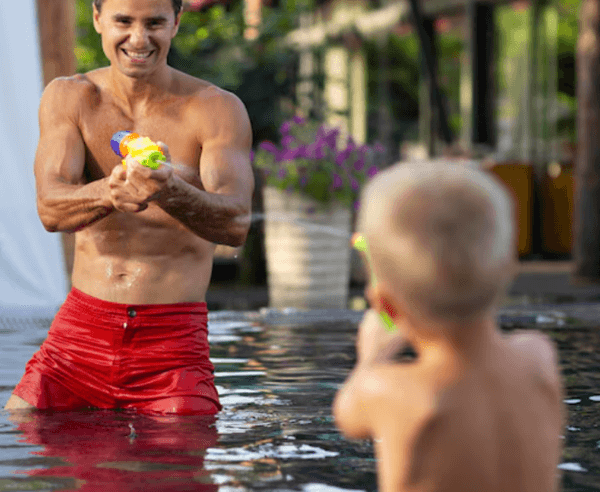
The shift from swimming as an occasional outing to a regular part of many family schedules has been happening slowly and almost imperceptibly, as evidenced by the swim bags left by the door and the damp towels draped over radiators.
For many years, family self-care was disjointed, remarkably akin to a relay race, with each member setting aside distinct times to deal, recuperate, or rejuvenate, frequently by themselves and crammed in between obligations.
| Context | Details |
|---|---|
| Activity | Recreational and fitness swimming |
| Typical settings | Public pools, school pools, leisure centres, beaches, lakes |
| Age range | Infants to grandparents |
| Key drivers | Physical health, mental wellbeing, bonding, routine-building |
| Barriers | Time, access to pools, cost, confidence in water |
By providing something remarkably inclusive, swimming subtly questioned that trend by enabling simultaneous participation by all without competition, performance metrics, or the subliminal pressure to get better faster than your neighbor.
Evening pools have developed a unique rhythm in recent years, with older relatives moving cautiously through warm water and parents counting goggles while kids cannonball repeatedly. Each group shares space without having to coordinate their efforts.
The lack of negotiation once everyone is in the water feels especially helpful because the typical distractions are gone, leaving only buoyancy, resistance, and the need to breathe steadily.
Families rarely explain swimming in terms of anatomy, instead remembering instances such as a child floating on their own for the first time or a parent hesitating before letting go. Swimming is an extremely effective way to engage the entire body.
Because children gain unexpected agency and adults lose some control, the water itself alters family dynamics and drastically reduces hierarchy. It also creates a shared vulnerability that softens conversations and tempers authority.
Because the pool replaces control with supervision an adjustment that many parents find surprisingly calming that change is significant in households that are becoming more and more shaped by logistics, notifications, and continuous decision-making.
Particularly for children who arrive overstimulated, the sensory environment plays a quiet role, with muted sounds, slowed movements, and rhythmic breathing combining to create something noticeably better than the typical noise of daily life.
Families gradually observe the benefits not during the swim, but afterward, when evenings become more tranquil, sleep arrives earlier, and the following morning starts without the jagged edges that frequently characterize hectic schedules.
Swimming’s emotional impact is incredibly powerful without needing an explanation because it seems to calm bodies and minds at the same time through repetition, slight exhaustion, and momentary weightlessness.
Many families went to the pool for pragmatic reasons, such as safety concerns, school recommendations, or injuries requiring low-impact movement, only to find that the habit satisfied a deeper need.
Swimming remained remarkably resilient as a routine that could be readily modified to accommodate varying energy levels, injuries, or shifting work schedules as seasons changed and other activities diminished.
Modern pools feel kinder than those of childhood, with warmer water and a slower pace that invites adults back in rather than leaving them poolside. Parents frequently talk about rediscovering swimming themselves.
Observing parents re-entering the water with their kids shows a subtle change, with encouragement going both ways and shared learning taking the place of instruction.
As a parent and child practiced floating together, I noticed how evenly they breathed. They were both clearly focused in a way that felt unusual, and neither of them spoke.
Swimming allows adults to switch between laps and stillness without upsetting the group, and it allows one child to race ahead while another clings to the wall.
Because of its adaptability, the routine is sustainable, especially for families tired of activities that fall apart when interest wanes or plans suddenly become more demanding.
Outside of the home, pools promote connection through repetition as kids learn to coexist without direct competition, conversations develop gradually, and familiar faces return once a week.
Indoor pools are particularly useful in the winter months because they provide a reliable haven from gloomy nights and shortened days, allowing for mobility when outdoor options are limited.
Swimming all year round positions self-care as something families depend on on a regular basis rather than saving for infrequent, rejuvenating moments, reframing it as maintenance rather than indulgence.
Where pools are available, they are being used in very different ways, with longer visits, a wider age range, and less focus on structured performance, even though access and affordability are still unequal.
The importance of swimming in family life has grown without the need for catchphrases or advertising campaigns. Instead, it has become ingrained through consistency, dependability, and the straightforward comfort of being together in the water, which requires very little but consistently provides.