

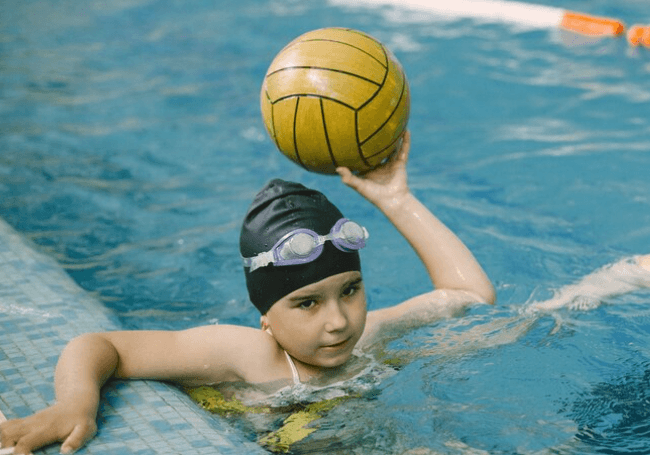
Swimming is the safest sport a child can participate in, according to a saying you hear at swimming galas, on poolside benches, and in PE staffrooms all over Britain. Waiting at the bottom of a scrum is low impact; there are no tackles or concussions. You can see why people believe it if you walk into any recreation center on a Saturday morning. Parents holding towels. Children wearing goggles too big for their faces. And the overpowering stench of chlorine.
For decades, people have assumed that it looks and feels safe. The situation in 2026 is more complicated than the presumption implies. In the UK, about 30% of primary school students graduate from Year 6 unable to swim 25 metres without assistance; this percentage has been steadily rising since 2018.
According to Swim England’s own projections, depending on how pool closures and curriculum delivery develop, the share may rise to sixty percent by this year. It’s not a statistical footnote. With abilities their parents took for granted, that generation is navigating open water. The sport’s reputation for safety is based on a subtle paradox. Among all childhood sports, swimming actually has one of the lowest injury rates. It is frequently ranked highest on recommendation lists by pediatric physiotherapists, surpassing even football, gymnastics, and cycling.
| Quick Reference | Details |
|---|---|
| Topic | Children’s swimming safety and skill levels |
| Region of Focus | United Kingdom (with broader implications) |
| Key Body | Swim England |
| Curriculum Standard | 25 metres unaided by end of primary school |
| Reported Decline | ~30% of primary leavers cannot meet the standard; projected up to 60% by 2026 |
| Child Drowning Trend (England) | Roughly doubled between 2020 and 2024 |
| Pool Closures | ~400 public pools lost in England, 2010–2025 |
Impact joint stress and collisions that shatter helmets are absent. When a child swims a front crawl, they are engaging in a physiologically gentle activity. A coach correcting a kick from the side. A child blowing bubbles for the first time without flinching. And the laminated certificate given out for floating thirty seconds without assistance are just a few of the small details you notice when watching a group lesson. There is no risk associated with the sport.
The risk lies in not realizing it. According to RLSS UK, the number of child drowning deaths in England increased from twenty to forty in a four-year period, nearly doubling between 2020 and 2024. That is the paradox at the core of this discussion. It’s a safe activity. Lacking the ability is not.
When on vacation, a child who is comfortable swimming laps on a Tuesday night could get into major trouble just two meters from the edge of a paddling pool. What was altered? A few things were intertwined.
During the years when muscle memory is most important, lockdowns halted instruction, and the recovery has been uneven. Since 2010, about 400 public pools have been closed throughout England, making what is left thinner. Leisure centers are more severely impacted by energy costs than most people realize.
Speaking with instructors, it seems like the infrastructure is deteriorating more quickly than councils can replace it. For a thirty-minute lesson, some schools now bus students forty minutes each way. In the hopes that no one will notice, some have subtly removed swimming from the schedule.
The inequality section, which is more difficult to read but arguably the most significant portion of the narrative, comes next. About 76% of kids in the least deprived areas can swim 25 meters, while only about 45% of kids in the most deprived areas can. There is more to that gap than just pools.
It’s about who lived close to accessible water that isn’t a freezing reservoir, who can afford weekend lessons, and who learned from their parents. Unusually, ministers publicly acknowledged the gap during a Lords debate in January 2025. Of course, fixing it is not the same as acknowledging it.
The distinction between competence and confidence is the other silent issue. It’s important to reiterate what Swim England has been saying for years. Before they have learned to tread water for a full minute or float in the shape of a star for thirty seconds. More than half of kids are pulled from class too soon. Frequently the moment they reach the 25-meter milestone.
Swimming a hundred meters continuously, treading water for sixty seconds, star-floating, and swimming fully clothed are the four fundamentals listed by Swim England and are not optional extras. When a child unexpectedly falls into the water, those are the things that count. The majority of mishaps don’t occur in class. They happen unexpectedly, fully clothed, on a hot day by a river. In 2026, is swimming the safest sport for children? If a child truly learns it correctly, the answer is probably yes.
That is still supported by the injury data. Whether enough kids are getting that opportunity is the more important question the one that doesn’t fit neatly into a headline. It’s difficult to ignore the difference between what swimming could offer a generation and what it does now. The pools are more empty. Lessons are shorter. The statistics continue to veer off course.
Speaking with parents and coaches, it seems like there is still hope, but the window is closing. The decisions made today. In council meetings. In classrooms. And at the kitchen tables of families debating whether Saturday morning is worth the drive. Will determine whether 2026 is the year that the trend reverses or becomes more difficult to reverse.
i) https://www.swimgeneration.co.uk/blog/why-uk-childrens-swimming-skills-are-declining-potential-solutions/
ii) https://www.swimdesignspace.com/blog/uk-children-swimming-skills-decline
iii) https://performancemedicine.com.au/safest-sport-for-children/
iv) https://littlespurspedi.com/blog/is-swimming-the-best-first-sport-for-kids/
v) https://children-ne.org.uk/is-swimming-accessible-for-everyone/