

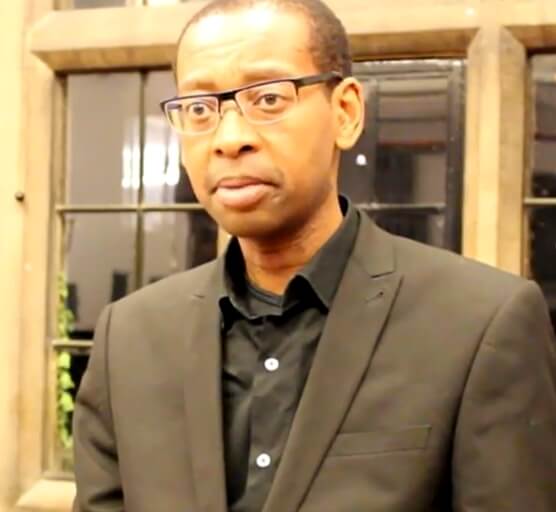
There’s a certain weight associated with a face you’ve seen since childhood. That belongs to Lizo Mzimba. He was just standing in front of those boisterous “Newsround” sets, complete with oversized graphics and primary colors, explaining the world to a ten-year-old without ever making them feel small, according to a generation of British viewers who grew up in the late 1990s and early 2000s. It’s more difficult than it seems. And now, strangely, searches for “Lizo Mzimba illness” appear in browser suggestion boxes all over the nation. This is because an algorithm decided it mattered after noticing a quiet, persistent curiosity.
Being straightforward about the very little that is actually known here is helpful. No health story has been verified. The BBC made no announcement, Mzimba made no public statement, and there was no reliable report indicating he was dealing with anything at all. Instead, the internet is doing what it always does with well-known public figures: it picks up on something, magnifies it, and transforms a hazy impression into a search trend that, by sheer repetition, begins to feel like proof. That is not how journalism operates. But in 2026, most people pay attention.
| Information | Detail |
|---|---|
| Full Name | Lizo Mzimba |
| Born | 6 December 1968, Solihull, Warwickshire, England |
| Raised | Birmingham, England |
| Education | University of Birmingham (Law and Medicine) |
| Profession | Journalist, Television Presenter |
| Known For | CBBC Newsround presenter (1998–2008); BBC News Entertainment Correspondent (2008–present) |
| Early Career | Student TV at Birmingham; NaSTA award winner; wrote for Sounds magazine from 1991 |
| Notable Legal Matter | Won substantial libel damages in 2011 over false claims by The Independent |
| Health Status | No confirmed illness; no statement from Mzimba or the BBC |
People are genuinely tugging at a very thin thread. He appeared to have lost noticeable weight, according to a January 2003 “Guardian” profile, one of those loose, slightly meandering pieces that newspapers used to run more frequently. According to that account, Mzimba dismissed it with a laugh, saying he had shed a little and that everything was alright. One of the few mentions of his physical appearance in print is that brief conversation, which occurred more than 20 years ago. It’s the kind of detail that goes unnoticed for decades before reappearing when someone looks for it.
Mzimba has worked as the BBC’s Entertainment Correspondent, a completely different beat, since departing *Newsround* in 2008. Fewer primary colors, more Leicester Square. Flashbulbs go off behind him as he appears outside premieres holding a microphone. He asks directors about their work, files on award shows, and sometimes covers the legal aspects of industry court cases and rights disputes. He is rarely at the center of the narrative, and one suspects that’s precisely how he enjoys it.
It’s difficult to fake the consistency of his reporting over the years. maintaining a straight posture. Delivery was measured. A calmness that reads more like someone who has done this long enough to understand that getting rattled on camera doesn’t help anyone than boredom. Additionally, very steadiness might be a contributing factor. Any perceived change seems louder than it should when someone is projecting stillness. A different haircut, a harsher angle in studio lighting, a frame caught in midair, and a search term are all born.
Additionally, there is a broader pattern that extends far beyond Mzimba. In public life, broadcasters at organizations like the BBC occupy an odd position. Not as well-known as actors, but still recognizable. A sense of personal investment in their well-being is fostered by being trusted and even relied upon. When one of them shows up on screen with a different appearance, those who grew up watching them do not react indifferently. A generational bond that is almost protective is at play, and it veers into speculation more quickly than it should.
He has previously faced intense public scrutiny, and it wasn’t kind. He received substantial libel damages in 2011 after *The Independent* falsely accused him of misbehaving while working on a BBC assignment at Cambridge University. He merely expressed his satisfaction that the issue had been resolved while standing outside the Royal Courts of Justice. It was, by all accounts, a painful episode, and long after the court has moved on, it continues to appear in search results. Since algorithms are only capable of making associations without context, some of the online noise that surrounds him now might just be a byproduct of that.
It is worthwhile to take a look at his past. He was born in Solihull in December 1968, grew up in Birmingham, and attended the University of Birmingham to study law and medicine, two professions that require a willingness to confront difficult situations head-on and a tolerance for complexity. It’s hard to tell if that training contributes to his on-screen steadiness. It’s possible that someone who has been trained to view the human body with clinical detachment has a slightly different perspective. He won NaSTA awards, took student TV seriously in Birmingham, and began contributing to *Sounds* magazine in 1991. That person didn’t fall into broadcasting by accident. It takes a certain kind of courage to choose the unpredictable nature of journalism over two of the safest professions in Britain.
It’s evident that he continues to work. As of 2025, he continues to work as an entertainment correspondent for BBC News, covering the *Doctor Who* series finale in June and interviewing Jenna Ortega about *Wednesday* in July. He consistently produces quality work throughout the year. A person in retreat would not produce that. It’s the routine of a journalist carrying out his duties with the kind of quiet consistency that hardly ever makes headlines, which could be the exact reason why something else has surged to the top of the search results.
That continuous output is the most dependable signal available for anyone who is truly concerned. You can learn a lot more about how the internet handles aging public figures than you can about Lizo Mzimba from the remaining trends, theories, and weight-loss questions that inquisitive strangers type in. He spent decades covering the news. He continues to do so. That appears to be the entire story for the time being.
i) https://surreylaserclinics.co.uk/celebrities/lizo-mzimba-weight-loss-whats-really-going-on-with-the-bbc-veteran/
ii) https://surreylaserclinics.co.uk/celebrities/lizo-mzimba-illness-the-truth-behind-the-rumours-swirling-around-the-bbcs-most-recognisable-face/
iii) https://en.wikipedia.org/wiki/Lizo_Mzimba
iv) https://privatetherapyclinics.co.uk/celebrities/lizo-mzimba-illness-rumors-why-are-fans-suddenly-concerned/