

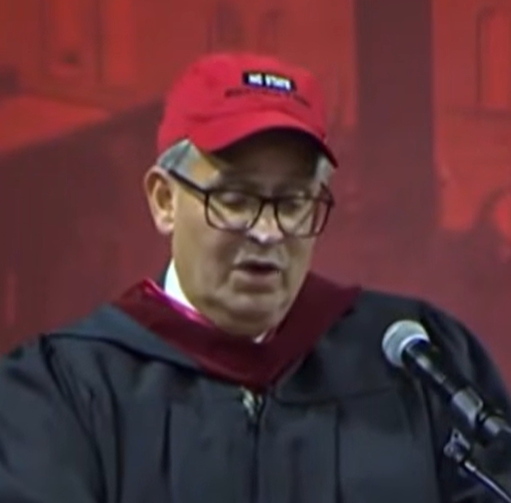
The first thing to note about Anil Kochhar is that, three weeks ago, very few people outside of the healthcare IT community had heard of him. That all changed on May 8 when he entered the Reynolds Coliseum in Raleigh and informed a graduating class that he was repaying their final-year loans, somewhere between a tribute to his late father and the customary greetings of commencement day. He seemed to have underestimated the response, as evidenced by the gasps, people covering their mouths, and students glancing at one another as if they had misheard. His face appeared on Fortune, Axios, the Times of India, and a dozen wire services by the end of the week as they scrambled to identify him.
The truth is that no one outside of Bloomberg’s databases has a reliable estimate of Anil Kochhar’s wealth. He doesn’t appear on any Forbes lists. He hasn’t discussed his finances in an interview. What is known is that, prior to retiring, he was vice chairman of Outcomes Health Information Solutions, a healthcare technology company that handled medical records analytics. Over the past ten years, businesses in that area of healthcare IT have been purchased for hundreds of millions of dollars, which is arguably the most accurate indicator of his wealth. It’s really unclear if the number is in the tens of millions or higher, and he seems to prefer it that way.
When reporting on a gift this size, it’s easy to ignore the awkward math. The average loan balance at NC State is in the tens of thousands, and estimates place the debt relief at more than two million dollars for 176 bachelor’s degree recipients and another 26 master’s graduates. Kochhar has not disclosed the precise amount, and NC State has declined to confirm it. The discretion seems a little outdated. He merely presented the idea to Dean David Hinks and asked the financial aid office to take care of the rest, in a time when philanthropy is typically accompanied by a press tour and a branded foundation.
| Bio | Details |
|---|---|
| Full Name | Anil Kochhar |
| Known For | Cofounder & former Vice Chairman, Outcomes Health Information Solutions |
| Industry | Healthcare Technology / IT |
| Hometown | Raleigh, North Carolina, USA |
| Nationality | American (Indian-origin) |
| Education | Broughton High School, Raleigh |
| Father | Late Prakash Chand Kochhar (NC State Wilson College alumnus) |
| Spouse | Marilyn Kochhar |
| Philanthropy | Paid off student loans for ~202 NC State Wilson College of Textiles graduates (May 2026); supporter of Daraja Academy, Kenya |
| Estimated Net Worth | Not publicly disclosed; widely estimated in the multi-million-dollar range based on his exit from Outcomes Health |
Kochhar is a native of Raleigh, which is a minor but easily overlooked detail. His father, Prakash Chand Kochhar, came from India decades earlier to study textiles at NC State and eventually built his life around that one welcome. He grew up there and attended Broughton High School. The elder Kochhar’s name already appears on Wilson College’s endowment deanship. Therefore, the line landed differently than it would have from a stranger when his son spoke from the stage about NC State saying “welcome” instead of asking why. It was more of a quiet personal accounting than commencement boilerplate.
It’s difficult to ignore Kochhar’s pacing of the announcement when watching the video. He doesn’t hurry. He gives his dad credit. He mentions Marilyn, his wife. Then, almost as an aside, he shares what he refers to as the “life-changing news.” It takes a moment for students in the front rows to comprehend it. A young lady wearing a cap and gown is seen turning to face the person next to her and mouthing something that appears to be *wait, what?* These are the reasons commencement speeches are typically forgotten by Monday. This one won’t.
This has a larger cultural context that is worth discussing. The amount owed by American students has surpassed $1.7 trillion. Programs for forgiveness have been challenged, halted, and partially reversed. Kochhar’s gesture feels both familiar and uncommon because Robert F. Smith’s now-famous 2019 gift to Morehouse College graduates established a model that very few have followed at the same scale. Additionally, it poses a question that no one is quite sure how to respond to: can isolated acts of private kindness effectively combat such a large structural issue? Most likely not. The structural controversy had little bearing on the 202 or so graduates who left Reynolds Coliseum that afternoon.
For the record, there is another Anil Kumble, an Indian cricket player whose name is sometimes confused with Kochhar’s in casual searches. According to Indian financial outlets, Kumble’s net worth is between ₹80 and ₹90 crore. Other than their shared South Asian ancestry and a brief publicity moment, the two have nothing to do with one another. Kochhar is a North Carolina-born businessman. Kumble is a Bengaluru-born leg-spinner. As always, search engines lack precision.
Days later, the dollar amount is not what really sticks. It’s the framing that Kochhar selected. He made no mention of wealth, earning, or merit. He discussed freedom, including the ability to take chances and choose a career without worrying about a loan calculator. No one knows yet whether that gift will result in the kinds of lives he hopes it will. The graduates have not yet begun working. The economy is still unstable. There are still a lot of things that could go wrong. For one Thursday afternoon in Raleigh, the math didn’t matter because of a man whose net worth is still unknown.
i) https://www.msn.com/en-in/money/topstories/my-father-could-not-have-imagined-indian-origin-philanthropist-pays-off-student-debt-for-176-students-in-us-college/ar-AA22Sp45
ii) https://timesofindia.indiatimes.com/world/us/indian-origin-philanthropist-anil-kochhar-pays-off-student-loans-for-176-graduates-of-north-carolina-80-yea