
Why Swimming Is Becoming a Popular Choice Among Gen Z Parents Today
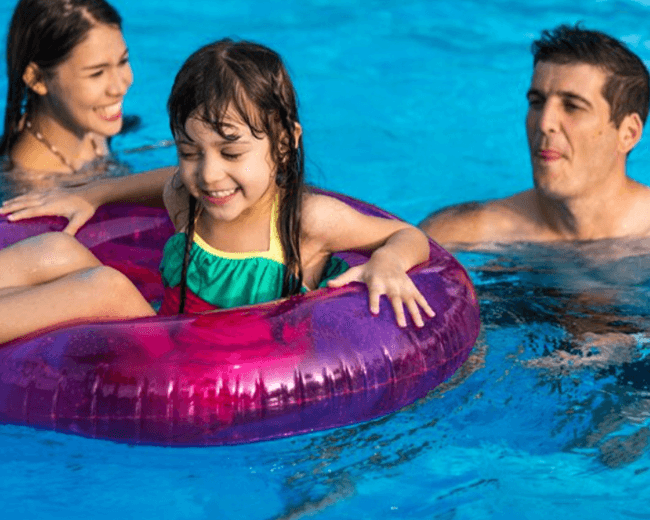
In a scene that has become remarkably familiar in recent years, children shuffle toward the pool with towels trailing the floor and goggles bouncing against their chests, while parents stay close enough to catch a glimpse but far enough to let the instructor take over.
The choice to make swimming a priority for Gen Z parents is frequently made subtly, without speeches or lofty declarations, and is influenced by life experience and an astute understanding of what truly endures into adulthood.
| Key Context | Details |
|---|---|
| Parental priority | Roughly seven in ten parents rank swimming as the most important sport for children to learn |
| Core motivation | A practical, life-saving skill valued over competition or trophies |
| Generational lens | Gen Z parents balance digital fluency with deliberately structured physical activity |
| Access pattern | Lessons are increasingly parent-led rather than provided through schools |
| Participation trend | Swimming participation has notably improved among younger adults and families |
A system that rewarded early talent and marginalized late bloomers, sport was framed for many of these parents as performance first, participation second, and they left behind formative but sometimes harsh memories.
Swimming brings a different texture to that memory, where improvement feels remarkably effective without the pressure of comparison, progress is incremental, almost meditative, and it’s more about showing up than it is about being chosen.
In a culture that has historically been dominated by competitive pathways, parents who choose swimming are not rejecting the sport itself but rather redefining its purpose by prioritizing ability over recognition and resilience over rankings. This change feels especially novel.
As parents who grew up online now understand how easily movement can be replaced by motionless scrolling if structure is not purposefully built in, technology plays a supporting role in this decision, ever-present but carefully managed.
By keeping phones in lockers and focusing only on breathing, balance, and repetition, a swimming lesson intentionally avoids distractions, resulting in a highly productive hour that feels both confined and rejuvenating.
The pool, which returns every week at the same time with the same faces and the same echo of voices against tiled walls, gives many families a rhythm that domestic life frequently lacks. It offers stability without rigidity.
When parents nod and provide brief updates, the social dynamic is subtle but noticeably better than in louder sports. Additionally, children learn familiarity through routine rather than coerced interaction.
Cost is often discussed, but swimming is justified in a different way. It is said to be surprisingly affordable when compared to longevity because the skill does not depend on maintaining peak performance or expire with age.
Additionally, there is a noticeable change in the demographics of attendees, with mothers and fathers showing up in equal numbers, navigating damp floors and large lockers, and sharing responsibilities in ways that seem more equitable.
When a child slipped off the step during a winter session, paused, and then calmly reached for the wall without panicking, I recall thinking that confidence frequently comes through repetition rather than applause.
The appeal of swimming is enhanced by its lack of narrative pressure, which many parents find incredibly comforting. It offers neither an inherited fantasy of stardom nor an assumed destination beyond competence.
Conversations about children’s mental health have become very clear in recent years, and swimming is often mentioned as being especially helpful for emotional regulation because the water offers both physical effort and sensory calm.
Teachers have responded to this generational change by using softer language and placing more emphasis on consent and confidence. These strategies seem very dependable to parents who are aware of how tone affects a child’s willingness to participate.
The number of schools has decreased, shifting the burden back to families. However, Gen Z parents take a practical approach to this, investigating programs, comparing schedules, and making a commitment in spite of practical difficulties.
The promise of continuity is also present in swimming, which is envisioned as an activity that parents may engage in with their kids later on, side by side rather than apart, rather than as a phase of childhood.
A sport without stands or spectacle, where effort is only apparent to those who are closely watching, where progress is measured in meters and breaths rather than cheers, has a subtly compelling quality.
Gen Z parents choose sports that fit with their values of balance, safety, and long-term utility rather than being sentimental about them.
Swimming provides a skill that develops with the child and doesn’t require reinvention, making it an exceptionally durable fit for this framework.
Because of its consistent predictability, the pool has evolved into a place where contemporary parenting feels more thoughtful and less reactive, where kids learn how to navigate uncertainty with confidence rather than how to win.