

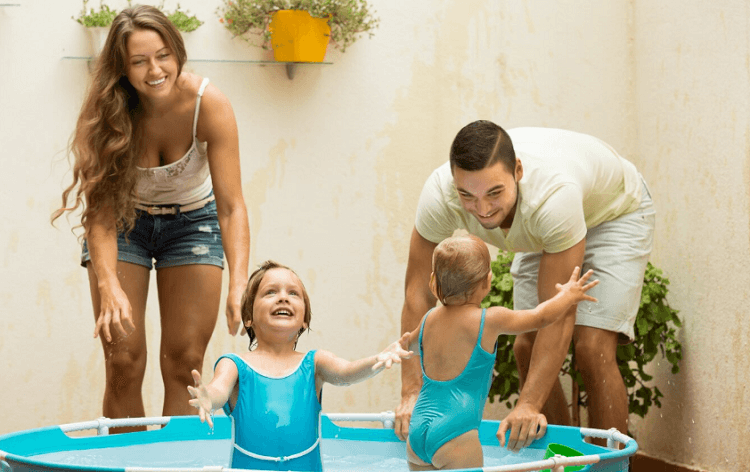
A community pool’s layered soundscape a remarkably similar blend of splashing water, lifeguard whistles, and half-finished conversations that drift across the deck is the first thing that people notice. It creates an atmosphere that is both busy and comfortingly orderly.
Parents arrive with survival kit-sized bags, towels tucked under their arms, and snacks rattling in containers. They move with the well-honed efficiency of those who know they will be here for a long time and have figured out through practice what is especially helpful to bring.
| Context | Details |
|---|---|
| Type of space | Public, community, and shared residential swimming pools |
| Primary users | Parents, caregivers, children, instructors |
| Social function | Informal support networks, routine based interaction |
| Health role | Water safety, physical activity, mental wellbeing |
| Notable shift | Pools functioning as social micro communities, not just facilities |
In contrast, children use the area as a playground and a testing ground. They enter the water with a mixture of excitement and trepidation, learning patience, balance, and confidence while being observed by their parents as well as a small group of familiar adults.
Pools have significantly enhanced their function as social infrastructure in recent years, evolving from locations intended solely for training or exercise to regular gathering spots where connections develop gradually, without pressure or preparation.
Because the value of swimming lessons goes far beyond technique and touches on routine, accountability, and the comfort of seeing the same faces again, they serve as an anchor for this transformation, functioning like a weekly appointment that parents seldom cancel.
Parents sit side by side as kids kick and float while being taught, exchanging brief observations about sleep regressions, school dropouts, or the difficulty of persuading a toddler that goggles are not a form of punishment.
The fact that no one is putting on a polished front with damp hair, damp clothes, and split attention flattening differences that might matter elsewhere makes these interactions incredibly effective at reducing social barriers.
The physical layout of pools facilitates this dynamic by establishing a confined space that promotes awareness. Adult anxiety is decreased and children are given more freedom to explore thanks to the clear regulations, obvious boundaries, and ongoing supervision.
After several visits, parents start to trust the staff as well as the facility, realizing who always remembers to pack sunscreen, who always brings extra snacks, and who calmly intervenes when a child loses their cool during a lesson.
This consistency is especially effective for kids because it makes cooperation, taking turns, and encouragement part of a fun routine and reinforces social learning in an environment that feels playful rather than educational.
Lifeguards and instructors in this situation become subtly powerful individuals, exhibiting calm and equitable authority while reassuring parents who observe their kids react favorably to outside guidance.
The impact is even more noticeable in isolated or underdeveloped areas, where families congregate at pools to maintain routine, hygiene, and mental health in addition to cooling off.
Emotionally, the benefits are surprisingly inexpensive for parents; all they need to do is show up and stay long enough to be acknowledged; formal enrollment in support groups or scheduled conversations are not necessary.
Youngsters pick up these patterns naturally, learning how to share space, which behaviors are rewarded, which ones are corrected, and other skills that carry over into the classroom and playground.
Although there are occasionally conflicts, usually over supervision or splashing, these are usually swiftly resolved because everyone agrees that the area belongs to everyone and works best when everyone works together.
As time passes, these exchanges create a very flexible network that transcends the pool and includes playdates, carpools, and unplanned but habit maintained check-ins.
Because of their low demand, preference for presence over performance, and reward for consistency over charisma, these micro communities are incredibly resilient.
Pools provide a refreshingly analog solution, based on physical proximity, shared schedules, and the straightforward clarity of witnessing children learn something tangible, in a time when many parents report feeling alone despite constant digital contact.
The local pool is a particularly creative example of how existing spaces can be repurposed through use rather than redesign, as communities search for ways to support families without overengineering solutions.
Municipalities are not only maintaining facilities but also fostering environments where children flourish visibly, parents find support without having to ask for it, and trust develops gradually by continuing to invest in access, safety, and programming.