
Why Swimming Is a Key Tool for Kids Struggling With Hyperactivity Beyond Medication
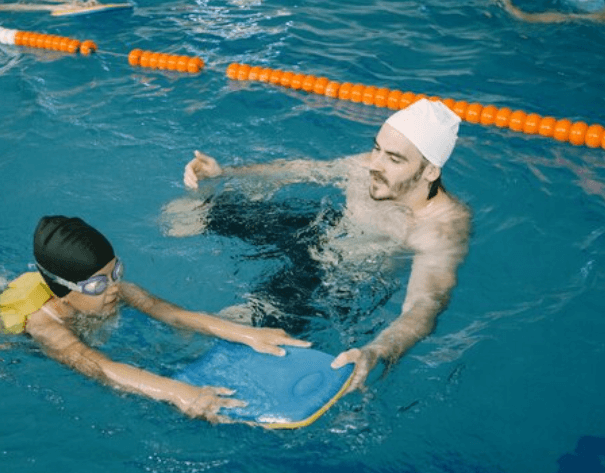
Families who have spent enough afternoons sitting on damp benches watching restless bodies finally move with purpose often notice a strikingly similar shift in behavior for children who struggle with hyperactivity. Indoor pools have a way of changing behavior without making that change obvious.
As splashes take the place of chatter and instructions are reduced to gestures, lane lines, and the quiet authority of water itself pressing back against every kick and pull, the noise never completely goes away but does so in a noticeably better way.
| Primary Focus | Swimming as a practical support tool for children with hyperactivity |
| Target Group | Children showing hyperactive or ADHD-related behaviors |
| Core Benefits | Improved focus, emotional regulation, and body awareness |
| How It Works | Rhythmic movement, structured repetition, controlled breathing |
| Supporting Evidence | Clinical observations, small-scale studies, educator and parent reports |
Swimming provides a particularly helpful contrast because it requires motion but insists that it follow a pattern. For many hyperactive children, daily routines are built around correction, with adults continuously rerouting movement that seems endless and uncontained.
Even the most impetuous swimmer must slow down and adjust because the water does not react to impatience, and this lesson is remarkably effective because rushing a stroke or neglecting breath control causes instant fatigue.
Swimming introduces regulation without lectures by requiring synchronized breathing and movement. Each lap reinforces a calm sequence that is not verbally enforced but becomes physically inevitable.
Coaches and therapists have discreetly observed over the past ten years that controlled breathing underwater can dramatically lessen emotional outbursts, particularly for kids who find it difficult to stop long enough to recognize their own internal cues.
Because bodies that frequently feel awkward or “too much” on land suddenly move with ease, supported evenly from all sides, the buoyancy of water plays a subtle but incredibly versatile role, reducing the sensory overload that drives constant motion.
I was shocked by how rapidly seriousness replaced agitation once the goggles were on, and I recall witnessing one child who could hardly sit through a brief conversation become totally engrossed in counting strokes.
Because the rules of swimming are physical rather than verbal, with lane markers, walls, and stroke patterns subtly guiding behavior without confrontation, the structure of swimming is remarkably clear, even to kids who don’t respond well to traditional instruction.
For kids who don’t respond well to constant correction, this setting works very well because the water itself gives instant feedback, gently but firmly reinforcing what works and what doesn’t.
Although research is still in its early stages, it has been demonstrated that children who participate in regular swimming programs frequently exhibit noticeably longer attention spans. Teachers have reported fewer disruptive moments during the school day and smoother transitions between tasks.
Parents report less chaotic evenings, not because all of the energy has been expended but rather because it has been used in a way that leaves the body feeling organized rather than exhausted.
Unlike many team sports, swimming functions as a closed system with minimal unpredictability and a strong emphasis on repetition. This structure is especially creative for kids whose minds switch between stimuli quickly.
For kids who have trouble with open-ended activities that require constant decision-making, each lap serves as a reset button, providing repetition that calms rather than bores.
Breathing is still essential to this effect because the inhale-turn-exhale rhythm triggers relaxing neurological reactions that simplify emotional regulation in a manner that therapy frequently aims to teach more directly.
Children who consistently practice breath control develop an internal pacing mechanism that extends beyond the pool, enabling them to pause before reacting in circumstances that previously caused impulsive reactions.
For kids who find social cues tiresome, social interaction in swimming environments is subtly encouraging because kids can share lanes and routines without feeling pressured to talk all the time.
Confidence can gradually grow in this shared but low-demand setting, where advancement is gauged by technique and distance rather than rivalry or comparison.
Swimming achievement is tangible and obvious, and for kids who have emotional difficulties in school, this clarity can be surprisingly affordable, providing success free from the burden of previous setbacks.
For many families, medication and therapy are still crucial, but swimming works well with these methods as well, giving previously learned skills a physical reinforcement.
Families who dedicate themselves to regular sessions frequently see patterns emerge, with daily transitions becoming incredibly dependable and sleep routines stabilizing over time.
In swimming, effort is reframed in a way that feels equitable because efficiency, patience, and attention to detail are rewarded right away, but pushing harder does not guarantee better results.
This lesson, which is acquired through muscle memory rather than formal education, frequently permeates other facets of life over time and influences how kids handle difficulties outside of the pool.
Not everyone enjoys swimming, and some kids are completely afraid of the water, but for those who do, the advantages can be incredibly long-lasting, continuing long after the lesson is over.
Swimming’s quiet consistency, which provides hyperactive kids with a setting where movement is expected, boundaries are clear, and calm develops organically through motion rather than restraint, is what makes it appealing rather than its novelty.