

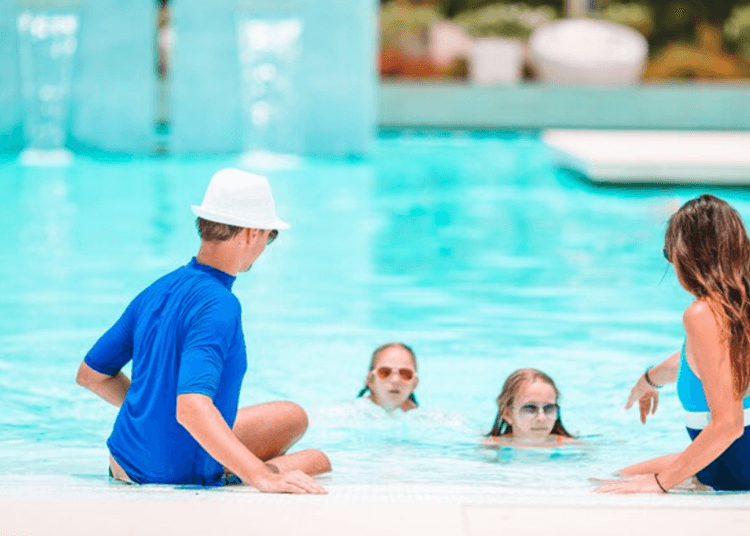
Indoor pools now bustle with constant activity on weeknights and early weekend mornings, with a scene remarkably similar in every city and season, as parents sit with paper cups of coffee and wet sleeves, watching kids push off the wall with varying degrees of confidence and familiar determination.
Swimming used to be a summertime activity for many families, squeezed in between holidays and heat waves before being quietly put on hold once school schedules tightened. However, in recent years, this seasonal mindset has significantly improved into something more consistent and, for many households, much more intentional.
| Key Context | Details |
|---|---|
| Type of activity | Low-impact, full-body physical movement |
| Typical starting age | Infancy through early childhood |
| Core health benefits | Heart health, muscular strength, coordination, stress reduction |
| Safety factor | Formal instruction linked to significantly reduced drowning risk |
| Long-term value | Suitable from childhood through older adulthood |
Parents who choose swimming do so in response to their mounting weariness with convoluted sports schedules and ongoing transportation demands. They find that swimming is a surprisingly inexpensive, incredibly dependable routine that only requires patience and consistent attendance.
Similar to a swarm of bees working in parallel, swimming is a well-organized system in which toddlers learn to float while older kids hone their technique nearby. All of them benefit from the same water without vying for attention or approval.
Families stay because the experience feels remarkably effective without being punishing, strengthening muscles and hearts while remaining incredibly durable for growing joints and still-developing bodies. The physical benefits are well established.
Swimming promotes steady improvement rather than early burnout, which parents increasingly view as especially advantageous for long-term health and emotional balance. This contrasts with high-impact sports that require peak performance at young ages.
Anyone who observes a tense child relax after being submerged can see how swimming promotes mental wellbeing by utilizing rhythm and repetition, concentrating on movement and breathing patterns rather than outside noise or expectations.
Parents frequently discuss anxiety and restlessness during conversations on pool decks, pointing out that frequent swim sessions have significantly improved sleep patterns and emotional regulation outcomes that feel just as valuable as physical conditioning.
The safety aspect of swimming is still crucial, despite the fact that it is frequently mentioned in an indirect manner, since families realize that organized lessons greatly lower the risks associated with the water, substituting familiarity and caution based on skill rather than avoidance for fear.
By incorporating water safety at a young age, parents are not only safeguarding their kids in swimming pools but also preparing them for lakes, beaches, and other unfamiliar settings, giving them confidence that extends far beyond the swim lane.
Another attraction is the lack of constant competition because swimming places more emphasis on individual standards than on public rankings, enabling kids to track their development in private, which many families find surprisingly empowering.
Friendships between sets and casual conversations between parents who share schedules over months are examples of how social development naturally takes place, fostering a supportive but non-demanding community.
When it comes to long-term health planning, swimming is particularly adaptable because it can be used to maintain mobility and cardiovascular fitness at various stages of life.
Families have become more wary of fitness fads that promise quick fixes over the last ten years, preferring long-lasting habits. Swimming satisfies this desire by providing consistency without the pressure of novelty.
Families can gently instill discipline by committing to regular sessions, which reinforces the lesson that attendance is more important than immediate success a lesson that is applicable outside of the pool environment.
Additionally, swimming promotes inclusivity by bringing kids of all skill levels together in one area where each child’s progress is unique and comparisons are minimized, boosting self-esteem without drawing attention to themselves.
Children gain resilience, perseverance, and self-confidence through repeated exposure; they acquire skills gradually while taking in the knowledge that effort builds up over time.
Swimming is a forward-thinking option for parents because it consistently promotes healthy routines that can last for decades, not because it promises remarkable results.
Swimming continues to be an anchor as families manage hectic schedules and changing health priorities, subtly demonstrating that sustainable habits frequently develop from straightforward, well-supported choices made early and frequently reinforced.