
Why Parents Are Calling Swimming a Life-Saver for Early Growth
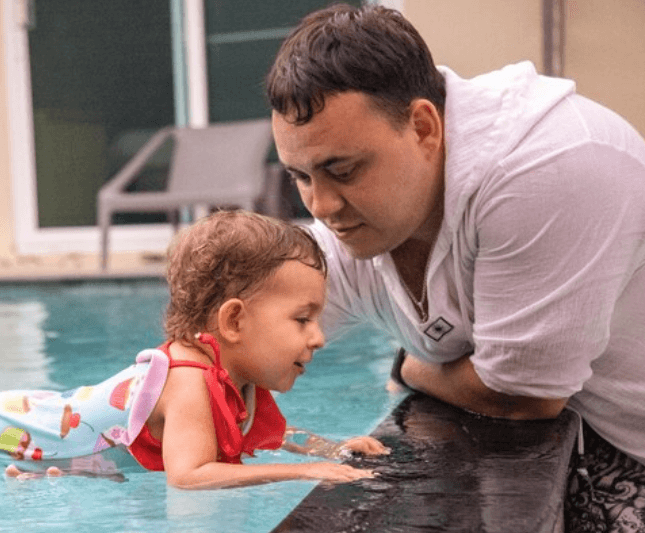
Swimming used to be thought of in the same way as weekend soccer or piano lessons, which parents enjoyed but put off when their schedules got tight. This way of thinking has significantly changed in recent years, as more and more families now characterize swimming as a life readiness exercise rather than an enrichment.
Water safety is a topic that comes up with remarkably similar urgency at school pick-up lines and playgrounds. A parent inquires about their child’s ability to float calmly without assistance after hearing about an impending vacation; ten years ago, this question would have seemed excessive.
| Key Context | Details |
|---|---|
| Primary safety concern | Drowning remains one of the leading accidental risks for young children |
| Preventability | Most childhood water incidents are considered preventable with layered safeguards |
| Typical starting age | Structured lessons can begin as early as 6 months |
| Core survival skills | Floating, breath control, self-rescue, calm recovery |
| Developmental impact | Coordination, confidence, emotional regulation, discipline |
Parents’ gradual exposure to information that they are unable to ignore has contributed to this shift. Statistics on drownings are startling, especially for young children, and they show how easily mishaps can happen in quiet, in familiar settings like hotel courtyards or backyard pools.
Parents discover that while supervision is very dependable, it is never perfect. Families start looking for safeguards that work without constant supervision after realizing how easily attention can be divided, even among watchful adults.
In order to address that issue, contemporary swim programs prioritize teaching survival over refinement. When panic would otherwise take over, children are guided through simple techniques like floating, controlled breathing, and intentional stillness. These techniques are remarkably effective.
It is subtly convincing to see a small child roll onto their back without any problems. Although the movement is straightforward, the child’s confidence in it indicates a more profound change in their comprehension of risk and reaction.
In order to be extremely effective rather than draining, many lessons are purposefully short and frequent. Instructors explain that repetition develops reflexive calm, which substitutes practiced poise under pressure for natural flailing.
Early sessions are frequently characterized by parents as emotionally taxing. Doubts quickly arise because seeing a baby briefly submerged goes against every protective instinct. As progress becomes apparent and steady over time, those doubts are greatly diminished.
Families share stories that are weighty but devoid of drama. A father remembers pausing for a few seconds by a creek. A mother recalls an unlatched gate. A grandparent recounts a time when trouble lurked beneath the surface, concealed by noise.
In many of these stories, a child’s learned response rather than adult speed was what determined survival. breathing, floating, and waiting. Techniques honed in quiet environments suddenly came into their own.
Swimming promotes development in ways that parents may not always expect, in addition to safety. The body and brain work together when arms, legs, and breathing are coordinated, strengthening the neural pathways linked to balance, concentration, and emotional control.
The fact that swimming develops strength without impact makes it especially advantageous, according to pediatric specialists. Growing joints are safeguarded, and overall physical confidence is supported by the steady development of muscle tone and endurance.
Additionally, taking swimming lessons instills a discipline that is applicable to everyday life. Youngsters are taught to wait, listen, and repeat challenging motions until progress is noticeable. That patience eventually extends to home routines and schoolwork.
Subtly, confidence appears. When kids learn to stay calm in the water, they often approach other challenges in a different way, realizing that discomfort does not always indicate danger but sometimes growth.
At first, parents report changes that don’t seem connected. Bedtimes start to go more smoothly. When doing homework, frustration becomes less intense. Kids seem more eager to try things that used to make them avoid them.
Responsible instructors stress that skill does not equate to invulnerability and do not promote swimming as a panacea. Overconfidence, cold water, and exhaustion are still hazards that require consideration and planning.
Layers supervision, barriers, swimming ability, and emergency preparedness are the foundation of the most successful safety philosophy. Each layer makes the assumption that the others might fail, resulting in an incredibly robust system.
Parents navigating modern childhood, where risks are rarely singular and solutions must be flexible, will find resonance in this layered approach. Swimming becomes a component of a more comprehensive resilience strategy.
Changes in generations also have an impact. Many parents who enrolled their kids never acquired the confidence to swim. These days, teaching their kids feels like filling a genetic void, a subtly significant choice.
Children’s sessions are frequently followed by adult instruction. It is a very human scene, equal parts humility and hope, to watch a child float on their own while a parent practices breathing techniques nearby.
Access is still not uniform. Not all communities are served equally, and programs are expensive and time-consuming. Participation increases and results improve when lessons are widely accessible, highlighting the significance of accessibility.
The most notable aspect is the words parents use after witnessing the outcomes. They talk less about strokes and more about mental tranquility, lighter vacations, and kids who can swim with composure.
Because of experience and observation rather than advertising slogans, swimming has evolved from an optional activity to a fundamental skill.
When parents refer to it as a life-saver, they are not overstating the case. They are talking from recollections, from near-misses, and from the silent relief of seeing a child wait, breathe, and float.