

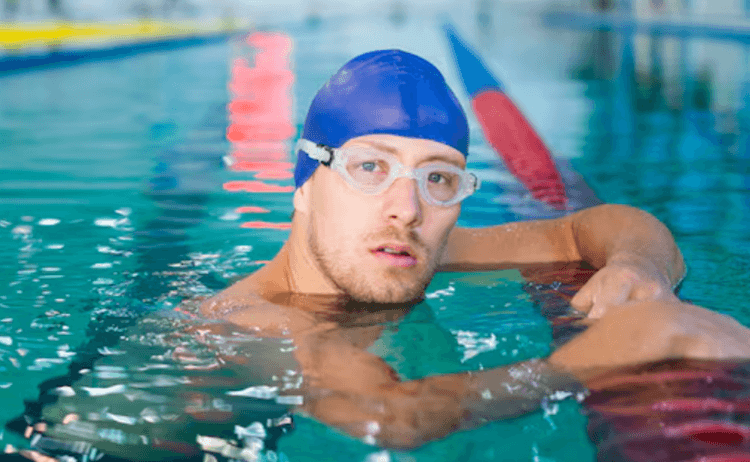
In morning, stand at the edge of any indoor pool and observe what transpires. Around the third or fourth lesson, a child who was holding on to the lane rope like a lifeline will typically let go. Not entirely. Just a little bit. Enough to hover for 30 seconds before returning to the surface. The teacher also notices it. You can probably tell all you need to know about whether someone is genuinely skilled at this job by how they react to that moment or if they completely miss it.
Being a good swimmer has never been enough for swimming instruction. However, the demands on teachers have increased significantly in 2026 due to the fact that more families than ever before are enrolling kids in classes and that there is a greater awareness of the dangers associated with water safety. Some facilities might not be up to date with what families now require from their educators. And that difference is important.
| Category | Details |
|---|---|
| Role | Swimming Instructor / Aquatics Educator |
| Average Annual Salary (US) | $34,327 |
| Hourly Rate | ~$16.50/hr |
| Top 10% Earn | Over $40,460/year |
| Primary Qualifications | CPR Certification, Lifeguard Training, Swim England / STA / equivalent national body certification |
| Key Skills | Communication, Patience, Observation, Technical Swimming Knowledge, Adaptability |
| Work Environment | Community pools, fitness centers, private swim academies, school programs |
| Job Type | Part-time and full-time; flexible hours common |
Certification and appropriate training are the most crucial qualities. A nationally recognized qualification is the standard, not an added bonus. Teachers can progress from basic competency to advanced teaching levels through organized pathways created by organizations such as Swim England and the STA in the UK and similar bodies in the US. Those credentials indicate that a teacher has undergone formal evaluation rather than being relied upon.
Because the science of teaching swimming, especially to young children, is constantly changing, instructors at respectable programs are expected to pursue further education. The professional who attended workshops last winter is not the same as the instructor who completed their training five years ago and stopped learning.
However, observing a certified teacher in action is a completely different matter. It’s your presence that keeps you in the door, not your credentials. The most skilled swimming instructors are extremely perceptive in a way that goes well beyond simply observing stroke mechanics.
They can tell when a child’s excitement has subtly faded, when anxiety has returned after a successful week, or when the child in the back of the lane is using jokes to cover up their fear. This meets the needs of a “mixed bag of personality types”, as former coaches at prestigious university programs have said, and they are absolutely correct. It is not a skill that appears on any certification.
Perhaps the most underappreciated trait in this line of work is patience. Children don’t all learn at the same rate, and this is particularly true in the water, where physical ability greatly depends on confidence. A scared child won’t float correctly. A child will not try new things if they are embarrassed. Even with the best of intentions, an overly demanding teacher can cause a student to regress by weeks. Teachers who are aware of this resist the need to advance quickly. They remain present with every student, honoring little things that may seem insignificant from the bleachers but have real significance in the water.
In this situation, it’s important to distinguish between empathy and sympathy. When a child is having difficulty, an instructor may show empathy by easing up and skipping the challenging portion of a drill because they care about the student. Conversely, empathy enables a teacher to comprehend the child’s emotions while maintaining the lesson’s structure. The most effective educators are aware of the challenges of the moment, but they don’t allow it to divert the focus of the lesson from what the student truly needs. Maintaining that balance is challenging, and not everyone finds it.
Communication is worthy of its own consideration. Swim instructors frequently operate in noisy, echo-filled spaces that make it challenging to see clearly. It is extremely uncommon to be able to translate a complex biomechanical correction into language that a six-year-old can comprehend. Good teachers use games, analogies, physical cues, and visual demonstrations. When verbal instruction fails, they turn to reading instead. They pay attention as well. A teacher will run a better class than one who follows a predetermined script every week if they consistently incorporate what the students say during class, such as that something feels strange, that their arm hurts, or that this game is boring.
When discussing what makes a great teacher, passion almost always comes up, and it’s difficult to ignore. Children seem to be able to identify inauthenticity with startling precision. A nine-year-old won’t be fooled for very long by a teacher who just goes through the motions. Coaches who make a lasting impression typically have a genuine passion for swimming, both as a sport and as a talent they think everyone should possess. That belief is infectious. It modifies the pool’s energy. Students no longer endure lessons; instead, they look forward to them.
Adaptability is possibly the most underappreciated trait in 2026. A great teacher approaches a lesson with a loose plan. They know when to extend a drill because three children are finally getting something right, when to abandon an exercise because the group isn’t ready, and when to make a lesson almost entirely play-based because the emotional climate in the pool demands it. A rigid teacher with rigid lesson plans is sure to cause progress to stall. It is worthwhile to seek out instructors who are able to improvise intelligently, always for the benefit of their students and never merely to pass the time.
Fundamentally, what makes a great swimming instructor in 2026 is not all that different from what it has always been. safety awareness. Be patient. ardor. Interaction. the readiness to prioritize the swimmer in each and every session. It’s still unclear if the aquatics industry as a whole is doing enough to draw in and keep individuals who actually possess all of these attributes, or if too many programs are just filling jobs. It’s a question worth posing, though, for the families waiting at the pool’s edge, hoping their child will eventually just let go of the rope.
i) https://jobbank.artsusa.org/salary/swimming-instructor-2
ii) https://bigblueswimschool.com/blog/finding-the-right-swim-instructor-what-parents-should-know/
iii) https://intotheswim.com/4-characteristics-that-make-a-great-swim-instructor/
iv) https://worldwideswimschool.com/blog/5-skills-that-make-a-quality-swim-teacher-2/