

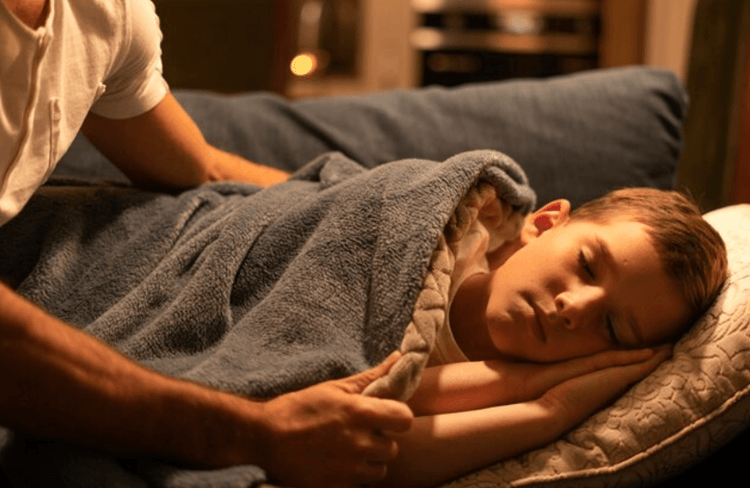
Parents of young swimmers are familiar with a certain expression. It’s the glazed-over eyes during the drive home, the abrupt silence where there used to be nonstop conversation, and the way a child who won’t sit still for twenty minutes during dinner will be half asleep before their head touches the pillow. It’s not a coincidence. It’s not just fatigue, either.
Beyond just burning off energy, something particular takes place in the water. Regular swimmers typically fall asleep more quickly, sleep deeper, and wake up in a noticeably better state than non-swimmers. Parents are aware of it. Swim instructors are aware of it. Furthermore, the research is gradually catching up to what everyone in the vicinity of a swimming pool seemed to already know.
| Topic | Details |
|---|---|
| Subject | Swimming and Children’s Sleep Quality |
| Benefits Covered | Physical exhaustion, nervous system regulation, circadian rhythm, temperature regulation, stress reduction |
| Age Range | Infants to teenagers |
| Recommended Frequency | 2–3 sessions per week |
| Best Time to Swim | Late afternoon (4–5 PM) for optimal sleep benefits |
| Key Research Reference | National Sleep Foundation — physical activity and sleep quality |
Few other activities can match the full-body workout that swimming offers. Each stroke simultaneously works the arms, shoulders, legs, and core. Muscles are working hard really hard without the strain that causes soreness or injury because the water produces natural resistance without the startling impact of running or jumping. A child’s body has used up the kind of concentrated, whole-body energy that makes it obvious that it’s time to rest by the end of even a moderate session. Don’t fidget or bargain for another television program. Take a nap.
However, the physical tiredness is just one aspect of the situation. The environment itself is what distinguishes swimming from, say, an hour of gymnastics or football. The nervous system is naturally calmed by water. Something akin to a meditative state is produced by the feeling of buoyancy, the muted sounds, and the rhythmic repetition of breathing and strokes. That change can be significant for kids who have a tendency toward anxiety or hyperactivity. The nervous system gradually learns to downshift in the pool.
Additionally, most people are unaware of the temperature effect. When a child swims, especially in water that is colder than body temperature, their body warms up during the exercise and then naturally cools down. The physiological process the body goes through at the start of sleep is nearly exactly mirrored by that decrease in core temperature after leaving the pool. It’s biology, not a ruse or a coincidence. When the body senses that rest is imminent, it reacts appropriately.
Cortisol also has an impact. It’s common knowledge that stress hormones, especially cortisol, interfere with sleep by keeping the brain in a state of low alertness when it should be relaxing. Swimming has been demonstrated to raise endorphins, the body’s natural mood enhancers, while lowering cortisol. Chemically speaking, a child who leaves the pool is in a completely different state than one who spends the same amount of time in front of a screen. The contrast is striking.
The bond is even stronger for infants and young children. Early exposure to water frequently results in better sleep patterns, as well as improvements in general disposition and appetite. Because water shares characteristics with its surroundings, the sensory experience of being in water the pressure, buoyancy, and sounds offers a rich stimulation that calms rather than overwhelms. Swimming sessions are often described by parents as a game-changer for sleep schedules in the home when they are incorporated into a weekly routine. It’s difficult to ignore what they say.
It turns out that timing is more important than most people think. High-energy kids who need a physical outlet before school can benefit from swimming first thing in the morning, but the most reliable sleep benefits seem to come from swimming in the late afternoon, around four or five o’clock. It’s close enough to bedtime that the physical exhaustion and cooling effect last, but far enough away that the activity’s stimulation doesn’t disrupt the wind-down process. The majority of swim instructors and sleep researchers advise finishing at least an hour before bed and then doing something quiet, like taking a warm shower, having a peaceful meal, or reading.
It’s still unclear how much of the effect results from regular swimming’s structure and routine and how much is purely physical. Whether anyone considers it or not, a child who swims at the same time three days a week is sending a dependable signal to their body about when to expect exertion and when to expect rest. This is because circadian rhythms, the body’s internal clock, respond well to regular daily patterns. Over time, that regularity builds up. Consistently maintaining two or three sessions per week tends to result in more noticeable sleep improvements than intermittent or intense sessions.
Observing all of this, it becomes clearer that swimming provides a screen-free, low-distraction setting where the body is truly in control something that is becoming more and more uncommon in children’s lives. An hour in the pool rebalances things in a way that is hard to duplicate elsewhere in a world where children are frequently overstimulated mentally and underworked physically. Expensive equipment, complex routines, or persuading a reluctant child of the value of rest are not necessary. All you have to do is put them in the water.
i) https://www.shapland.com.au/swimming-improve-children-sleep-quality/
ii) https://swimstars.co/en/blog/advice-en/how-swimming-can-improve-the-quality-of-your-sleep/
iii) https://mightyfinsswimschool.com/how-swimming-can-improve-your-childs-sleep-patterns/
iv) https://fibreglasspoolssydney.com.au/how-a-pool-routine-can-help-kids-with-focus-better-sleep/
v) https://swimlessons.sg/does-swimming-improve-sleep/