

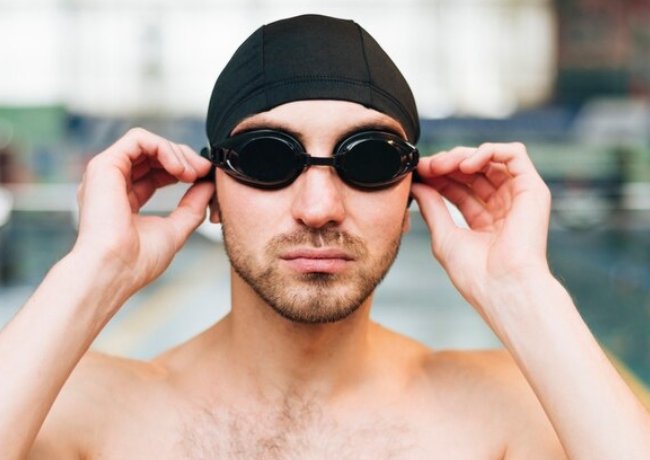
After a long afternoon at the public pool, a child will make a specific sound that sounds like a half-whine, half-complaint about something feeling “blocked” in one ear. Most parents dismiss it as sloshing pool water that will naturally drain by nightfall. It does occasionally. Sometimes it doesn’t, and a few days later the pediatrician is reaching for an otoscope because the same ear is tender to the touch and throbbing.
The ear of the swimmer is not dramatic. It doesn’t garner media attention. It is persistently prevalent, impacting approximately 10% of individuals over the course of a lifetime, and it frequently manifests during the height of summer plans. Although it can become serious if left untreated for an extended period of time, doctors refer to it as otitis externa, a term that sounds more serious than the condition actually is. It is an infection of the ear canal, which is the small tube that connects the eardrum to the outer ear, and water is nearly always the initial cause.
| Category | Information |
|---|---|
| Medical name | Otitis externa, commonly known as swimmer’s ear |
| Affected area | Outer ear canal, between the outer ear and the eardrum |
| Common cause | Bacterial or, less often, fungal infection triggered by trapped moisture |
| Prevalence | Affects roughly 10 percent of people at some point in their lives |
| Most affected group | Children and teenagers are especially susceptible, though adults aren’t spared |
| Typical recovery | Symptoms usually clear within seven to ten days with proper drops |
| Primary prevention method | Keeping the ear canal dry after swimming or bathing |
| Reference source | ENT Health, American Academy of Otolaryngology |
Observing how people discuss it, it’s odd how frequently prevention is boiled down to one piece of advice: wear earplugs. That’s not exactly incorrect. Earplugs are beneficial. Ear, nose, and throat specialists typically paint a more complete picture, one that is based more on habits than equipment. What you do with your ears after the swim is just as important as what you do during it.
The conditions that bacteria prefer to settle in warm, dark, moist, and undisturbed are created by water that lingers in the canal. The thin layer of earwax that typically shields the skin lining the canal is washed away, leaving the skin exposed and slightly more vulnerable than it was that morning. When you combine that with the kind of humid, sticky weather that usually occurs in July and August, the skin becomes even softer and more prone to irritation. All of this takes time. People don’t always make the connection between yesterday’s swim and today’s itch because it builds silently over hours or days.
After emerging from the water, swimmers should tilt their heads to each side and gently tug their outer ears to release trapped water. This is a simple gesture that takes about ten seconds, but surprisingly few swimmers do it. Although it won’t reach the deeper portions of the canal, a towel that has been carefully dried around the outer ear also helps. Some medical professionals recommend using a hair dryer on the lowest setting, with more breeze than heat, and at a real distance. It seems almost too easy to be significant. It is important.
Additionally, there is the issue of what “not” to do, which causes some discomfort for those who are driven by habits. Cotton swabs have a cleaning sensation. They’re not. Instead of removing wax, pushing a swab into the canal tends to push it deeper. In the process, it may scrape the delicate skin lining the canal, creating tiny openings that allow infection to pass through. More than anything else, ear, nose, and throat specialists advise against cleaning the canal unless a professional is doing so. People nod in agreement with this advice, but they mostly disregard it, which illustrates how deeply embedded the swab habit is.
Over-the-counter drying drops have become something of a quiet staple for lifeguards, competitive swimmers, and anyone spending a lot of time in the pool. After swimming, a straightforward solution of rubbing alcohol and white vinegar helps evaporate any remaining moisture and pushes the canal’s natural acidity back toward its proper location an environment that bacteria detest. It’s not glitzy. It isn’t advertised in the same way as branded swimwear or expensive waterproof earbuds. The reasoning behind it hasn’t really changed in the decades that it has been suggested in different forms.
Water choice is also more important than most people realize. Despite their other disadvantages, chlorinated pools are generally safer for ears than lakes, ponds, or rivers, where bacterial levels are much more unpredictable and less controlled. That does not imply that swimming in lakes is careless. It only slightly changes the odds, which likely explains why ear complaints are more common at summer camps near natural water than at those built around chlorinated pools.
It’s difficult to ignore the fact that the majority of this preventative advice has nothing to do with completely avoiding water. No one is advocating for children to avoid the pool. The focus is on drying completely in a quieter location, avoiding the temptation to use a cotton swab, and viewing early itching as a signal rather than an annoyance to be ignored. If left untreated, mild irritation may spread beyond the outer ear, though early intervention is still rare.
Whether swimmer’s ear becomes a summertime annoyance or a one-time annoyance seems to depend more on these little, almost dull habits that are repeated repeatedly than on chance. How aggressive prevention should be for casual swimmers versus daily swimmers is still up for debate among parents and even some clinicians. No one who studies this closely has really contested the fundamental idea that dry ears rarely become infected.
i) https://www.mayoclinic.org/diseases-conditions/swimmers-ear/symptoms-causes/syc-20351682
ii) https://www.nhsinform.scot/illnesses-and-conditions/ears-nose-and-throat/otitis-externa/
iii) https://my.clevelandclinic.org/health/diseases/8381-swimmers-ear-otitis-externa
iv) https://www.boots.com/healthhub/travel-health-advice/swimmers-ear
v) https://www.cdc.gov/healthy-swimming/prevention/preventing-swimmers-ear.html