
How Swimming Helps Kids Develop Resilience Without Exhaustion in Everyday Life
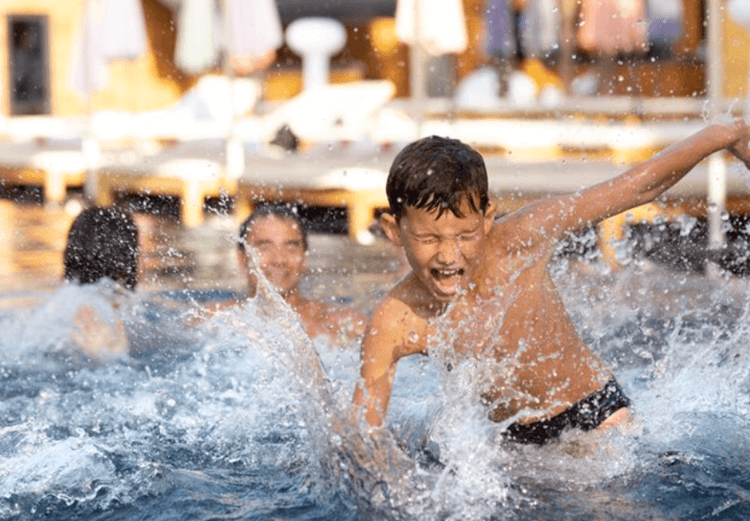
First come the sounds of a children’s swim lesson: small hands rhythmically slapping water, instructions reverberating off tile, and a sharp squeal that could be interpreted as either triumph or fear. But if you stay a few minutes longer, you’ll notice another pattern. The pace of the pool is different, one that subtly promotes effort followed by relaxation as opposed to constant production.
While swimming requires children to put in a lot of effort, it also requires them to stop, take a breath, and adjust. At a time when many childhood activities are designed around consistent intensity, longer sessions, and visible performance leaving little room for recuperation or introspection that balance is especially helpful.
| Key Context | Details |
|---|---|
| Activity Type | Swimming (structured lessons and free swim) |
| Primary Age Group | Children, roughly ages 3–14 |
| Physical Impact | Low-impact, full-body movement with built-in recovery |
| Psychological Focus | Resilience, emotional regulation, confidence |
| Distinctive Feature | Challenge without sustained physical overload |
| Relevant Research Areas | Child development, stress regulation, motor learning |
By its very nature, water establishes boundaries that cannot be disputed. You can’t breathe too quickly. Fatigue is impossible to ignore. Every child eventually reaches for the wall, not as a sign of failure but as a necessary step in learning that stopping can be both tactically sound and sensible.
Here, resilience grows without drama. Children learn to control their discomfort by modifying their movements and emotions in response to what the water provides, which is remarkably effective in teaching self-regulation rather than just toughness.
I once witnessed a six-year-old cling obstinately to the pool’s edge for three weeks, refusing to submerge her face while others moved on. Every lesson followed the same pattern: patient guidance, obvious hesitation, and a prolonged period of floating on her back until her breathing slowed.
Nobody hurried her or presented her hesitancy as a failure. As if resilience had crept in unnoticed when no one was looking, she blew bubbles with her mouth dipped under one afternoon and looked up with a look of mild surprise rather than celebration.
Patience is rewarded more in swimming than bravado, and that difference counts. Rarely is progress loud or visible. Longer glides, calmer breathing, and decreased panic are all internal indicators that are remarkably similar to the emotional skills kids require outside of the pool.
Swimming lessens the need for constant comparison, in contrast to many land-based sports. Winners and losers are not announced on a scoreboard. Private improvement occurs when children are taught to focus on their own bodies instead of comparing themselves to others. This significantly improves learning for kids who are anxious or perfectionists.
Experimentation is encouraged by the safety net that the water itself offers. It hurts to fall off a bike. It’s embarrassing to miss a goal. Slipping underwater under supervision, on the other hand, is rarely disastrous and only results in a mouthful of water and an instant lesson rather than a permanent injury or humiliation.
Youngsters pick up on this distinction fast. They make more attempts. They fail more composedly. They discover that errors are transitory conditions rather than life-altering events, which is especially empowering in the formative years of self-image.
The pool inherently promotes the productive struggle that swimming instructors frequently discuss. Children are pulled back from emotional overload before it tips into exhaustion by the even tying of muscles, the rising and settling of heart rates, and the steady anchoring of breathing.
This equilibrium is particularly beneficial for kids who are already under a lot of stress. Water provides relief rather than pressure for children who are overachievers, anxious, or have trouble controlling their emotions. It gently demands focus without being aggressive.
I recall thinking that the pool was teaching a nervous boy something that no motivational speech could ever teach him as I watched him cling to the wall longer than the others.
In swimming, resilience develops via practice and recuperation. Instead of resisting or shutting down, children learn that discomfort comes in waves and goes away if they remain in the moment, breathing and adapting.
Notably, exhaustion is rarely the outcome. Although swimming is exhausting, it usually leaves kids calmly exhausted rather than overstimulated. After lessons, parents frequently report much less emotional turbulence, earlier bedtimes, and quieter car rides home.
It’s more important than it seems. A child who is always exhausted is unable to think critically or grow from difficulties. Swimming saves sufficient energy for processing, transforming effort into understanding rather than exhaustion.
Additionally, swimming reframes the concept of quitting. Holding the wall or stopping mid-lap is portrayed as a smart move rather than a sign of weakness. It’s surprisingly uncommon for kids to learn to listen to their bodies in competitive settings.
This awareness is internalized over time. Failure is no longer connected to breaks. It becomes second nature to pace. These abilities, which are highly adaptable by nature, manifest later in relationships, academic performance, and making decisions under duress.
There is a moment in almost every lesson when a child looks to the teacher before trying something new. The nod they get reinforces that taking risks is most effective when there is support, as it conveys safety rather than command.
This combination of challenge and safety explains why swimming helps kids develop resilience without wearing them out. The water offers a firm, patient, and forward-thinking model of growth that demands respect without hurrying, shouting, or embarrassing.
Children who are given enough time learn to thoughtfully satisfy that demand, and they will remember the lesson long after the towel has been hung up.