
Why Swimming May Be the Most Sustainable Childhood Sport of the Future for Families and Schools
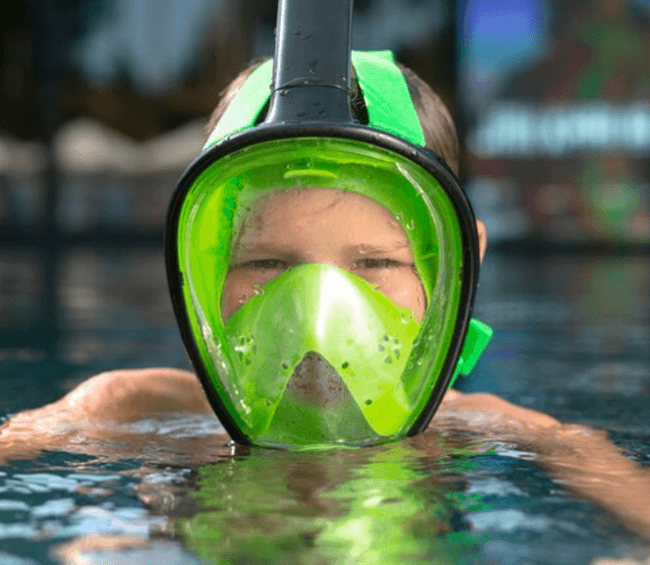
The schedule of youth sports has grown congested and noisy. Every year, new leagues emerge, uniform costs rise, and sidelines are crowded with parents haggling over schedules like air traffic controllers. Swimming has strangely remained unaltered in that noise, remaining silent in the early morning and maintaining a subtle scent of rubber mats and chlorine.
The more pragmatic meaning of sustainability in children’s sports is often overlooked when discussing it in terms of funding or carbon footprints. Children can participate in a sustainable sport without experiencing financial, emotional, or physical burnout. For decades, swimming has been quietly doing that.
| Context Area | Key Facts |
|---|---|
| Injury risk | Swimming is low-impact and associated with fewer overuse injuries than most field and court sports |
| Accessibility | Suitable for children of varied abilities, body types, and neurodiversity |
| Lifesaving relevance | Swimming reduces drowning risk, a leading cause of death in children aged 1–14 |
| Longevity | Can be practiced from infancy through old age without rule changes |
| Infrastructure | Pools already exist in schools, municipalities, and housing developments |
In a manner that felt earned rather than performed, I have seen eight-year-olds arrive at the pool wearing mismatched goggles and swim caps that are two sizes too big, and then leave an hour later feeling calmer, more composed, and proud. On well-kept fields, that result is more difficult to find.
Very little spectacle is required when swimming. Most classes don’t have crowds, brackets to obsess over, or private rankings that circulate in group chats. Breaths, lengths, and the moment a child stops reaching for the wall are used to gauge progress.
As childhood itself gets more condensed, that simplicity becomes important. Many children are forced into specialization before their bodies or attention spans are ready, and they are exposed to competitive pathways earlier. That pressure is resisted by swimming. It lets kids take part seriously without pressuring them to define themselves through victory.
It is one of the few physical activities that builds strength without inflicting punishment. Joints no longer have to carry the weight that water does. Swimming allows kids to grow, make mistakes with distance, and fall awkwardly without getting hurt. This is a significant benefit in a time when pediatric sports injuries are on the rise.
Who gets to stay is another example of the sustainability case. Swimming softens differences rather than eliminating them. Asthma sufferers frequently breathe easier in the pool. There, kids who struggle with coordination discover rhythm. The water is often calming for kids who have trouble with noise and disorder.
This inclusiveness isn’t just theoretical. Progress in group lessons is intentionally spaced out. While one child practices turning, another works on floating. If someone develops slowly, they are not benched. Because their bodies matured later than the schedule required, no one ages out.
Another issue is safety, which ought to be considered a sustainability issue but isn’t often. By definition, a sport that teaches kids how to survive is future-focused. The only popular childhood sport that also serves as a survival skill is swimming.
Parents are naturally aware of this. Many parents enroll their kids because there is water everywhere pools, beaches, rivers, hotel courtyards rather than because they envision podiums. No youth trophy lasts as long as the confidence to enter it safely.
Swimming is in an intriguing position in the changing environmental discourse surrounding sports. Yes, energy is needed for pools, but this is shared infrastructure. Over several decades, a single pool serves thousands of kids. Contrast that with other youth sports ecosystems where equipment, travel, and private facilities are constantly changing.
Urbanization increases the relevance of this. Free play area decreases as cities get denser. Acres of fields can be replaced by a single municipal pool that is weatherproof and operates all year round. It is the only sport that is still practically feasible for a lot of families.
Cost is important as well, but it is rarely openly discussed. The only necessities for swimming are a suit, goggles, and a towel. Lessons scale well. Many kids can be taught at once by a coach without losing focus. This is not policy language; rather, it is sustainability in everyday terms.
I became aware of how uncommon it is to witness patience rewarded rather than hurried when I saw a child repeatedly perform the same tentative kick for ten minutes.
Additionally, swimming avoids the identity trap that so many children fall into. When the system determines you are no longer fit, it is simple to stop being “a gymnast” or “a soccer kid.” Being able to swim is much more difficult to give up. The child, not the league, owns the skill.
In a sport where progress is frequently invisible, there is a subtle dignity. Before parents notice, coaches do. Youngsters experience it first on an internal level. In contrast to external validation, internalization fosters resilience.
Swimming promotes balance, coordination, and spatial awareness in ways that have an external impact on development. Youngsters who can navigate the water with ease frequently navigate the outside world with greater assurance. The surroundings are unfamiliar, somewhat challenging, and necessitate ongoing adaptation.
Swimming may have endured through the ages with little innovation due to its adaptability. Rebranding every ten years is not necessary. The regulations remain unchanged. Gravity exhibits distinct yet consistent behavior.
Swimming may become more important rather than less important as climate patterns change. People gravitate toward water during heat waves. Aquatic proficiency is becoming less optional due to flooding and rising sea levels. It is now more than just recreational foresight to teach kids how to be at ease in the water.
It’s also important to note the sport’s emotional sustainability. Swimming teaches people to be alone without being alone. A child is alone with their breath and movement, even in a crowded pool. Being calm with oneself is a skill that is becoming more and more uncommon.
Many kids continue to swim even after they quit competitive swimming. They frequently quit movement entirely when they stop participating in other sports. The most obvious indicator of sustainability is that continuation.
Glory is not promised by swimming. It provides continuity. It doesn’t shout about the future. It silently gets kids ready for it. The most sustainable choice might already be reverberating off tiled walls at six in the morning, unaltered, waiting, in a culture that is always looking for the next big thing for kids.