
Why Swimming Is One of the Few Activities That Benefits Mind, Body, and Behaviour for Life
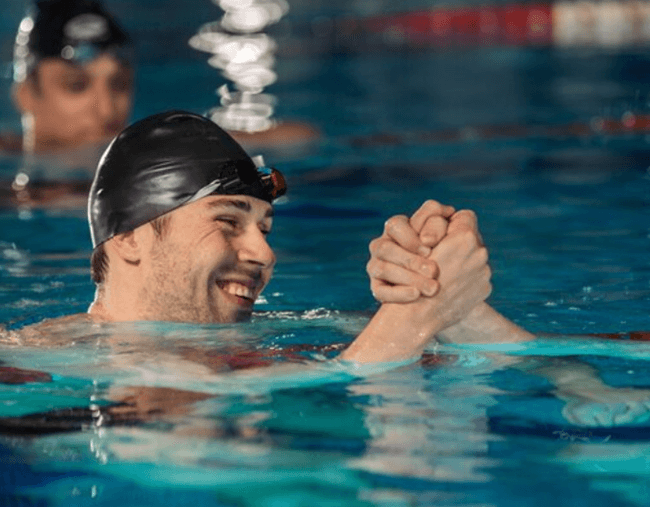
The quietness of swimming is frequently the first thing people notice. Once your ears submerge, sound dulls and disappears, even in a crowded pool. Breath, rhythm, and the sound of water hitting tile take the place of conversation. It’s a unique beginning for an activity that shapes behavior just as much as it tones muscles.
Exercise on land usually requires a particular way of looking at the world. Competition, pace-setting, comparison, and occasionally even an audience are all present. Most of that disappears in water. The mid-length is not a good time to check your phone. You can’t talk while working hard. The surroundings demand that you be there.
| Key context | Summary |
|---|---|
| Type of activity | Aerobic, low-impact, full-body movement |
| Physical effects | Cardiovascular fitness, muscle strength, joint protection |
| Mental effects | Improved mood, reduced stress, enhanced focus |
| Behavioural effects | Better emotional regulation, sleep, social interaction |
| Accessibility | Suitable across ages and physical abilities |
A portion of that presence is mechanical. The entire body must be coordinated when swimming. To advance, the arms, legs, lungs, and core must work together. Because this bilateral movement activates both sides of the brain, regular swimmers frequently report feeling more focused and less exhausted afterward.
This is also the reason why swimming seems to affect kids differently. Instead of being burned off, restless energy is reorganized during lessons. When asked to time a breath or count strokes, a child who finds it difficult to remain motionless on a bench will suddenly become attentive. Behavior changes in response to the water’s instantaneous feedback.
The same effect is less noticeable in adults. The mind moves from rumination to repetition, stress hormones decrease, and mood enhancing chemicals increase. A moving metronome is created by the constant cycle of inhale, exhale, reach, and pull. Either thoughts line up or they stray.
While easier to enumerate, the physical advantages are equally important. It is uncommon for water to both support and oppose the body. Without bearing all of the weight, joints can move freely. Muscles function continuously and without force. Without the startling effects of pounding pavement, the heart and lungs are tested.
Swimming is one of the few activities that people can resume after an illness or injury without feeling like they have to start over because of this balance. I’ve seen runners enter the pool with obvious hesitation, only to discover halfway through a session that their bodies were exerting themselves without complaining.
Resistance also has a behaviorally instructive aspect that is invisible. Water pushes back uniformly and without preference. It is not force but technique that makes progress. Swimmers eventually discover that tension causes them to slow down. Ironically, the key to effective movement is relaxation.
That’s a lesson that travels. Regular swimmers frequently discuss patience in other spheres of life. They are more at ease while they wait. They bounce back from failures faster. The discipline is persistent but gentle.
Another silent victim of contemporary life that swimming tends to replenish is sleep. Physical effort combined with mental relaxation facilitates easier rest. After pool days, parents frequently notice this first, as evening routines become less strident and shorter.
Additionally, swimming occupies an odd social space. It can be lonely without being alienating. While lanes are shared, each person’s effort is unique. Regulars give each other nods, speak briefly at the wall, and then fall silent again. Community without performance is what it is.
Water provides a sort of anonymity for some people, particularly those who are uncomfortable working out in public. Submerged bodies have a different appearance. Disability, age, and injury become less significant. The ability to move from one end to the other is what counts.
Swimming outside or in the cold adds an additional behavioral dimension. The first shock necessitates dedication. Cold water cannot be partially submerged. Attention is sharpened by the choice, and the calm that follows is frequently earned rather than borrowed.
A few years ago, while swimming in the winter, I noticed how quickly the day’s irritation disappeared once my breathing stabilized.
That particular instance encapsulates a key aspect of swimming’s behavioral impact. Patterns are broken by it. When the body is focused on staying afloat and moving forward, it is difficult to maintain anxiety, distraction, and irritability.
Swimming does not promise change, in contrast to many wellness fads. It provides upkeep. You return to the pool to get back to yourself in a functional state, not to change into someone else.
Additionally, it is forgiving. The water doesn’t punish you for missing a week. Skills come back fast. The body retains memories. Long-term mental and behavioral benefits truly begin to take root when that continuity fosters consistency.
Swimming has an authenticity that defies hyperbole. You can’t pretend to be long. The work cannot be outsourced. Progress is often subtle and only becomes apparent when a familiar anxiety feels less acute or when an old distance seems shorter.
Swimming is still stubbornly analogue in a time full of metrics and optimization. A line on the pool floor, a clock on the wall, breath coming in and going out. Behavior, body, and mind all work together because they are finally doing the same thing at the same time, not because they are getting better.