
Why Swimming Is Becoming the Sport of Choice for Calm, Focused Kids After School
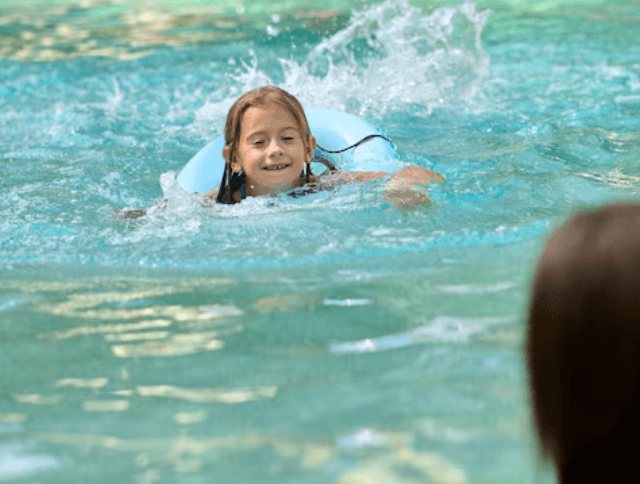
The pool sounds different from the rest of the recreation center on a weekday afternoon. Don’t whistle. No yelled directions reverberating off walls. Only the steady churn of arms, the gentle slap of water, and the occasional muffled laugh that fades beneath the surface.
Compared to football fields, parents sit closer to one another. While many are scrolling and some are paying close attention, the majority appear more composed than usual, as though the surroundings have also slowed them down.
| Context | Key Facts |
|---|---|
| Participation trend | Swimming participation among children has steadily increased as parents seek low-impact, year-round activities |
| Mental wellbeing | Studies and parent surveys consistently link swimming with reduced anxiety and improved mood |
| Cognitive focus | Rhythmic movement and breath control are associated with improved concentration and attention |
| Accessibility | Swimming is widely available through schools, public pools, and community programs |
| Safety element | Swimming remains the only sport that doubles as a life-saving skill |
Swimming has always been a sensible option. It taught kids how to float, survive, and not panic in deep water. The reason why parents are choosing it now feels more recent, particularly for kids who are almost apologetically characterized as sensitive, easily overwhelmed, or distracted.
Teachers discuss attention fatigue more candidly. In the evenings, when homework becomes brittle and tempers shorten, parents notice it. Even for children who seem to be coping, the days seem louder than they used to.
Swimming, on the other hand, requires something straightforward. Arrive, Enter, Take a breath. There is no opponent to read, no ball to chase, and no need to constantly recalculate one’s strategy. One stroke at a time, the child advances while facing the entire length of the pool.
During class, teachers talk quietly. Short corrections are made. In water, too much explanation is ineffective. Youngsters learn through doing, feeling, and repeating.
That rhythm is important. Extend, pull, and recover your arms. Inhale and exhale. Some kids find the predictability to be a comfort, particularly those who have trouble with overstimulation.
Parents use subtle language to explain the shift. A child who has better sleep on the nights of lessons. Another who is calmer on the way home in the car, not wired, not exhausted, just content.
Transformation is not guaranteed by swimming. It makes no promises to improve grades or behavior overnight. It appears to provide space.
Gravity loosens its hold in water. Lighter bodies are experienced. The pool allows kids who are frequently instructed to sit still or pay attention to move around without causing trouble.
Swimming permits solitude without isolation, in contrast to many team sports. While counting tiles and watching the black line move beneath them, a child can be in a class and yet stay in their own bubble.
Some parents acknowledge that they were taken aback. Either for safety reasons or because swimming was a convenient way to get from school to dinner, they signed up. Unexpectedly, the calm arrived later.
There is now research that puts into words what families observe on an instinctual level. Following lessons, surveys consistently demonstrate improvements in mood and focus. Coaches discuss resilience, teaching kids how to cope with discomfort, cold water, and lost breath.
In actuality, though, the more subdued moments are what make a difference. Instead of clinging to the wall, the child now pushes off without asking. The student who found it difficult to concentrate in class gains the ability to precisely count strokes.
I recall how deliberate it felt to watch a boy pause at the edge, goggles fogged, breathing slowly before slipping in.
Patience is rewarded when swimming. Progress is gradual and frequently imperceptible. Goals are not scored by you. Rounds are not won by you. Seconds are either shaved or not.
This can be a relief for kids who feel pressured to perform loudly and early. Improvement takes place in private, measured not by the scoreboard of others but by your own body.
Additionally, there’s something about how swimming ends. Kids emerge exhausted but unscathed. Lungs opened, muscles contracted, and minds became quieter.
Parents discuss the “after”, The quiet meal. the more seamless bedtime. the feeling that the day’s edges have become softer.
Teachers of swimming observe trends over time. The nervous kid who uses breathing to gain control. The restless person who discovers that energy should be directed forward rather than outward.
The forgiving nature of swimming is helpful. You are not disqualified by growth spurts, awkward periods, or weeks off from school. Wherever you are, the water meets you.
Swimming feels accepting without being condescending for families dealing with diagnoses, labels, or just the sense that their child doesn’t quite fit the mold of traditional sport.
Swimming is not a panacea because of any of this. Some kids detest the feel of water. Others are drawn to the commotion and noise of team games. However, the change is apparent.
Instead of selecting stimulating activities, parents are opting for steady ones. Instead of making a loud demand for focus, they develop it subtly.
A child gains a subtle but lasting skill in the pool: self-control. How to continue when breathing becomes difficult. How to maintain composure during an effort.
The lane rope is just the beginning of those lessons. Later on, they manifest themselves in classrooms, conversations, and how children deal with frustration when no one is around.
The advantages of swimming are not immediately apparent. Long after the towel has dried, it allows them to slowly come to the surface.