
Why More Parents Are Choosing Swimming Over Other Activities for Emotional Support
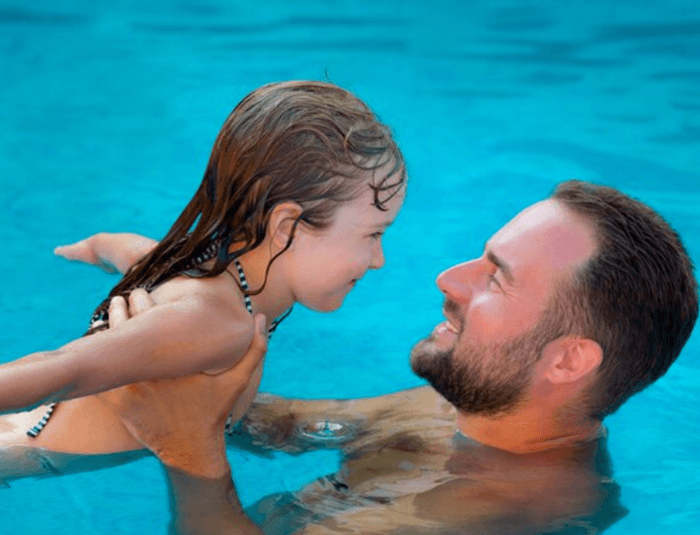
With wet tiles beneath feet, echoes resonating off the ceiling, and kids lined up in bright swim caps, their energy vibrating like a densely packed swarm of bees waiting to be released, the indoor pool continues to be one of the few places where parenting feels refreshingly analog.
Inside, parents focus on breathing, balance, and the incredibly effective simplicity of moving forward without sinking, while outside the glass doors, they manage schedules, messages, and responsibilities with practiced efficiency.
| Context | What it suggests |
|---|---|
| A Swim England #LoveSwimming–linked survey reported 84% of parents say their child’s mood improves after a swimming lesson. | Parents are noticing an immediate emotional “after effect” not just fitness gains. |
| The same body of findings reported nearly 8 in 10 parents saw better concentration and attention span after lessons. | Swimming is being framed as school support as much as recreation. |
| A large early childhood study (Griffith University; 7,000 children aged five and under across the U.S., Australia, and New Zealand) reported swimmers were ~10 months ahead cognitively and ~15 months ahead socially/emotionally. | Parents hear “development” and think: this is not optional, this is formative. |
| In toddler/parent research tied to #LoveSwimming, 79% of mums said swimming helps ease working-parent guilt; 96% of pre-school parents said swimming is what makes their child happy. | The pool is becoming a rare, protected pocket of undivided attention. |
| Coaches and teachers consistently describe children leaving sessions “happier” and “more focused” with water safety still the obvious practical reason to enroll. | The emotional case for swimming is now competing with, and sometimes outranking, the safety case. |
Parents discussions have changed significantly over the last ten years, departing from the question, “What sport should they play?” in the direction of “Where does all this emotional energy go when the day is over?”
Swimming has subtly filled that void by providing something especially helpful: a setting that demands mental and physical cooperation, where distraction is instantly rectified by water that rewards composure and discourages impatience.
A restless child slowing down to listen because sound travels differently underwater or a confident talker becoming unusually focused when asked to float and trust their own breathing are examples of how small details in lessons reveal the appeal.
Parents frequently use remarkably similar language to describe the effect, stating that their child feels “settled” afterward that is, reorganized, as though the day’s mental clutter has been gently washed away, rather than sedated or exhausted.
Survey results in recent years have struck a chord because they reflect what families observe directly that is, mood shifts manifest in parking lots and restrooms rather than in abstract graphs or scholarly summaries.
Something has changed, frequently in ways that feel both subtle and profound. Examples include a damp towel wrapped around small shoulders, an unexpected quiet on the drive home, and an unexpected hunger for food and conversation.
A portion of this reaction is physiological, and parents discuss it with increasing assurance, talking about stress hormones and sleep patterns as lived realities shaped by long nights and early mornings rather than as trendy terms.
The rhythmic structure of swimming is very effective in this situation because repeated strokes and deliberate breathing produce a pattern that is similar to methods used to lower anxiety in adults, but without lectures or labels.
Through repetition, even novices learn that slowing down yields better results than pushing harder by exhaling underwater and inhaling at the surface.
Additionally, water eliminates pretense in a very obvious way because it is impossible to multitask once the eyesight blurs and the ears fill, leaving little space for performance or distraction.
When children are commended for their quick thinking, they may initially struggle because physical learning resists shortcuts. However, this manageable friction frequently serves as a space where confidence is restored rather than undermined.
Parents frequently cite a particular instance that led them to make their decision, such as a teacher’s note regarding attention, a persistent knot of anxiety before school, or sudden emotional outbursts.
Because swimming appears like play while acting as regulation, it feels like a constructive response that is surprisingly affordable emotionally. This allows parents to say, “Let’s try this” without framing the choice as a correction.
This message has been amplified by campaigns that highlight swimming’s wider benefits, portraying lessons as tools for focus and resilience rather than as limited skill-building exercises a change that would have sounded overly idealistic years ago.
Children no longer feel evaluated only in classrooms; many take in pressure from screens, comparisons, and expectations and carry it subtly until it overflows where it feels safest.
The pool provides a counterbalance, a place where each person’s progress is unique and everyone experiences the same resistance from the water, making effort feel equitable in a very dependable way.
In addition to teaching technique, coaches now play a more sophisticated role by observing motivation and mood, recognizing when bravado conceals fear or when boredom indicates hesitation rather than defiance.
It felt like a significant change at this point in the conversation, and I found myself silently appreciating how frequently parents referred to teachers as stable presences rather than authorities.
Swimming, which provides brief but protected time that feels truly undivided a rarity in weeks shaped by constant interruptions addresses another layer of stress, particularly for working parents.
When helping a child navigate unfamiliar water, even the most distracted adult becomes totally present, phones stay dry, and notifications fade.
This dynamic, which emphasizes how shared focus can lessen emotional burdens on both sides of the relationship, is supported by research that indicates most mothers feel less guilty after swimming sessions.
This is also the reason why parent-child classes, which emphasize touch, responsiveness, and shared sensation as the cornerstones of emotional development, have grown so quickly.
Parents may not identify the chemistry at play, but they do report feeling more at ease, connected, and self-assured all of which are markedly enhanced by consistent, recurring routines.
These decisions are the result of a larger uneasiness that is fueled by children’s increasing levels of anxiety and inactivity, which make movement seem more necessary than ever and less optional.
Children are often left hungry, calm, and open rather than overstimulated or aggressive after swimming, which is appealing because it channels energy without inflaming it.
Nevertheless, the strategy is most effective when pressure is purposefully reduced because turning classes into a performance space runs the risk of upsetting the very equilibrium that parents are trying to achieve.
Children who are encouraged to swim react differently from those who are encouraged to succeed; this difference can be seen in their posture, breathing, and willingness to try again.
Families who understand that progress rarely happens in straight lines and let fear and confidence alternate are the ones with the most encouraging stories.
Children wearing big hoodies and holding goggles like trophies fill the pool foyer after lessons. Some are giddy with stories, while others are quietly happy.
Based on rhythm, repetition, and an environment where self-control is encouraged rather than required, the emotional balancing act is remarkably effective even though it is not miraculous.
Families go outside on chilly nights with kids wrapped up like superheroes in capes, looking somehow smaller but more contained, as though the water has softly put the broken pieces back together.