

You can see them right away if you walk into any community pool on a Tuesday morning. The fresh swimmers. They’re standing at the edge of the shallow end, their towel slung over one shoulder as if they’re unsure of why they brought it, their goggles fogged up. Starting something physical as an adult causes a certain kind of anxiety that is rarely related to the water itself. It has to do with not knowing what to pack.
The majority of novice swimmers overthink things. After spending hours researching stroke technique, watching educational videos, and possibly even reading about breathing patterns, they will arrive at their first lesson wearing goggles they hastily purchased from a discount bin and a swimsuit that is inappropriate for the activity. It’s a reasonable error. Even though the wrong choice can result in 45 minutes of mild discomfort during a lesson, swimming equipment doesn’t receive the same attention as, say, yoga mats or running shoes.
| Category | Details |
|---|---|
| Topic | Swimming gear for beginners |
| Core essentials | Swimsuit, towel, goggles, swim cap |
| Common mistake | Buying competitive gear before mastering basics |
| Recommended fabric | Polyester-spandex blends for durability |
| Goggle fit test | Press to face without strap; suction should hold briefly |
| Optional extras | Nose clips, swim snorkel, microfiber towel |
| Safety note | Consult instructor before purchasing specialized gear |
More than most people realize, the swimsuit is important. Surprisingly, cotton is still frequently made as a first purchase and it’s the wrong one. Cotton clings and drags in water, making every stroke feel heavier than it should once it gets wet. The majority of real swimwear is made of polyester-spandex blends, which retain their shape and dry more quickly. This advice is not glamorous at all. It’s the kind of thing where a teacher brings it up once, casually, and novices only recall it after they’ve already committed the error.
In addition to making things more difficult, goggles are a common place for people to either overspend or underspend. Within the first ten minutes, a ten-dollar pair from a pharmacy might fog up and leak just enough to be annoying but not intolerable. On the other hand, someone learning to float doesn’t need competitive racing goggles, the streamlined type designed to cut milliseconds off a sprint. Since most beginner lessons take place indoors, where glare isn’t a major concern, the instructors at the majority of learn-to-swim programs typically suggest something in between: a comfortable, mid-range pair with an adjustable strap and a clear or slightly tinted lens.
It’s important to know about a straightforward fit test. Without using the strap at all, press the goggles up against your face. They are properly shaped for your face if they produce a slight suction and remain in place for a few seconds. No strap adjustment will adequately address the issue if they slide off right away.
Conversations about swim caps are less common among beginners, but regardless of hair length, they’re worth bringing. Caps lessen drag, which is more important than most people realize, even at slow, cautious beginner speeds. Over time, chlorine is harsh on hair. Seeing someone without a cap repeatedly stop mid-lap to push wet hair out of their face strengthens the argument more than any product description could.
Then there is the towel issue, which may seem insignificant until you find yourself in a changing room with a bulky, slow-drying bath towel crammed into a bag that has doubled in weight in just an hour. This issue was resolved by microfiber towels for a reason. They dry fast, are small, and don’t make a gym bag look like a soggy sponge by the end of the week.
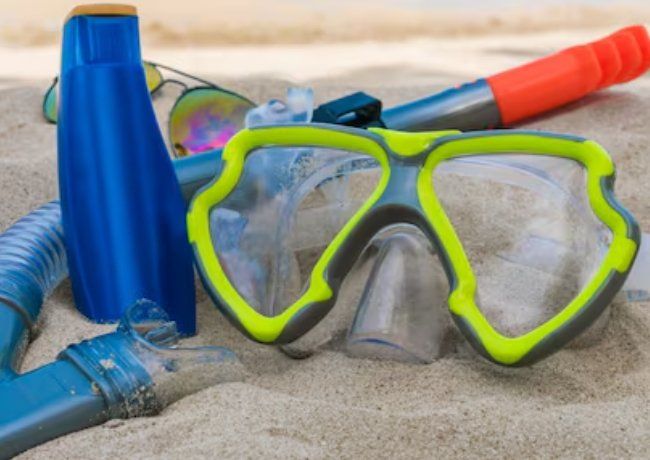
A few extras usually only come to light after a person has already experienced one or more frustrating lessons. Swimmers who experience water rushing into their nose during specific strokes which may seem insignificant until it occurs mid-breath and disrupts concentration benefit from nose clips. Swim snorkels, on the other hand, allow novices to concentrate only on body position and stroke mechanics without the additional challenge of timing their breathing, which is, to be honest, the source of a lot of early frustration. Although most people don’t think to inquire about it, instructors bring it up more frequently than you might think.
Additionally, most people don’t think about the bag itself until they’re standing at a pool entrance with goggles in one hand and a dripping cap in the other. A straightforward mesh bag with two distinct sections one for wet and one for dry resolves an issue that no one anticipates until they have experienced the alternative.
Nothing about this is difficult, and it doesn’t cost a fortune. Removing the minor frictions that are unrelated to swimming ability appears to be the most important thing, based on observing enough first lessons. When people aren’t distracted by fogged-up goggles or a sagging swimsuit, they seem to gain confidence in the water more quickly. Before purchasing anything specialized, it’s still advisable to consult an instructor because while needs differ greatly from person to person, the fundamentals never change. If you get those right, the water starts to seem a little less daunting sooner rather than later.
i) https://www.swimming.org/learntoswim/things-to-take-to-your-first-adult-swimming-lesson/
ii) https://www.adidas.co.uk/blog/910351-5-swimming-essentials-you-need-for-your-swim-class
iii) https://www.everyoneactive.com/content-hub/swimminglessons/first-adult-swimming-lesson/
iv) https://www.bearpaddle.com/swimming-blog/essential-swimming-gear-for-beginners-what-your-child-really-needs/
v) https://ymcagbw.org/blog/10-essential-items-pack-swim-lessons