

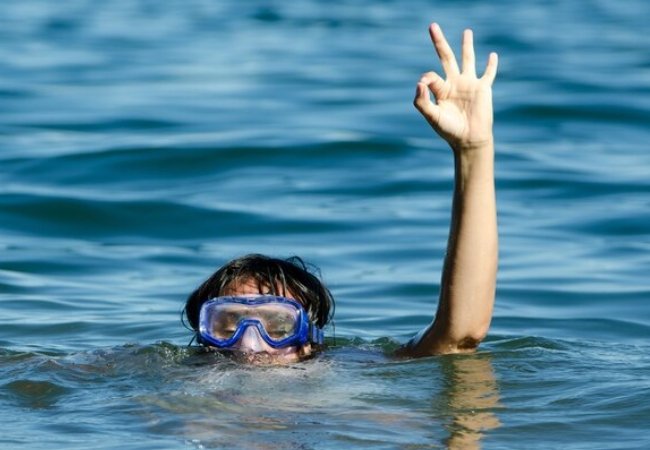
On the hottest days of the year, standing at the edge of a lake or a slow-moving river, certain that the water will be just as gentle as it appears, exudes a certain kind of confidence. Seldom does it. Swim England has been saying this for years, but every summer, usually after another story about a swimmer who failed to return to shore, the message seems to land differently.
The organization’s CEO, Jane Nickerson, has discussed this with a weary urgency. The number of accidental drownings increased in 2020, and since then, there hasn’t been much cause for optimism. Seeing this unfold year after year, it’s odd how infrequently the threat materializes. One moment a river may appear glassy and innocuous, and the next it may drag a powerful swimmer beneath it, and there is rarely any obvious warning sign for either.
| Category | Details |
|---|---|
| Topic | Open Water Swimming Safety |
| Governing Body (UK) | Swim England |
| Key Risk Factor | Cold water shock, even in summer heat |
| Recommended Gear | Neoprene wetsuit, swim cap, tow float |
| Safety Organisations Involved | Swim England, Royal Life Saving Society UK, British Triathlon |
| Recommended Practice | Swim at accredited open water venues with lifeguard supervision |
The part that most people underestimate is cold water shock, which is counterintuitive and worth considering. The water in a British lake or estuary rarely rises much above the mid-teens in Celsius, even when the air feels like an oven. This difference between hot skin and cold water can cause an involuntary gasp reflex, a tightening of the chest, and occasionally a fleeting sense of panic that swimmers describe nearly identically regardless of fitness level. It’s not a sign of weakness. Pretending otherwise has cost lives. It’s physiology.
There’s a reason why British Triathlon, the Royal Life Saving Society UK, and Swim England consistently stick to the same few suggestions rather than updating them every season. Safety kayaks patrolling the water, lifeguards watching from shore, and a brief induction briefing covering entry points, exit points, and what to do if a swimmer starts to struggle are all reasons why accredited open water venues exist. The majority of deaths appear to occur in unmonitored areas with no such structure, despite the fact that it sounds almost too straightforward to be significant.
Another piece of advice that seems obvious until you see someone disregard it is to acclimate gradually. Splashing the face and chest first, breathing slowly while the body adjusts, and walking in rather than diving are not rituals for the extremely cautious. An ambassador for the Outdoor Swimming Society, Calum Maclean, has characterized his own approach to cold water as a sort of dedicated non-faffing.
He is prepared, has made up his mind, and doesn’t hesitate once his feet are wet. The founder of OSS, Kate Rew, adopts a more delicate approach, dabbing water on her chest and cheeks before taking that final, decisive breath. Despite having different temperaments, they share an underlying respect for the damage that the cold can do to an unprepared body.
The computation is significantly altered by a wetsuit, though not always in the way that people anticipate. Longtime swimmers swear by a somewhat counterintuitive technique: pulling the suit’s neck to allow a tiny rush of cold water to enter. This water warms against the skin and turns into an insulating layer rather than a discomfort.
For roughly four seconds, it is uncomfortable, but for the remainder of the swim, it is actually helpful. Warmth is important, but so is visibility. A bright swim cap, which is frequently required at venues under supervision, is more useful for a kayaker or lifeguard to identify a bobbing head in choppy, low-light conditions than it is for fashion.
Even though it seems almost too obvious to mention, people who swim in unfamiliar places routinely neglect to check the tides and weather before leaving. Rain causes rivers to swell, winds to change, and currents to intensify without any discernible surface changes. The kind of panic that transforms a manageable situation into an emergency can be avoided by being aware of the entry and exit points beforehand, as opposed to finding them mid-swim when fatigue sets in.
Even though none of this advice is glamorous, it’s difficult to ignore how frequently it is disregarded possibly because caution seems unnecessary on a day when the water appears to be so calm. The unremarkable habits that distinguish a successful summer swim from a disastrous one are swimming with a companion, selecting reputable locations, and accepting the cold rather than battling it. There are few indications that these habits will soon change.
i) https://rnli.org/safety/choose-your-activity/open-water-swimming
ii) https://www.rlss.org.uk/listing/category/summer-water-safety
iii) https://www.swimming.org/openwater/open-water-safety-advice-hot-weather/
iv) https://zone3.com/blogs/inside-zone3/open-water-swim-safety-tips-for-newbies
v) https://www.rospa.com/water-safety/open-water-swimming