

Observing a group of teenagers jump into freezing water while laughing, filming, and tagging their friends is strangely captivating. At first, it appears disorganized half performance, half dare but after a few minutes of browsing Instagram or TikTok, a pattern starts to show. These days, swim challenges are more than just sporadic online creative outbursts. Particularly among Gen Z, they are evolving into shared, structured rituals.
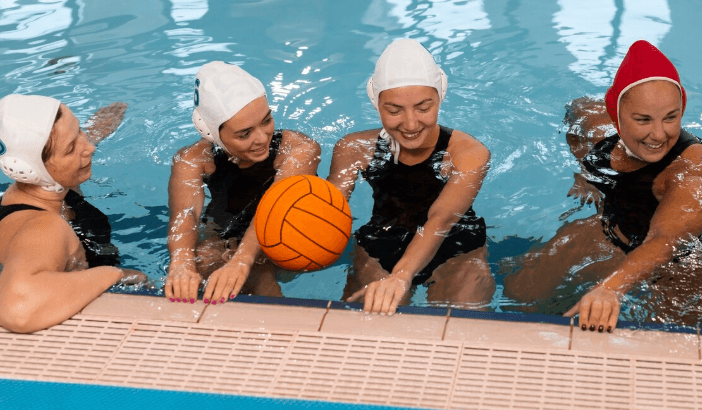
Last summer, a group of college students lined up at the edge of a public pool in Lahore, balancing their phones against water bottles and counting down before diving in unison. Instructions were shouted, someone laughed in the middle of the jump, and the video was being reviewed in a matter of seconds. It felt more like a production than a leisurely swim. That’s the change. Swimming, which was formerly a solitary or competitive activity, is now performative, but not in the meaningless way that social media is sometimes said to be.
This could be a component of a larger problem with passive scrolling. Even though Gen Z spends a lot of time online, they appear to be drawn more and more to activities that make their screen time worthwhile. That balance is provided by swim challenges. They start off online, but they insist on something tangible and a little awkward. chilled water. control of breathing. timing. There is work involved, and that work results in something that can be shared.
| Category | Details |
|---|---|
| Trend Name | Swim Challenges on Social Media |
| Primary Audience | Gen Z (Ages 13 to 28) |
| Platforms | TikTok, Instagram, YouTube |
| Core Activity | Swimming based challenges, creative aquatic content |
| Key Benefits | Fitness, social bonding, mental health |
| Cultural Shift | From passive scrolling to active participation |
| Notable Early Viral Moment | Harlem Shake swim team videos (2013) |
| Social Impact | Awareness campaigns, community building |
| Related Trend | Outdoor fitness & digital detox movement |
| Reference | https://www.worldaquatics.com |
In the past, Gen Z did not initiate these trends. What was possible was hinted at in the 2013 Harlem Shake videos, especially those made by swim teams. Attention was drawn to athletes’ ability as well as their humor when they held their breath underwater while mayhem broke out above them. It’s difficult to ignore how today’s more refined, occasionally purpose-driven swim challenges have developed from that early blend of inventiveness and physical prowess.
The intention has changed. Some of the swimming challenges of today are emotionally taxing. A few years ago, a “cannonball challenge” went viral in swim communities to help a teen who was suffering from a serious illness. Teams from various locations took part, sharing videos for unity rather than likes. Moments like that linger. It implies that, despite their seeming playfulness, these trends aren’t always superficial.
This trend also has a more subdued aspect that seems related to mental health. By its very nature, swimming demands a level of concentration that is difficult to achieve elsewhere. A momentary escape is produced by the physical resistance, the muffled sound beneath the surface, and the rhythm of the strokes. These encounters become invitations when they are transformed into challenges. To participate, not just to compete.
However, there’s a feeling that social media pressures are still present. There’s a hint of comparison. Beginners may feel intimidated by seeing others perform flips, hold their breath longer, or glide through the water with ease. Whether this discourages participation or motivates people to put in more effort is still up for debate. Most likely both. Clean results are rarely obtained from social media.
The community component is indisputable. Similar to run clubs or group exercise, swim challenges are evolving into social hubs. They provide an incentive for people to congregate offline while maintaining online connections. They even take the place of customary hangouts in certain situations. Groups are gathering at pools, lakes, or beaches rather than cafes or shopping centers; phones are still there, but they are not the main focus.
This change feels minor but important. Health is no longer the only aspect of fitness; it’s growing into a way of identifying oneself. Gen Z does more than simply swim; they record, style, and disseminate it. Goggles, swimwear, and even the location itself are incorporated into the story. A swim at dusk. a pool on the roof. A chilly river. Each gives the narrative more depth.
These trends also subtly incorporate an environmental component. For example, wild swimming has become popular due to its connection to nature as well as its aesthetic appeal. Videos featuring open-water swims or cold plunges frequently include commentary about mental clarity or environmental awareness. The undertone is present even though it isn’t always clear. When the water isn’t chlorinated, it feels different.
Swim challenges seem to be pulling people outward, which is something social media hasn’t been able to do in a long time. Not completely away from screens, but in the direction of something real. The phone stops being the destination and instead becomes a tool.
It is more difficult to predict whether this trend will continue. Social media trends often burn and fade quickly. Swim challenges, on the other hand, seem to have something more enduring behind them: shared experience, physical effort, and just enough unpredictability to keep participants engaged.
Perhaps that is the true story behind this. It’s not the videos per se, but what they stand for. A generation experimenting with harmony. attempting to maintain contact without remaining motionless.
i) https://www.swimmingworldmagazine.com/news/swimming-trends-and-challenges-on-social-media/
ii) https://www.swimmax.ie/blog/2024/how-social-media-can-stop-adults-learning-to-swim-and-how-to-overcome-this-333