

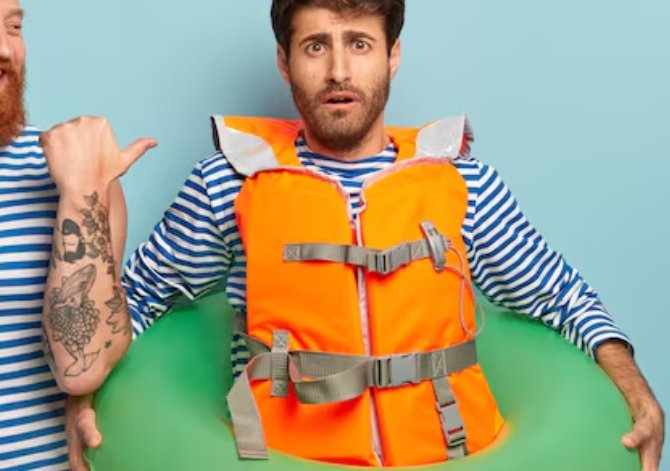
When a toddler strays too close to a pool’s edge, parents experience a specific type of panic. The flotation device section of any sporting goods store has turned into a tiny battlefield of conflicting claims because it happens much more quickly than most people anticipate. Arm floaties are happy, inflatable objects that sit on one side. On the other hand, life jackets are heavier, more somber-looking, and frequently have tight straps across a small chest. The question of which one genuinely protects a child has been simmering for years and is still up for debate.
For many years, arm floaties also known as armbands have been in use. The sound of inflating one before diving into a community pool is probably familiar to anyone who grew up swimming in the 1980s or 1990s. They provide young children with an instant sense of buoyancy, are affordable, and are simple to pack. Even though the awkward high-armed posture doesn’t resemble actual swimming, there is something almost endearing about watching a child wearing them paddle across a shallow end.
| Category | Details |
|---|---|
| Topic | Children’s water safety: flotation devices |
| Primary comparison | Life jackets vs arm floaties (armbands) |
| Best for early water play | Armbands |
| Best for emergency/open water | Life jackets |
| Core distinction | Swim aids assist learning; life jackets are designed to save lives in emergencies |
| Supervision requirement | Constant adult supervision required regardless of device |
| Reference organization | U.S. Coast Guard, American Red Cross |
In actuality, that posture contributes to the issue. Armbands do not resemble functional stroke technique; instead, they place flotation at the upper arms, holding them wide and high. Some swim instructors have become dubious about this, claiming that kids who wear armbands for extended periods of time form habits. That are difficult to break once the floaties are removed. Convenience might have a price in this case, but reasonable people can’t agree on how much that price really matters for a four-year-old who just wants to play.
Life jackets function differently, and this difference is not aesthetic. A well-fitting life jacket is designed to flip an unconscious or worn-out wearer face-up, keeping the head above water without requiring the child to exert any effort. The purpose of the device is completely altered by that one design element. Really, it’s not a teaching tool. Designed for boats, lakes, and other unpredictable bodies of water where a child might become submerged and unable to react, it is an emergency tool.
The majority of the public’s confusion appears to reside here. In actuality, the term “life jacket” refers to a particular class of safety gear, usually Coast Guard approved, intended for open water and boating situations. People frequently use the term loosely, applying it to anything that floats. Swim aids, which include armbands, float jackets, and swim vests, are a completely different category. They are designed for pools, for practice under supervision, and for the gradual process of teaching a small body to navigate water independently.
The swim aid market seems to have been subtly moving away from the inflatable orange ring and toward something more advanced. Some more recent vests use detachable foam floats placed in pairs, allowing parents to progressively remove support as a child gains self-assurance. To be honest, it’s a clever bit of engineering, similar to how training wheels on a bicycle operate through incremental design thinking. Let the child fail safely a few times before they succeed, cut back on support, and maintain just the right amount of structure.
The Dutch Olympic swimmer Kira Toussaint has publicly discussed this change, arguing that the previous method of maximum buoyancy may have harmed kids by teaching them passivity in the water rather than independence. It is more difficult to determine whether that view is consistent with all of the available research. The fact that drowning is still the third most common cause of death for children under the age of twelve worldwide tends to turn any discussion into something more serious than a matter of personal taste.
Despite the disagreement, it appears obvious that neither gadget can take the place of an adult who is watching. Perhaps because it’s the one rule that people are most likely to disregard once a child appears at ease in the water, manufacturers print this warning on almost every swim aid that is sold, and lifeguards constantly reiterate it. A tightly fastened life jacket may give one a false sense of security. A pair of armbands can also be used. For the child, neither one swims.
Therefore, picking between them isn’t really about which product comes out on top in some hypothetical safety competition. It has to do with context. Unlike a lake or a boat deck, a backyard pool requires constant supervision. A six-year-old who is already enrolled in lessons requires something different than a two-year-old splashing for the first time. Even though the marketing on store shelves seldom makes the distinction clear, parents seem to grasp this intuitively once it’s presented that way.
Perhaps the true issue here isn’t the products’ design per se, but rather the way they are marketed. The general aisle and the nebulous category of “kid water stuff” are shared by a life jacket and a pair of floaties, despite the fact that their true functions differ greatly. Parents will continue to speculate until that is made clearer, and the argument between life jackets and arm floaties will probably continue, one slightly uneasy purchase at a time.
i) https://limmys.com/blogs/articles/swim-vest-vs-armbands-which-is-right-for-your-child
ii) https://swim-tank.co.uk/choosing-the-right-flotation-device-for-your-childs-holiday/
iii) https://www.splashabout.com/blogs/blog/swim-jackets-vests-and-aids-for-boys-what-helps-build-water-confidence
iv) https://www.mabelandfox.com/blogs/mabelsmumclub/choosing-the-right-swim-aid-for-your-child
v) https://www.independent.co.uk/extras/indybest/outdoor-activity/swimming/best-kids-swimming-aid-a9689376.html