
Inside The Unexpected Role Swimming Plays in Developing Kids Problem Solving Skills
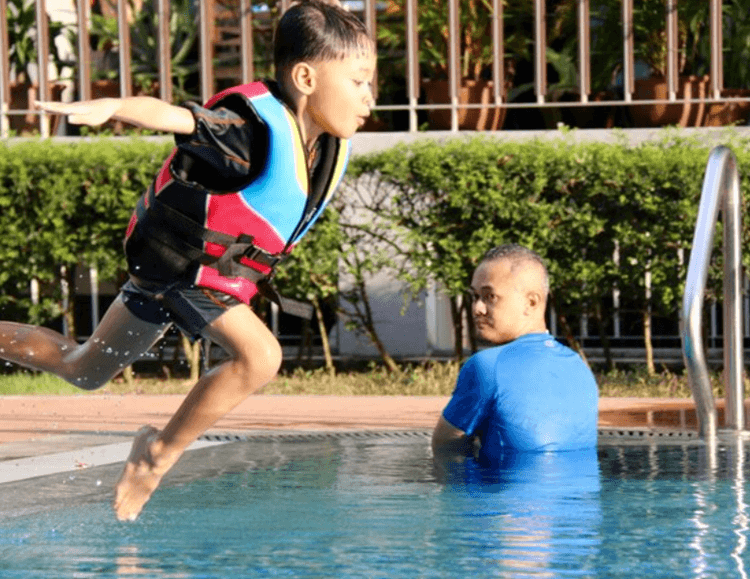
Adults typically observe emotional rather than intellectual responses during a swim lesson, such as hesitancy at the pool’s edge or an excessively tight grip on the wall. These behaviors are remarkably consistent across ages and personalities, indicating that water instantly poses a problem for kids that cannot be resolved with words alone.
Children are forced to think through movement in a way that is especially helpful because swimming introduces a situation where the body behaves differently than expected, with gravity softened and balance altered. This requires attention, patience, and a willingness to revise assumptions on the fly.
| Aspect | Key Information |
|---|---|
| Core activity | Swimming requires coordinated movement, breath control, and constant adjustment |
| Cognitive connection | Regular swimming is linked to improved memory, attention, and adaptive problem-solving |
| Learning dynamic | Children receive immediate physical feedback and must self-correct in real time |
| Developmental relevance | Skills develop most strongly during early and middle childhood |
| Transfer effect | Mental habits formed in swimming often carry into academic and social settings |
Researchers and educators have recently focused more on the mental processes involved in a child’s struggle to stay horizontal, finding that the effort required to stay afloat triggers problem-solving mechanisms that are significantly enhanced by repetition rather than instruction.
Swimming problems come right away, unlike classroom assignments that permit breaks or retries because failing to exhale or raising the head too high results in an instantaneous and obvious outcome, establishing a very effective and dependable learning loop.
Youngsters quickly discover that force alone rarely works in water. This insight is surprisingly applicable to other challenges as well, as hurried decisions and flailing arms frequently impede progress, whereas small, deliberate adjustments result in smoother and noticeably faster outcomes.
Young swimmers can practice remembering multiple instructions, putting them together under physical pressure, and changing them when something doesn’t work by using a kick-pull-breathe sequence. This process is similar to academic reasoning but feels less abstract and more tangible.
During group lessons, the learning is socially reinforced as kids watch their peers solve the same physical problem in different ways, witnessing strategies work or fail in real time, which is incredibly effective in broadening their understanding of potential solutions.
Since panic upsets equilibrium and calm restores it, the pool also teaches emotional regulation in a subtly persuasive way, assisting kids in realizing that controlling reactions is frequently the first step toward resolving any issue.
Teachers have consistently noted over the past ten years that children who used to freeze when confused gradually become more experimental, trying different options instead of giving up completely. This shift is noticeably improved with regular exposure to manageable difficulty.
I once thought that the lesson being taught was much more cognitive than athletic as I watched a child pause in the middle of the lane, adjust their breathing, and then glide forward with obvious relief.
Children internalize the idea that understanding leads movement rather than the other way around when they swim, which makes progress feel earned and confidence exceptionally durable because there are no shortcuts, no bluffing, and no way to avoid fundamentals.
Swimming lowers the gap between action and consequence by incorporating physical rather than verbal feedback. This structure is especially creative in fostering children’s confidence in their own capacity to identify and fix errors.
The initial advantages for many parents seem to be physical, such as better posture or more restful sleep, but as children approach schoolwork with a more composed attitude and a readiness to adapt rather than give up, the cognitive benefits become more obvious.
Swimming reinforces perseverance in a way that is highly adaptable across various learning environments by teaching kids that problems are rarely solved in a single attempt through repeated exposure to uncertainty that is safe but challenging.
The pool continues to be refreshingly straightforward, encouraging kids to move, adapt, and try again—a habit of thinking that is subtly persuasive and profoundly empowering as educational systems depend more and more on prompts and guided cues.
From this perspective, swimming becomes less about perfecting strokes and more about molding young brains’ reactions to challenges, developing problem-solvers who are patient, flexible, and noticeably self-assured when confronted with new situations.