

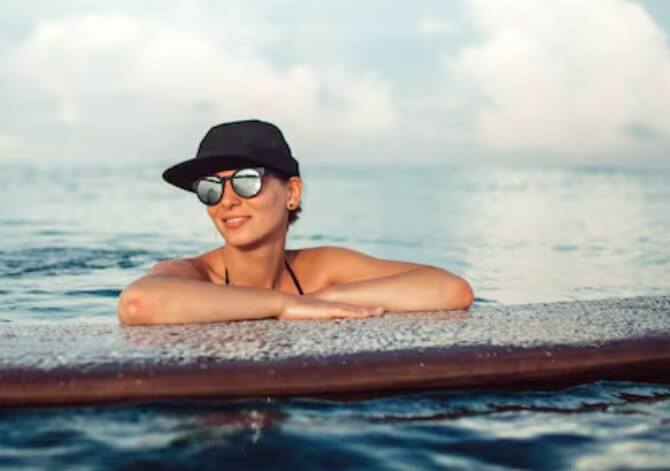
At seven in the morning in February, a certain kind of silence descends upon a British beach. A few cars in the parking lot with steam rising from their windscreens, frost still clinging to the grass behind the dunes, and a small group of people in dressing gowns making their way toward water that no one should be voluntarily entering by any reasonable standard. In any case, they enter. A few scream. Most go silent in a matter of seconds, that peculiar silence that appears to descend upon a person as soon as cold water touches their chest.
In between a wellness fad and a true subculture, cold water swimming has emerged as one of those activities that is difficult to avoid bringing up at a dinner party. Since the 1800s, swimmers have been traversing the English Channel without wetsuits. In nations like Finland and Russia, where submerging oneself in freezing water following a sauna is more of a custom than a fad, the practice is even more widespread. The scale has been altered. Since the pandemic forced people outdoors in search of anything that felt like contact with the outside world once more, groups that began with five friends getting together on a beach have grown to thousands of members.
| Category | Details |
|---|---|
| Recommended water temperature | Below 15°C (59°F) is generally classed as cold water swimming |
| Common UK locations | Coastal beaches, lakes, rivers, lidos |
| Key risk | Cold water shock, most dangerous in the first minute of immersion |
| Recommended session length (beginners) | A few minutes, building gradually over weeks |
| Essential safety gear | Bright swim hat, tow float, change robe |
| Supporting organisations | RNLI and RLSS UK water safety guidance |
| Popularity driver | Surge linked to the COVID-19 pandemic and outdoor wellness trend |
| Notable community growth example | Morecambe and Lancaster Open Water Swimmers group, from 5 to 7,000+ members since 2020 |
| Reported benefits | Mood improvement, stress resilience, circulation support |
None of that background is especially reassuring to a novice standing at the water’s edge for the first time. The immediate physical reality is more important: breathing becomes strangely difficult and the cold initially affects the skin before appearing to reach deeper. It’s important to comprehend the cold shock response before approaching open water.
The body produces short, sharp breaths and floods the system with cortisol in response to abrupt cold immersion, just as it does in response to a threat. As long as a swimmer understands what’s going on and doesn’t panic, it’s not dangerous in and of itself. It is the single biggest risk factor for newcomers, which is why all safety organizations, including the RNLI and RLSS UK, reiterate the same advice: never swim alone, breathe out for longer than you breathe in, and enter slowly.
The reason why people return is more difficult to explain to someone who hasn’t tried it. An activity that is genuinely unpleasant for the first thirty seconds and produces what regular swimmers somewhat dramatically describe as a post-swim high has an almost paradoxical quality.
The truth is that the science is still catching up with the anecdotes, despite decades of effort by physiology researchers, such as Professor Mike Tipton of the University of Portsmouth. It seems that cold shock increases blood flow to areas of the brain related to mood regulation. It’s another matter entirely whether that explains cold swimmers’ devotion to an activity that necessitates rising early in the morning during the winter.
After a few months, it’s difficult to ignore a pattern in the way people discuss it. The wording changes from expressing discomfort to expressing relief a feeling of leaving something behind in the water and returning to everyday life with greater stability. It’s really unclear and probably differs from swimmer to swimmer whether that’s the cold itself, the community swimming ritual, or just the accomplishment of doing something challenging on a regular basis.
The practical advice is rather unglamorous for anyone who is actually thinking about trying this instead of just reading about it. Instead of jumping right into a January dip just because it looked good online, start in late spring or summer when water temperatures are higher and the risk of shock is lower.
Instead of testing limits, limit the initial sessions to a few minutes and gradually increase tolerance. Bring a tow float, wear a brightly colored swim cap, and let someone know where you’ll be. Since the body continues to cool even after leaving the water a phenomenon sometimes referred to as afterdrop changing a robe afterward isn’t just for comfort. Getting warm quickly matters more than most beginners realize.
Another issue is who shouldn’t do this at all, at least not without first consulting a doctor. No amount of community enthusiasm can change the real risks that people with heart conditions, uncontrolled hypertension, or specific respiratory problems face from the shock response. Contrary to what the more breathless wellness coverage might imply, the swimming groups themselves are typically open about this.
The slow walk in, the audible gasps, and the instant camaraderie of having survived something together are all part of the strange mixture of nerves and ceremony that occurs when a group of novices congregate at the water’s edge. It’s easy to interpret it too deeply and label it as a metaphor for resiliency or something similar. Perhaps it’s easier than that. Perhaps people simply enjoy the feeling of having accomplished something difficult before breakfast, and the cold just so happens to be the most accessible hard thing.
i) https://dryrobe.com/blogs/latest-news/the-benefits-of-cold-water-swimming-and-how-to-get-started
ii) https://elemento-fitness.com/cold-water-swimming-guide-uk/
iii) https://www.everyoneactive.com/content-hub/swimming/open-water-swimming/
iv) https://www.boots.com/healthhub/fitness-exercise/what-is-cold-water-swimming
v) https://travelwithkat.com/benefits-risks-of-cold-water-swimming/