

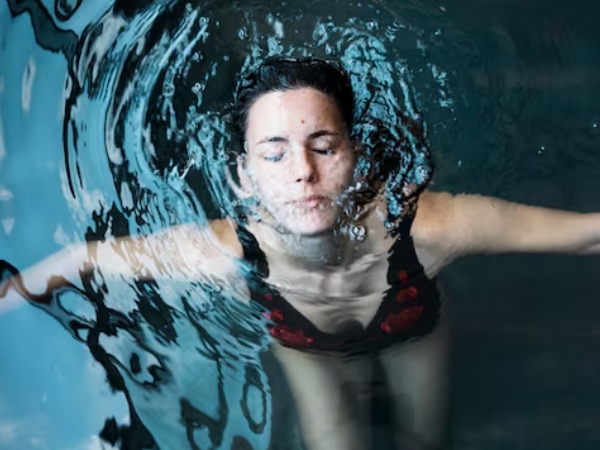
Every logical part of your brain tells you to stop right before you lower yourself into 14-degree water. The surface appears to be motionless. It is almost innocent until it experiences a shock that falls somewhere uncomfortable between pain and panic. But that’s where things really start to get interesting.
One hour of submersion at 14°C causes something akin to a biochemical storm within the body, according to research on cold water immersion. The stress and alertness hormone, noradrenaline, increases by about 530%. Dopamine increases by 250%. The increase in basal metabolic rate is approximately 350%. These are not gentle prods.
These are the kinds of figures that make you question why someone would prefer a warm bath. The same study, which was released by the National Institutes of Health, also discovered slight but detectable drops in blood pressure and heart rate during the actual immersion the kind of cardiovascular calm that seems almost paradoxical when you’re trying to control your breathing while sitting in nearly freezing water.
The dopamine number is important in ways that go beyond the cold plunge trend you’ve undoubtedly seen dominating your social media feed, so it’s worth taking a moment to consider it. Dopamine is involved in more than just pleasure.
It has to do with focus, motivation the desire to take action. The dopamine release brought on by cold exposure seems to last for several hours after exiting the water, which may help to explain why regular cold swimsuits report feeling more alert and focused throughout the day rather than just in the minutes right after a swim.
Although it’s still unclear whether brief increases in metabolic rate result in significant long-term weight management, the metabolic picture is also compelling. The link to brown fat, the kind of fat tissue that actively burns calories instead of storing them, appears to be more well-established. Frequent exposure to cold seems to raise the percentage of brown fat cells relative to white fat cells, which begs the question of whether cold water.
Therapy may eventually support metabolic health. Five minutes in water below 15°C was found to have a significant impact on metabolism, according to a 2009 review of medical literature. It’s really unclear if that holds up after months or years of practice.
The image may be more convincing when it comes to mental health. The brain releases beta-endorphins, the same class of chemical that gives runners a high, when cold water floods skin receptors with electrical signals.
A case study describes a 24-year-old woman with treatment-resistant depression who stopped needing antidepressant medication after a year of consistent cold water swimming. Naturally, one case does not prove anything. Considering the dearth of truly low-risk interventions in that area, it indicates a direction worth considering.
There is a perception that the wellness sector has both benefited and harmed cold water immersion at the same time. On the one hand, legitimate benefits to broader awareness have been brought about by the mainstream attention, which has funded actual research.
The practice has taken on a performance like quality due to the breathless enthusiasm of influencers submerging themselves in ice baths. Compared to the content surrounding it, the actual science a gradual accumulation of research on cardiovascular, metabolic psychological outcomes is more subdued and cautious.
This does not imply that everyone should submerge themselves in cold water. There have been fatalities at open-water events sudden cold water shock can cause cardiac arrhythmias, putting people with pre-existing heart conditions at serious risk. A doctor should be consulted before starting anything, not as a legal disclaimer but as sincere advice.
The barrier is primarily psychological for the majority of healthy individuals. The first few seconds are when the water at 14°C works. You just have to choose whether or not to stay after that.