

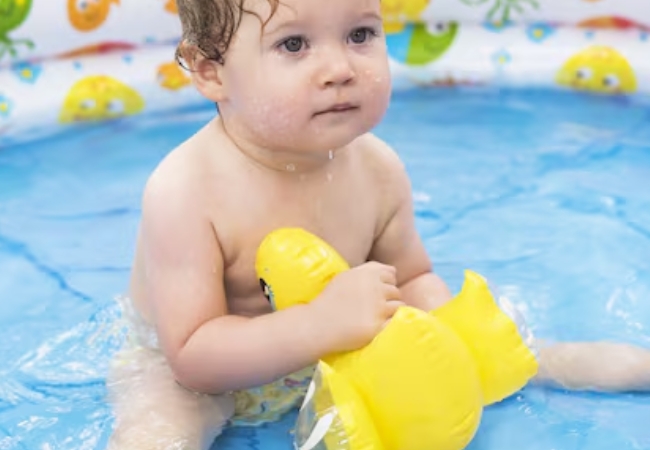
Standing at the pool’s edge with a wiggling six-month-old with a backpack full of sunscreen, snacks, and a regular diaper that’s where a lot of first-time parents realize they’ve made a mistake. The standard diaper, which is made to accomplish precisely that, will absorb the surrounding pool water, balloon to an insane size, and become uncomfortable and useless. It’s an instance that often occurs just once. After that, parents know: you need a swim diaper, and more specifically for younger babies, you need a size 1.
A remarkably complex area of the baby product market is occupied by swimming diapers in size 1. Most pools legally require them for any child who isn’t potty trained, however the category confuses new parents repeatedly. The most important thing to realize is that swim diapers don’t absorb pee, which truly amazes people. They are specifically designed to keep solid trash out of the water. Pediatricians and pool staff alike will emphasize the same thing: fit is everything. No matter how high-end the brand, a diaper that sags at the waist or gaps at the thigh isn’t performing its job.
Huggies Little Swimmers remain the dominating choice for most families, and it’s easy to see why. They are available at almost any drugstore and supermarket shop, which is important when you’ve accepted an invitation to someone’s backyard pool at the last minute. Slim newborns particularly benefit from being able to tighten the fit; the adjustable waistline is a real feature, not a marketing ploy. The diapers are also free of scents, parabens, and chlorine bleaching, which feels like an acceptable baseline for something worn on a baby’s skin. They do tend to run narrow, so sizing up is worth considering for babies on the heavier end of the range.
The reason Pampers Splashers are worth mentioning is that their smallest version, which weighs about 13 pounds, is really more affordable than many of its rivals. That is important for parents of smaller infants. Pull-ups are rather simple thanks to the stretch waistband, but anybody who has tried wearing one on a wet, slick baby knows that it may tear. Burning through diapers before they’ve even come into contact with water is a small annoyance, but it gets costly.
The calculus is slightly altered for infants with sensitive skin. On their own, saltwater and chlorine can be uncomfortable; the danger of chafing increases when a swim diaper and extended dampness are added. This is frequently noted by pediatric dermatologists, who advise removing wet swim diapers right after following a session. Companies like Coterie have taken notice of this issue; their swim diaper is Oeko-Tex Standard 100 certified, which means it has been officially confirmed to be free of more than a thousand potentially dangerous chemicals. The catch is that it can only be purchased via their website, so it’s not something you can grab on the spur of the moment from a shelf.
More consideration should be given to reusable choices than most parents do, especially for families with frequent swimmers. The environmental case is evident, but there’s also a practical one. Brands like Splash About’s Happy Nappy, manufactured from soft neoprene, are meant to move with a baby rather than against them, with a snug fit that apparently hasn’t generated a documented leak in years. Reusables are sized according to age range, and for this reason, the majority of infant-focused pool programs actually suggest them over disposables. The upfront cost is larger, but the per-use math swings quickly.
Swim diapers are put on just before the child goes into the water, which is one thing that surprises parents. Not ten minutes before. Not in the changing room three hallways away from the pool. Right before. Because they don’t absorb urine, a swim diaper worn too early is just a gap in your coverage. It takes some getting used to, especially with a baby who dislikes waiting, but it’s a minor logistical change. On the walk to the pool, some parents cover the swim diaper with a conventional diaper, which they then remove at the last minute. It works, but it sounds fussy.
The swim diaper aisle has a lot going on, so it’s probably okay that most parents initially find it a little intimidating. Getting the correct size, making sure the diaper fits properly around the waist and thighs before putting it on, and keeping in mind what the diaper is and isn’t meant to do are all important. The range of size 1 possibilities has greatly increased, and the ideal selection is determined more by the baby’s weight, skin sensitivity, and frequency of actual swimming than by brand loyalty.
i) https://bigblueswimschool.com/blog/swim-diapers-for-kids/
ii) https://www.forbes.com/sites/forbes-personal-shopper/article/best-swim-diapers/